Why is your website not generating leads? What should fix
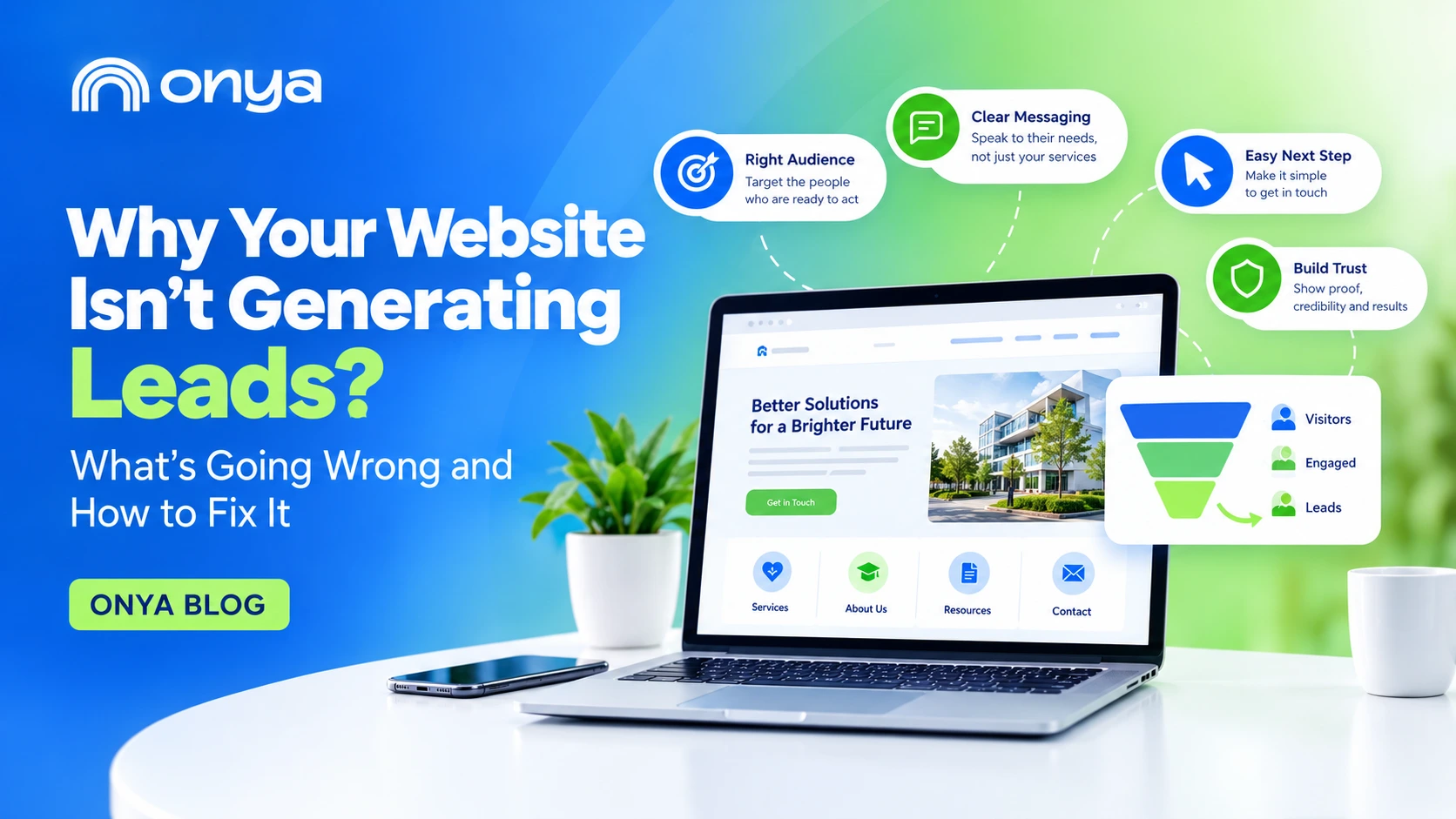
A well-designed website that generates no leads is one of the most common and quietly expensive problems organizations face today.
For a healthcare organization looking to grow its reach, a university working to increase enrollment, or a nonprofit building donor relationships, the website is often the first place a potential lead lands and the last place they’re heard from. The frustrating part is that most of these websites aren’t broken. They load fast, look professional, and rank for the right terms.
The problem lives deeper, in the messaging, the structure, the conversion path, or the absence of any real follow-up strategy after someone visits. This is exactly what this guide is all about. If your website is getting traffic but your inquiry forms stay quiet, this guide covers exactly why that happens and what to fix first.
Quick Answer: Why is your website not generating leads?
A website that attracts visitors but generates no leads has a conversion problem, not a traffic problem. The people are finding you — the website just isn’t giving them a strong enough reason to reach out.
The most common reasons:
- Wrong audience landing on your pages
- Messaging that doesn’t speak to their specific situation
- No clear next step after they read
- Landing pages that don’t match what they searched for
- No strategy to bring back visitors who left without converting
Why Traffic Does Not Guarantee Meaningful Inquiries
Attracting people to your website and convincing them to take any action are two different challenges entirely. Organizations spend months building visibility through SEO, content, and paid campaigns — and when the traffic arrives, it’s natural to assume that inquiries will follow. But for most, they usually don’t.
Traffic reflects how well your website gets found. But it says nothing about whether the right people are finding it, whether they understand what you offer, or whether anything on the page gives them a reason to reach out. That’s where a well-ranked page with the wrong message converts just as poorly as a page nobody visits.
Ultimately, a website that doesn’t speak directly to their situation loses them before a conversation ever starts. For a deeper look at where that breakdown typically happens, our guide on website traffic but no leads is worth reading alongside this.
Reasons Your Website Isn’t Generating Leads
Most website lead generation problems trace back to a handful of specific issues — and they show up consistently across industries, whether the organization is a university, a healthcare network, or a nonprofit.
Attracting the Wrong Audience
Broad keyword targeting, unfocused campaigns, and content written for general awareness rather than a specific audience all bring in visitors with no real intention to inquire. The traffic looks healthy in analytics but the people landing on the site were never going to convert.
The most common causes:
- Keywords with high volume but low buying intent
- Ad targeting too wide to reach the right decision-maker
- Content that speaks to everyone and converts no one
Unclear Website Messaging
When visitors land on your website, they make a quick judgment about whether your organization is relevant to them. If your messaging is vague, overly broad, or focused on what you do rather than what you solve, that judgment is made in seconds and they leave.
The most common messaging gaps:
- Headlines that describe the organization instead of addressing the visitor’s need
- Service pages built around features rather than outcomes
- No clear explanation of who the website is actually for
No Clear Path to Conversion
A visitor can spend several minutes on your website, read through your services — and still leave without inquiring. When there is no logical next step guiding them from one page to the point of contact, even genuinely interested visitors lose momentum and move on.
The most common conversion path gaps:
- Pages that end without telling the visitor what to do next
- Contact options buried deep in the site
- Too many directions pulling the visitor away from taking action
- Internal linking that leads nowhere useful
Poor Landing Page Experience
Every visitor arrives at a landing page with a specific expectation based on what they clicked. When the page delivers something different — generic content, slow load times, or messaging that has nothing to do with their search — that expectation breaks immediately. Most visitors give that page one chance, and a poor experience means they move on without ever reaching out.
The most common landing page problems:
- Page content that doesn’t match the search term or ad that brought the visitor there
- Slow load times that lose the visitor before the page even appears
- No clear headline that tells the visitor they’re in the right place
- Mobile experience that makes navigation difficult
Lack of Trust and Credibility
People decide whether to trust an organization long before they fill out a contact form. That trust is built through what the website shows — proof of past work, recognizable credentials, real outcomes, and content — that demonstrates genuine expertise. When those signals are missing, even a visitor who needs exactly what you offer will think twice before reaching out.
The most common trust gaps:
- No case studies, testimonials, or measurable results
- Credentials and accreditations not clearly displayed
- Blog content that lacks depth or a clear point of view
- No recognizable clients, partners, or affiliations shown
Most organizations don’t have all of these problems at once. But even one or two of them can quietly drain the leads a website should be generating. Getting visibility right is often the first step — and if that’s still a work in progress, our guide on online visibility for small businesses covers where to start.
How to Generate More Leads from Your Website
Knowing why your website isn’t generating leads is only useful if it leads somewhere. These are the specific changes that move a website from a passive online presence to something that actively brings in inquiries.
Target the Right Audience
When your SEO, paid campaigns, and content are built around the specific people most likely to inquire, the traffic that arrives already has a reason to be there. That alignment between audience and offer is what makes every other part of the website work harder.
Clarify Your Messaging
Clear messaging tells a visitor immediately about — what your organization does, who it serves, and what problem it solves. When that’s communicated well, visitors stay longer, explore further, and feel confident enough to reach out.
Optimize Landing Pages
A landing page built around a specific visitor intent removes the gap between what someone expected and what they found. That alignment keeps people on the page long enough to take action rather than bouncing back to search results.
Build Trust and Credibility
Visitors are more likely to inquire when they can see evidence that your organization has delivered results before. Case studies, credentials, and client proof — answer the question every visitor is silently asking before they commit to reaching out.
Create Content That Drives Action
Content that speaks directly to the challenges your audience faces positions your organization as the right choice before a conversation even happens. Our guide on why content is still king covers what that looks like in practice.
Make the Next Step Easy
Every unnecessary step between interest and contact gives a visitor a reason to leave. Simplifying that process — shorter forms, clearer CTAs, faster load times — directly increases the number of people who follow through.
How Onya Helps Organizations Turn Their Website into a Lead Generation Engine
A website that looks good but generates no leads isn’t a design problem — it’s a strategy problem. Most organizations have invested in the right pieces but haven’t connected them into a system that actually produces inquiries. That’s the work Onya does.
We work with higher education institutions, healthcare organizations, nonprofits, churches, and growing businesses to build digital marketing strategies that go beyond visibility. Getting found is only part of the equation. What happens after someone lands on your website — the messaging, the conversion path, the follow-up — is where leads are won or lost. As search continues to evolve, that full-picture thinking matters more than ever. Our guide on the future of search explores why organizations need to think beyond traditional SEO to stay competitive.
At Onya, we look at your website the way a potential lead does — identifying exactly where the experience breaks down and building a strategy around fixing it.
Ready to turn your website into a lead generation engine?
If your website is attracting visitors but not producing inquiries, the gap is fixable. Talk to Onya and let’s identify exactly what’s standing between your traffic and your next lead.
Frequently Asked Questions (FAQs)
Why is my website not generating leads despite good traffic?
Good traffic means people are finding you. The problem is usually unclear messaging, no conversion path, or the wrong audience landing on your pages.
How long does it take to start generating leads from a website?
Most organizations see meaningful improvement within 60 to 90 days of making targeted fixes to messaging, landing pages, and conversion paths. Sustainable lead generation builds over three to six months.
How important is mobile experience for lead generation?
Over 60% of web traffic comes from mobile devices. A poor mobile experience means the majority of your visitors are hitting friction before they ever consider reaching out.
How do I generate more leads from my website without increasing traffic?
Fix what’s already broken. Improving your messaging, simplifying your conversion path, and adding retargeting can significantly increase leads from the traffic you already have.
How does retargeting help with website lead generation?
Most visitors need multiple touchpoints before they inquire. Retargeting keeps your organization visible to people who already visited your site, bringing them back when they’re ready to make a decision.