Getting Online Visibility But No Sales? What Small Businesses May Be Missing
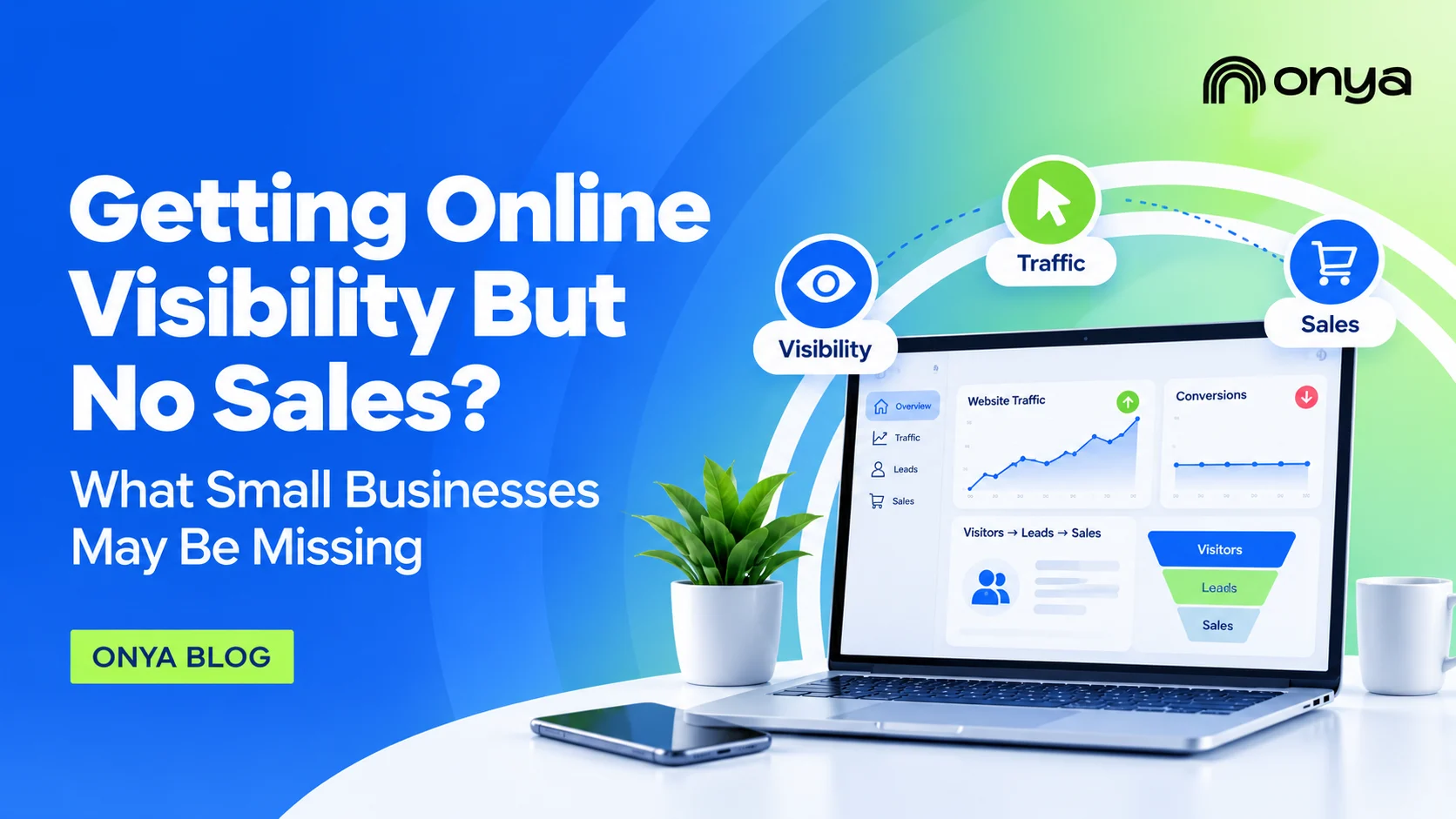
Visibility alone doesn’t always mean sales or leads. Plenty of small businesses get traffic, followers, and impressions and still see few leads. The problem usually sits between being found and being chosen: the wrong audience, a page that doesn’t guide the next step, or no follow-up after the first visit.
At Onya, we see this often. Small businesses come to us with posts getting views and a site getting visits, yet sales stay flat. This blog covers how to measure brand visibility for small online businesses, where interested buyers drop off, and how to increase online visibility in ways that lead to real inquiries and revenue.
Why Visibility Is Not the Same as Sales
Visibility measures attention. Sales measure intent.
A person can see your Reel, click a post, or land on your homepage without any plan to buy. Those numbers show that people noticed you, but they don’t show whether anyone trusts you enough to purchase.
Visibility for a small online business only matters when it reaches people who are ready to act. This is where small businesses struggle the most. Small businesses get stuck here because visibility is the easiest thing to see and track. Followers, reach, and impressions show up in a dashboard every day, so owners treat them as proof that marketing is working.
When sales stay flat, owners push for more reach, which costs more money. The cheaper fix is usually further down the path: a clearer offer, a better page, or a follow-up that brings visitors back.
How to Measure Brand Visibility Online That Doesn’t Convert
Getting people to your website is only half the job. What happens in the first few seconds after they arrive decides whether that visit turns into a lead or disappears from your analytics as one more bounce. Visibility for small online businesses can fill the site with visitors and still leave the inbox empty, so the real question is what stops those visitors from acting.
Here are the most common reasons you get traffic that doesn’t convert:
- Wrong audience: people who enjoy your posts but never planned to buy
- Mismatched sources: your traffic comes from one place, your inquiries from another
- No clear next step: the page doesn’t say what to do next
- Slow mobile loading: visitors leave before they read the offer
Putting full effort into marketing that doesn’t convert is frustrating, and it’s where a lot of small businesses get stuck. If your site already gets traffic but few inquiries, this breakdown of why websites get traffic but not enough leads shows what to check first.
How to Turn Online Visibility into Sales and Business Growth
Turning increasing online visibility into sales comes down to four moves: reach the right buyers, give them a clear offer, make the next step easy, and follow up with anyone who doesn’t act right away. Some owners handle all of it themselves. Others work with a digital marketing agency for small businesses to run all four together.
The steps below explain how small businesses can increase online visibility in a way that turns into sales and business growth.
Improve Your Search and AI Search Presence
Buyers now ask Google and AI tools questions before they ever visit a website. When your business appears in those answers, you reach people who are already looking for what you sell. That is why search and AI visibility often brings more qualified visitors than broad social reach.
- Higher-intent traffic: searchers are closer to a decision than feed scrollers.
- Earlier trust: being named in an answer puts you on the shortlist.
- Compounding reach: one useful page keeps bringing visitors without more ad spend.
If your business isn’t showing up in AI answers yet, this guide to tracking and fixing Google AI Overview visibility explains how a marketing agency finds the gaps and closes them, so you can start appearing where your buyers are asking.
Use Social Media to Build Awareness and Trust
Most buyers check a business’s social profiles before they contact it. For instance, a strong Reel can put your business in front of thousands of new people, but it only helps when it leads somewhere. Here’s how it helps:
- Familiarity: repeated views make a new name feel known.
- Proof: real customers, behind-the-scenes clips, and replies show who is behind the brand.
- Short-form video: Reels reach people beyond your followers.
Short-form video is the quickest way to reach people who don’t follow you yet, and this breakdown of how to use Instagram Reels for business growth covers how to turn those views into leads.
Use Email Marketing to Nurture Interested Prospects
Email gives you a direct line to people who chose to hear from you. Welcome emails, helpful guides, and reminders — they all keep your business in front of them, building the trust that turns interest into a first inquiry or purchase.
The best part about email marketing is that you own your own list of audience, so no algorithm change can cut off your audience. This breakdown of why email marketing for small businesses still works in an AI search world covers how to build one.
Connect Visibility With a Clear Conversion Strategy
A conversion strategy decides what they do once they arrive. It means choosing the one action you want from each visitor — such as booking a call or requesting a quote — and making that action easy to find at every step. Without it, even strong reach ends in visitors who look around and leave.
When you use a conversion strategy the right way, every channel you use pushes toward the same result: more inquiries and more sales.
When Should a Small Business Get Professional Marketing Help?
Every small business reaches a point where doing marketing alone stops working. Most owners wait until sales drop before they notice, but the signs show up much earlier:
- Flat inquiries: visits and followers grow, but leads don’t.
- No clear source: you can’t tell which channel brings real customers.
- No time: marketing slips whenever the business gets busy.
- Disconnected channels: search, social, and email run separately.
If a couple of these sound familiar, it’s probably time to bring in a team. A full-service agency puts every channel under one plan and tracks results against leads and sales, so you’re no longer guessing where things go wrong.
If you’d like help turning your visibility into sales, talk to Onya. We’re a full-service digital marketing agency, and we build strategy, content, and campaigns around the results your business needs.
Frequently Asked Questions
How long does it take to increase online visibility for a small business?
Paid ads can bring visibility within days, while SEO and content usually take three to six months to build traction. Results vary by competition, budget, and how consistently you publish.
What is the difference between online visibility and brand awareness?
Visibility is how often people can find or see your business online. Brand awareness is whether they recognize and remember it.
Can social media alone increase online visibility for a small business?
It can bring attention, but it limits your reach to people already on those platforms. Search, content, and email reach buyers' social media misses.
What metrics show if my online visibility is turning into sales?
Track leads, conversion rate, cost per lead, and revenue by channel. Reach and followers show attention, but these show whether it pays off.
When should a small business hire a digital marketing agency?
Hire one when marketing takes more time than you have, or when traffic grows and inquiries stay flat. An agency also helps when you can’t tell which channel brings real customers.