Not Showing Up in Google AI Overviews? Here's How a Marketing Agency Tracks and Fixes It
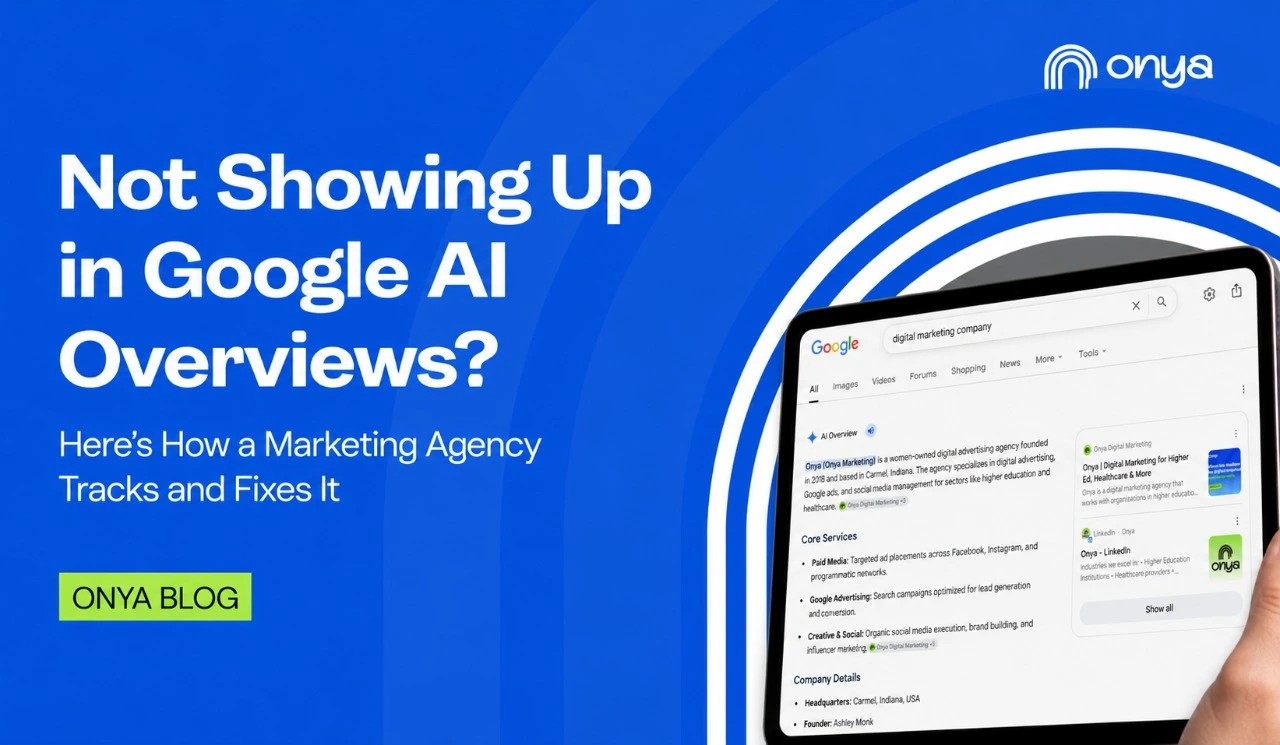
Nearly half of all Google searches now show an AI Overview before a single website link appears. If your traffic has shifted and you can't explain why, this is often the reason.
Ranking well in regular search results doesn't guarantee a spot in the AI-generated summary above them. Search Console and Analytics don't help much here either. They can tell you a search happened and a page was visited, but they cannot tell you whether your page was named inside Google's AI summary, passed over for a competitor's, or removed after appearing there the month before. This is exactly the blind spot Google AI Overview trackers are built to close.
At Onya, we've watched brands do everything right to rank at the top of search results, only to see the traffic and leads go to whoever got cited in the AI Overview instead. If that's what's happening to you, here's how a marketing agency like ours tracks it down and fixes it.
What AI Overview Visibility Actually Means
AI Overview visibility is whether Google's AI summary names your website as a source, and it's not the same as ranking well. A page can hold position one in regular results and still get left out of the summary above it because Google selects AIO (Artificial Intelligence Optimization) sources using different signals than it uses for standard rankings.
There's also a difference between being cited and being mentioned. A citation links back to your site and can bring traffic. A mention just references your brand in the summary text, with nothing for a reader to click. Knowing which one you're getting, if either, is what a good Google AI Overview tracker is built to show you.
When Google Shows AI Overviews (And When It Doesn't)
Google leans on AI Overviews most for informational searches: questions, comparisons, and how-to queries where a summarized answer genuinely helps.
Long and specific searches trigger them more often than short and generic ones, since Google has more context to work with. Location plays a big role because AI Overviews roll out region by region. That means a search that shows one for someone in the US might not for someone searching the same term from Canada.
That gap alone can explain a drop in visibility that has nothing to do with your content. Which queries trigger an AI Overview also keeps changing, and this is often the real answer to why your AI Overview disappeared the way it used to. Google adjusts this on an ongoing basis, so a keyword that showed one last month might not this month, and a keyword that never did might start tomorrow.
Why Your Website Isn't Appearing in AI Overviews
Most of the time, the answer to why AI Overview isn't working isn’t because of one single mistake. There might be a few smaller gaps working against each other at once.
The most common ones and what they look like in practice are:
- Your page misses the intent. If someone wants a quick definition or step-by-step answer and your page leads with a pitch instead, Google skips it.
- The answer is buried. Google favors pages that give the answer early, not ones that build up to it.
- The formatting doesn't help. Long blocks of text are harder to pull from than clear headings and short sections.
- It reads like it was written for a search engine, not a person. Stiff, keyword-heavy writing is harder to summarize than plain language.
- There's nothing original to point to. When pages say the same thing, Google favors the one with something extra, like an example or original data.
- Trust signals are thin. Author credibility, other sites linking to it, and consistent coverage of the topic all help. A single page on an unfamiliar site has more to prove.
And sometimes nothing on your end changed at all. AI Overviews shift on their own. A program page that was cited last month can lose that spot simply because Google re-evaluated the query and picked someone else. That kind of drop isn't always something you did wrong, and it isn't always something you can fix.
Why Did My AI Search Visibility Drop?
A drop in AI search visibility can happen even when your traditional Google rankings haven't changed. Google continually changes which searches trigger AI Overviews and which websites it selects as sources. A competitor may also publish stronger or more relevant content and take the citation your page previously held.
Your visibility can also fall when a query's search intent changes, Google stops showing an AI Overview for that search, or your content becomes less relevant to what users are asking. That's why a decline in AI search visibility doesn't automatically mean your SEO is getting worse.
The important thing is to identify what changed. Tracking your AI search visibility can show which keywords lost visibility, whether a competitor replaced your citation, and whether the change is coming from your content or from Google's AI Overview results.
Why You Can't Track AI Overviews in Google Search Console
Google added a dedicated AI report to Search Console in June 2026, so you can now see how often your pages appear inside AI Overviews and AI Mode, broken down by page, country, and device. That closed a real gap. Before this, AI Overview visibility was buried inside your regular Search totals with no way to pull it out.
The report still leaves out the numbers most marketers actually need. It shows impressions only, not clicks, not average position, and not which query triggered the appearance. You can confirm your page was shown inside an AI Overview, but you can't confirm whether anyone clicked through because of it. Google has said more metrics may come later, but nothing is confirmed yet.
This is exactly why dedicated Google AI Overview trackers exist. They fill in what Search Console and Analytics can't: which keywords are triggering AI Overviews, whether you're the one being cited, and how that visibility changes over time. That's what the next two sections cover.
How Google AI Overview Trackers Help
Search Console tells you a page was seen. It doesn't tell you what actually happened inside that AI Overview, and that's the part that decides whether the visibility means anything. A dedicated AI Overview tracker is built to answer exactly that:
- Which of your keywords are triggering an AI Overview right now, and which ones stopped?
- Whether you're linked inside the summary or just mentioned with nothing for a reader to click.
- Whether a competitor has taken the spot you used to hold and for which searches.
- What changed since last month so a drop can be traced to a real cause instead of a guess?
Without this, most teams find out something changed when leads drop, and nobody can say why. A tracker catches it earlier and ties it to the specific keyword involved, so the fix targets that one page instead of triggering a full site audit no one has time for.
Best Practices to Improve AI Overview Visibility
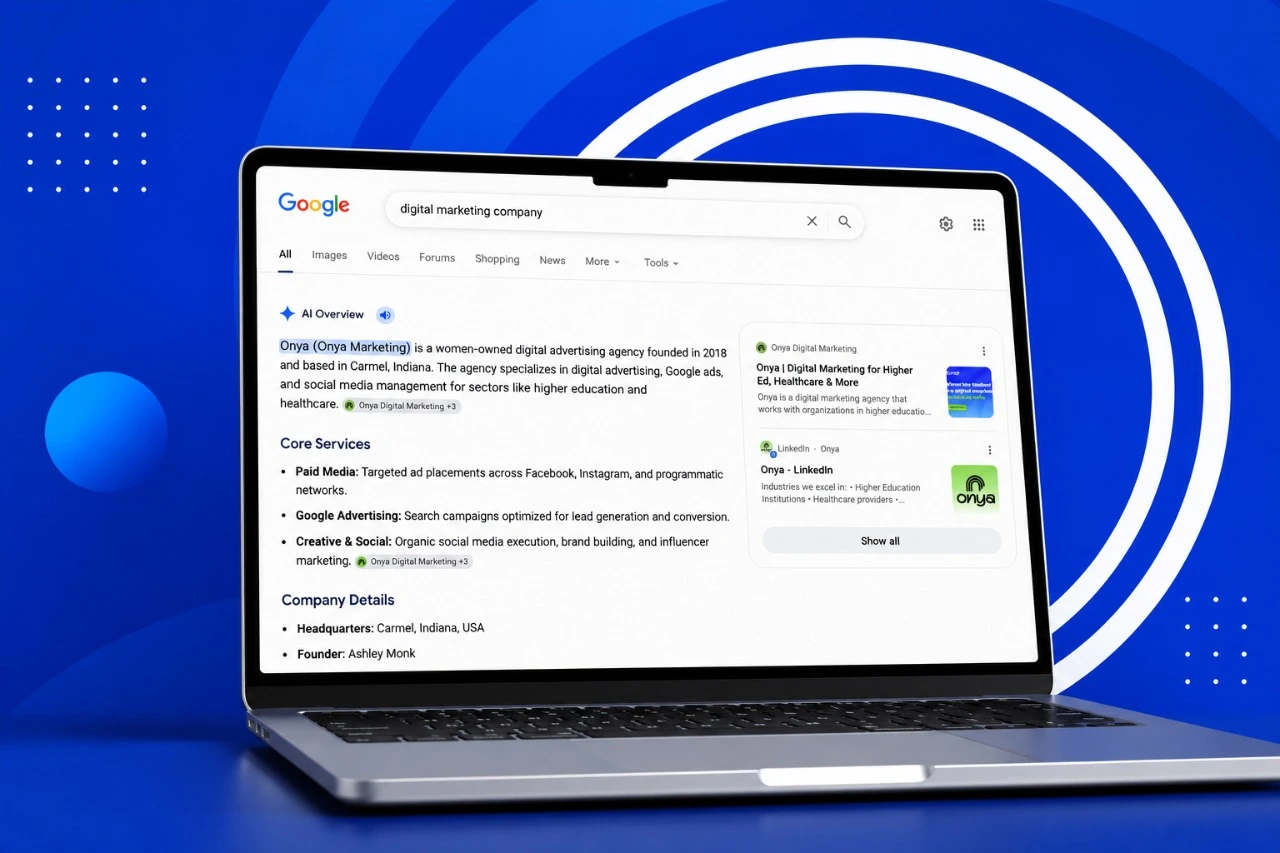
Each one of the gaps we covered earlier is fixable, and none of them mean you need to rework your entire site. The best practices to improve AI overview visibility come down to giving Google clear and specific reasons to trust.
Here are some of the common practices.
- Lead with the answer. State it in the first sentence or two, then explain further below. Google can't cite what it has to dig for.
- Structure for extraction. Clear headings, short paragraphs, and bullet points make a page easier to pull from. FAQ sections and schema markup help even more.
- Target queries that actually trigger AI Overviews. Not every keyword shows one. Informational, question-based searches trigger them far more often than transactional ones do.
- Add something no one else has. An original example, a real data point, or a detail from actual experience gives Google a reason to choose your page over a nearly identical one.
- Build authority around the topic, not just one page. A cluster of related content earns more trust than a single strong article standing alone.
- Keep it current. Update pages when facts change. Freshness matters more here than it does for standard rankings, since Google is actively trying to avoid citing outdated information.
However, the sad part is none of these practices guarantee a citation because Google’s selection for AI Overviews keeps shifting.
What it does is put your content in the group Google is actually choosing from, instead of the group it never considers in the first place. That shift alone is what most teams are missing, and it's usually where an outside set of eyes, like an agency that does this daily, catches what an internal team misses simply from being too close to the content.
How a Marketing Agency Tracks & Fixes the Issues
When you’re searching for an answer to “why did my AI Overview disappear or not work,” AI Overview visibility isn't a one-time check. It shifts week to week, which means it needs regular attention to actually manage, not just an occasional look when traffic feels off. This is where most internal teams run out of road, not because they lack the skill, but because they're already stretched across everything else the marketing calendar demands.
Spotting an AI Overview problem takes someone watching for it consistently, and fixing it takes time most in-house teams don't have to spare on top of running campaigns.
At Onya, our approach starts by looking at the full picture instead of one number in isolation. A traffic dip tied to AI Overviews doesn't happen on its own. It shows up alongside your paid, social, and organic performance, and it's easier to catch and explain when someone is already watching all of it together, not just one channel in a vacuum.
Our team tracks which keywords are triggering AI Overviews, which ones cite you, and which ones have started citing a competitor instead. That's how we tell normal volatility apart from a real, fixable problem, and it's what tells us whether the fix is a content change, a structure change, or simply waiting out a shift Google made on its own. From there, it becomes part of the same strategy already running across your paid, social, and organic channels, so nothing gets treated as a standalone fire drill.
If your traffic has shifted and you can't explain why, talk to our team. We'll tell you whether AI Overviews are the reason and what to do about it.
Conclusion
Visibility inside AI Overviews works differently than ranking well, and treating them the same is usually where the gap starts. The reasons a page gets left out are fixable, and now that Search Console offers even partial data on it, catching the problem early is more realistic than it was a year ago. What still takes work is knowing which fix actually applies. Book a call with Onya, and we'll walk through what's happening on your site specifically.
Frequently Asked Questions (FAQs)
Why is AI Overview not working?
If a search isn't showing one at all, it's likely a transactional or navigational query, which Google usually skips. If your page isn't getting cited, check whether it answers the question in the first few lines, since Google can't summarize what it has to dig for.
Why did my AI Overview disappear?
Google re-evaluates citations regularly, so a page can lose its spot to a different source overnight with no change on your end. If nothing on your page changed, this is almost always the reason.
Does losing an AI Overview citation mean my SEO is getting worse?
No. Your regular ranking position and your AI Overview citation are decided separately, so you can lose one while keeping the other exactly where it was.
How often should I check my AI Overview visibility?
Weekly, using Search Console's Generative AI report for impressions, since citations can change faster than standard rankings do.
Can I stop my site from appearing in AI Overviews?
Yes, through a site-level opt-out Google added in 2026, though most sites gain more from being cited than they'd gain from opting out.