Expert insights on digital advertising, strategy, and growth
Marketing Insights
September 17, 2026
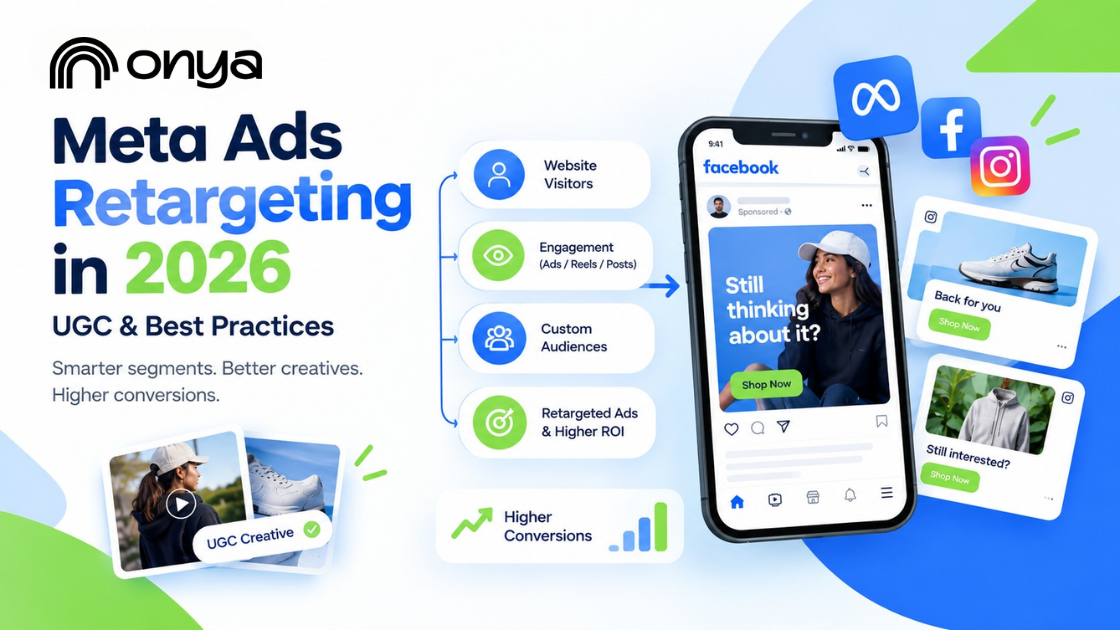
How to optimize UGC for meta ads retargeting 2026?
Meta's ad delivery system now treats creative as a relevance signal, not just the audience behind it. A repeated, generic ad loses ground even when the targeting is accurate, because the platform rewards ads that actually resolve something for the specific person seeing them. That's a meaningful shift from how retargeting used to work, and most campaigns haven't caught up to it yet.
At Onya, we manage Meta retargeting across higher education, healthcare, and business clients, and the gap we see most often isn't a budget problem or a platform problem. It's a strategy problem. The same ad running to every past visitor, with no consideration for where that person actually stopped engaging, is where most retargeting spend goes quiet.
This post breaks down what makes Meta ads retargeting work in 2026, from how to segment your audiences correctly to which creative approach fits which stage of the funnel and how to read your results honestly.
Why the Same Retargeting Ad Twice Doesn't Work Anymore
Meta's delivery system reads fatigue in real time. Run the same creative to the same person too many times, and the platform doesn't just get less effective; it actively deprioritizes the ad. Costs climb. Relevance drops. You end up paying more to reach people who already told you, by not converting, that the first version didn't land.
A few signs this is happening in your account:
Frequency is past 4-5x with no lift in clicks or conversions.
CPMs are creeping up on an audience that hasn't grown.
The same creative has run 30+ days with no rotation.
One ad is going to everyone who visited, regardless of how far they got.
None of this means Meta ad retargeting stopped working. It simply means the strategy behind it hasn't kept up. Retargeting still earns its spot in the funnel — but only when the creative and audience logic change with the person seeing it, not when an ad gets built once and left to run.
How Retargeting with Facebook Ads Works
Meta ad retargeting relies on one core piece of infrastructure: the Meta Pixel, a snippet of code on your website that tracks visitor activity and reports it back to Meta. Without it, you can't build an audience from your website activity.
Here's the sequence:
Someone visits your site or engages on Facebook or Instagram.
The Pixel logs that action and sends it to Meta.
Meta matches it to a user profile.
Your campaign serves ads to that person next time they're in-feed.
Pixel-only setups are common but increasingly incomplete. Browser blockers and iOS privacy settings mean a chunk of signal never makes it through. Pairing the pixel with the Conversions API closes that gap, since server-side data doesn't rely on the visitor's browser cooperating.
If you're still deciding where to put ad spend in the first place, this breakdown of Google Ads vs Meta Ads covers how the two platforms differ.
How Retargeting Instagram Ads Works
Instagram retargeting uses engagement and website activity to reconnect with people who have already interacted with your brand. Instead of relying only on broad audience targeting, you can build audiences from actions people take across Instagram, Facebook, and your website.
Here’s the basic sequence:
Someone watches your Reel, interacts with a post, visits your profile, or lands on your website.
Meta receives signals from that interaction through its platform and tracking tools.
Those signals can be used to create or update a retargeting audience.
Your Instagram campaign then delivers relevant ads to people who match your audience criteria.
For example, someone might watch a large portion of a product Reel but leave without visiting your website. You can create an audience around that type of engagement and show them a follow-up ad with more product information or a different creative.
Website visitors can also be retargeted on Instagram when the appropriate Meta tracking and audience setup is in place. The Meta Pixel can send website events to Meta, while the Conversions API can complement browser-based tracking with server-side event data.
The key is to treat Instagram retargeting as a continuation of the customer's first interaction, not simply another opportunity to display the same ad. Someone who watched a Reel, visited a product page, or abandoned a cart may need a different message at each stage.
That makes audience segmentation and creative rotation just as important as the retargeting campaign itself.
Build Retargeting Audiences Around Behavior, Not Channel
Most accounts build one audience: everyone who visited in the last 30 days. That treats a person who reads one page the same as someone who almost converted, and they need completely different ads. Group your audiences by what the person actually did, not which channel they came from:
Engagement-based — visited your site or watched most of a video, but took no further action. They know you exist; they're not sold yet.
Intent-based — started something and didn't finish: an abandoned cart, an unfinished application. This is your highest-intent group; they've told you exactly what they want.
Relationship-based — people you already have data on, email lists, and past customers. Worth prioritizing since first-party data holds up better as tracking degrades, part of why retargeting still earns its place in 2026.
Each group stalled for a different reason, so each needs a different message. That's what makes the next step, matching UGC retargeting ads to the right hook, actually work.
Match the Hook to the Reason They Stalled
The product doesn't need three versions. The first three seconds do. Someone who barely looked needs a different opener than someone who almost bought, and matching that opener to the actual hesitation is what separates UGC that converts from UGC that just adds frequency.
Awareness Hook: For Visitors Who Left Too Early They saw the ad or landed on the site but never connected it to a problem they actually have. The fix isn't a better product shot; it's leading with the problem itself, in plain language, before the product ever shows up. If the hook doesn't name what they're struggling with, the product looks irrelevant no matter how good it is.
Proof Hook: For Visitors Who Hesitated Cart abandoners clicked, then talked themselves out of it. Usually it's one unanswered objection: will this actually work for someone like me? Answer it with something concrete, not a general claim:
A specific timeframe ("after two weeks")
A specific result, not a vague one
An unpolished, real moment over a staged one
Decision Hook: For Visitors Who Are Almost Ready This is someone deep in consideration, not a past buyer. They've viewed pricing, come back more than once, and maybe started a form or cart and stopped. They don't need convincing anymore; they need a reason to stop deliberating: a deadline, a guarantee, or a direct answer to what's still holding them back.
Rotate the opener before the offer. When frequency climbs and results dip, the hook usually goes stale first, not the product or the price.
Meta Ads Retargeting Best Practices: How Often to Refresh UGC Creative?
The same clip that converted well two weeks ago starts losing steam the moment your audience has seen it too many times, and leaving it running past that point burns the budget instead of saving it.
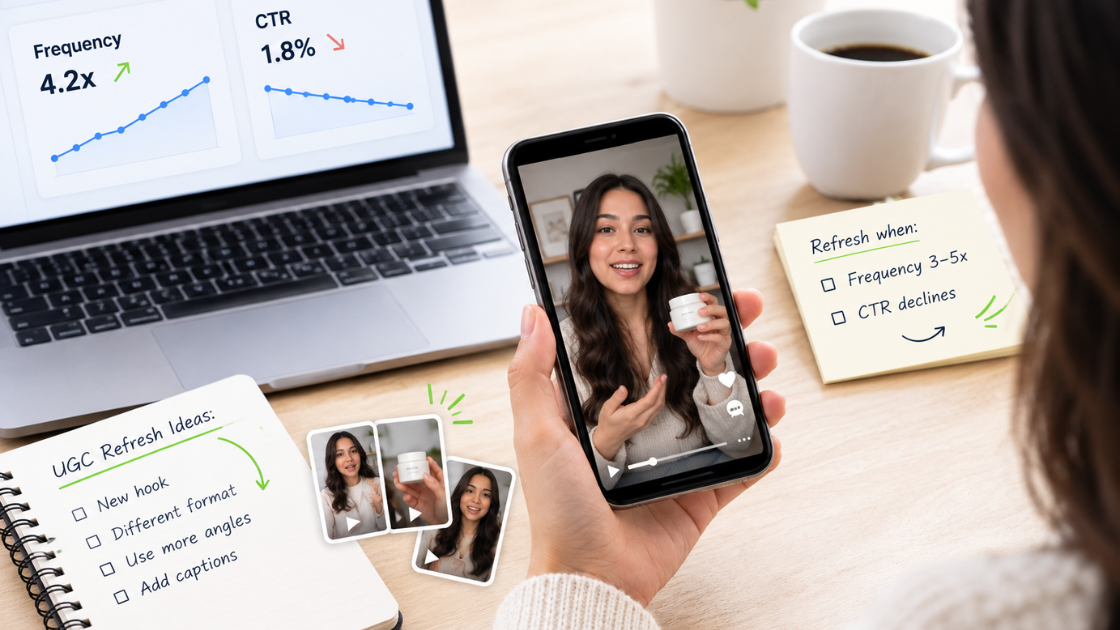
Watch performance, not the calendar. Two numbers tell you when it's time to replace a creative:
Frequency past roughly 3-5x with no lift in clicks or conversions
CTR declining on a specific asset, not just the campaign average
When both start moving the wrong way, replace the creative, usually every 2-3 weeks for an active retargeting segment, sooner for smaller audiences that see the same ad more often.
Refreshing doesn't always mean a full reshoot. Often the fastest fix is swapping the opening hook or format on existing footage. If you're running low on raw material to pull from, this breakdown of UGC content ideas is a good next stop before you schedule a new shoot.
Formatting UGC for Facebook and Instagram Retargeting
A strong hook still underperforms if the format looks like an ad instead of a Reel. A few non-negotiables for retargeting social media content on Facebook and Instagram:
A few things worth getting right:
Shoot vertical, 9:16, for Stories and Reels, where most retargeting inventory runs
Front-load the hook; the first two to three seconds decide whether someone stays.
Burn in captions, since most Feed and Stories viewing happens with sound off
Skip the polish; handheld framing and natural lighting read as authentic, which matters more with a warm audience than production value
Facebook and Instagram audiences don't always respond the same way. With retargeting Instagram ads, you'll often see more visual, lifestyle-driven clips perform best, campus life, and product-in-use moments.
When retargeting with Facebook ads, you're often reaching an older or more decision-adjacent audience, parents in a higher-ed context, for example, so slightly more direct, information-forward creative can perform better there. Running the same UGC on both, with small adjustments to pacing or caption tone, tends to outperform picking one platform and skipping the other.
These aren't universal retargeting ads best practices; they're specific to warm audiences who've already seen your brand once and are deciding whether the second look is worth their time.
Are Your UGC Retargeting Ads Actually Working?
Vanity metrics won't tell you if it's actually paying off. Check these at the individual-asset level, not the campaign average:
Frequency and CTR trend per asset — a declining CTR on one specific clip is your earliest fatigue signal, well before overall cost per result moves.
Cost per result by audience segment — lumping every stalled visitor into one report hides which segment is actually underperforming.
Performance by platform — retargeting with Facebook ads and retargeting Instagram ads rarely perform identically, so review them separately.
If none of this is tracked at that level, the honest answer is, "You don't know whether retargeting is working; you just know it's running.
This is usually where teams either build the reporting themselves or bring in someone who already has the system for it. At Onya, matching hooks to funnel stage, formatting for each platform, and reporting on individual assets isn't an add-on; it's the default way we run Meta ads retargeting for every client, higher education, ecommerce, or otherwise.
Conclusion
Retargeting on social media only works when the strategy behind it does. Segment audiences by behavior, match each hook to the reason someone stalled, and refresh creative before fatigue sets in — that's what separates UGC retargeting ads that convert from ones that just add frequency. This discipline applies whether you're running retargeting with Facebook ads, retargeting Instagram ads, or both at once.
Onya is a full-service digital marketing agency that builds this whole system: strategy, creative, platform-specific formatting, and asset-level reporting, not just the retargeting piece. If you want a team that follows retargeting ads best practices end to end, see what Onya can do for your business. Contact us now!
Frequently Asked Questions (FAQs)
What counts as UGC in a Meta retargeting ad? Content that looks like it's from a real person, not a brand. Think testimonials, honest reviews, or day-in-the-life clips.
How is retargeting different from a regular Meta ad? Regular ads target people who don't know you yet. Retargeting shows ads only to people who already visited or engaged with your brand.
Can the same UGC clip work on Facebook and Instagram? Yes, but results differ. Instagram favors lifestyle content, Facebook often does better with more direct messaging.
Do I need a big budget for UGC retargeting ads? No. Polished, expensive-looking ads often perform worse with a warm audience than something that looks real.
How do I know if my UGC creative needs to be replaced? Watch frequency and CTR on that specific ad. When frequency rises and CTR drops, it's time to swap it.
Beyond Metrics: How Smart Social Spend Drives Measurable ROI
Unfortunately, social media budgets are often treated like a mysterious black box. Money goes in, likes and shares come out, and somewhere in between, marketers cross their fingers hoping for real business impact. But here’s the truth: smart social media spending isn’t about vanity metrics—it’s about driving measurable ROI.
If your social media strategy isn’t delivering tangible results, it’s time to go beyond the Marketing Metrics that don’t matter and focus on the ones that do.
Why Social Spend Needs to Be Smarter, Not Bigger
Throwing more money at social ads without a strategy is like dumping water into a leaky bucket. More spending doesn’t always mean better results. Instead of just increasing budgets, brands should focus on optimizing every dollar spent.
A smart social spend means:
Investing in high-intent audiences
Choosing the right ad formats for conversion
Tracking performance beyond likes and shares
Iterating quickly based on real-time insights
Defining Measurable ROI in Social Media
ROI isn’t just about revenue—it’s about value. Here are some key ways to Measure ROI on Social Media it effectively:
Customer Acquisition Cost (CAC): How much are you spending to acquire a new customer through social media?
Customer Lifetime Value (CLV): Are your social media-acquired customers generating long-term revenue?
Engagement-to-Conversion Rate: Are those clicks, comments, and shares leading to sales or sign-ups?
Return on Ad Spend (ROAS): For every dollar spent on social ads, how much revenue is being generated?
Attribution Modeling: Are you tracking the full customer journey to understand social media’s impact on conversions?
The Power of Smart Targeting
One of the biggest mistakes organizations make with social media advertising is targeting too broadly. Sure, reaching a million people sounds impressive, but if only 0.01% of them convert, you’re burning budget on the wrong audience.
Instead, smart social spend focuses on:
Lookalike Audiences: Find new users who resemble your best customers.
Retargeting: Re-engage users who have interacted with your brand before.
Behavioral Targeting: Use data-driven insights to reach people based on interests, habits, and online behavior.
Geotargeting: Optimize spend by focusing on high-performing locations.
Creating Content That Converts
Not all content is created equal when it comes to ROI. If your social media ads aren’t driving measurable results, it could be because your content isn’t optimized for conversions.
Here’s what works:
Clear CTAs: Tell users exactly what to do next (Buy Now, Sign Up, Learn More).
Authenticity Over Perfection: UGC, testimonials, and real-life experiences outperform overly polished ads.
Video Over Static Images: Short-form video (think TikTok, Reels, and Stories) tends to drive higher engagement and conversions.
A/B Testing: Always be testing! Try different headlines, creatives, and CTAs to see what works best.
The Role of Data in Smarter Spending
If you’re not tracking the right data, you’re guessing. And guessing is expensive. Social media platforms provide an overwhelming amount of analytics, but the key is knowing which ones actually matter.
Google Analytics: Monitor social referral traffic and goal completions.
UTM Parameters: Tag your links to track exactly where conversions are coming from.
Third-Party Tools (HubSpot, Hootsuite, Sprout Social): Get deeper analytics and automation to maximize your social ROI.
Making Your Social Spend Work Harder
Here’s how to ensure every dollar spent on social media is pulling its weight:
1. Prioritize Conversion Over Engagement
Engagement is great, but if it’s not leading to sales or sign-ups, it’s not enough. Shift your focus toward conversion-driven content and strategies.
2. Leverage Influencer & UGC Marketing
Consumers trust other consumers. Partner with influencers or encourage user-generated content to make your brand feel more authentic and increase conversion rates.
3. Use Automated Bidding Strategies
Platforms like Facebook and Google have smart bidding options that optimize your spend based on conversion goals rather than just reach.
4. Keep Testing & Optimizing
Digital marketing success isn’t set-it-and-forget-it. Run split tests, analyze performance, and tweak your strategy regularly.
5. Align Social with Your Overall Sales Funnel
Make sure your social ads and content align with your broader sales strategy. Social should drive traffic to high-converting landing pages, not just your homepage.
Smart social spending isn’t about chasing trends or boosting every post—it’s about data, strategy, and real impact. If you’re tired of vanity metrics and want social media to work for your organization, it’s time to shift your mindset. Focus on conversions, refine your targeting, and make sure every dollar is accountable. Because at the end of the day, likes don’t pay the bills—conversions do. So, let’s get smart with social!
UGC Content: What It Is and How to Leverage It for Real Growth
If you’ve spent any time on the internet (which, let’s be real, you have), you’ve probably encountered user-generated content (UGC). It’s the Instagram post raving about a new skincare brand, the unboxing video on YouTube, or even the hilarious TikTok duet featuring your product. UGC is everywhere—and it’s pure marketing gold.
But what exactly is UGC, and more importantly, how can your brand use it to fuel real growth? Let’s dive in!
What Is UGC, and Why Does It Matter?
User-generated content is any content—text, videos, images, reviews—created by real people rather than brands. Unlike traditional marketing, which can sometimes feel salesy or forced, UGC is authentic, organic, and (often) more relatable.
Why does it matter? Because consumers trust other consumers way more than they trust ads. In fact, 93% of consumers say UGC influences their buying decisions. That’s huge! Plus, UGC doesn’t just boost trust—it also increases engagement, enhances brand credibility, and costs way less than in-house content production.
Types of UGC You Can Use
Before we talk strategy, let’s break down the types of UGC you can leverage:
Social Media Posts: Think Instagram stories, tweets, or TikToks featuring your brand.
Reviews & Testimonials: A positive review can be a game-changer for conversion rates.
Unboxing Videos & Tutorials: These showcase your product in action and provide valuable insights to potential buyers.
Hashtag Challenges: Viral UGC campaigns often start with a simple hashtag.
Q&A and Forum Discussions: Reddit, Quora, and product forums are full of genuine customer conversations.
How to Encourage and Collect UGC
UGC doesn’t just magically appear (though sometimes it feels like it does). You need to create an environment where your audience wants to engage and share. Here’s how:
1. Ask (Nicely) for It
Sometimes, all you need to do is ask! Encourage customers to tag your brand in their posts, leave a review, or share their experiences.
2. Create a Branded Hashtag
A catchy, unique hashtag makes it easier for users to contribute content and for you to track it. Think #ShotOniPhone or #ShareACoke.
3. Feature UGC on Your Platforms
When customers see their content being shared on your website, Instagram, or email campaigns, they feel valued—and others will be more likely to join in!
4. Run Contests & Giveaways
Nothing sparks engagement like a well-executed giveaway. Require participants to create and share content to enter.
5. Partner with Micro-Influencers
Influencers—especially micro-influencers—have highly engaged audiences. A collaboration can lead to an influx of UGC that feels both authentic and impactful.
Best Practices for Leveraging UGC
Once you’ve got a steady flow of UGC, here’s how to use it effectively:
1. Always Give Credit
If you’re reposting someone’s content, tag them and, if necessary, ask for permission. This builds goodwill and keeps things ethical.
2. Curate, Don’t Just Collect
Not all UGC is created equal. Pick high-quality content that aligns with your brand’s aesthetics and message.
3. Incorporate UGC in Ads
Want your ads to feel more genuine? Use UGC! Facebook and Instagram ads featuring UGC tend to have higher engagement and conversion rates.
4. Showcase UGC on Your Website
Adding real customer photos or reviews to product pages can significantly boost trust and sales.
5. Keep It Fresh
Encourage new UGC regularly to keep your brand looking active and up-to-date.
The Future of UGC
With the rise of short-form video content, AI-driven recommendations, and community-driven marketing, UGC is only going to become more influential. Brands that embrace UGC now will have a major advantage in the years to come.
UGC isn’t just a trend—it’s a powerful, cost-effective way to build brand credibility, increase engagement, and drive real growth. By encouraging, curating, and strategically using user-generated content, you can create a brand presence that feels authentic, engaging, and, most importantly, trustworthy.
So, are you ready to turn your customers into your best marketers? Start leveraging UGC today and watch your brand grow like never before!
5 Programmatic Advertising Strategies That Outperform Your Competition
If you’re looking to step up your digital advertising game, programmatic advertising is where it’s at! Gone are the days of manual bidding and hoping for the best—now, AI-driven algorithms and real-time bidding (RTB) help you target the right audience at the right time. That being said, with so many brands leveraging programmatic, how do you stay ahead of the competition?
We’ve got you covered! Here are five programmatic advertising strategies that’ll help you dominate your industry and leave competitors in the dust.
1. Leverage AI-Powered Audience Targeting
Sure, programmatic advertising is all about automation, but the real magic happens when you let artificial intelligence (AI) refine your targeting. AI can analyze massive datasets to identify patterns and predict which audiences are most likely to engage with your ads. This means better conversion rates and lower ad spend wastage.
How to implement this:
Use AI-driven Demand-Side Platforms (DSPs) to optimize targeting.
Implement machine learning models that adapt based on real-time performance.
Tap into first-party and third-party data to create hyper-personalized audience segments.
2. Utilize Contextual Targeting Over Cookie-Based Tracking
With privacy regulations tightening and third-party cookies on their way out, brands need a smarter approach to targeting. Enter contextual targeting—an AI-driven method that places ads based on content relevance rather than user data.
Why it works:
Your ads appear in environments that naturally align with your brand.
It’s privacy-friendly, meaning no issues with GDPR, CCPA, or cookie restrictions.
Higher engagement rates since ads are relevant to what users are actively consuming.
Helpful Tip: Use Natural Language Processing (NLP) to analyze page content and ensure your ads align with the context in real time.
3. Embrace Dynamic Creative Optimization (DCO)
Static ads? Boring. Personalized, dynamically generated ads? Game-changer! Dynamic Creative Optimization (DCO) automatically tailors ad creatives based on user behavior, demographics, and contextual data.
How to use DCO effectively:
Create multiple variations of headlines, images, and CTAs.
Use AI to test which combination works best for different audience segments.
Personalize messaging based on real-time signals (e.g., weather, location, past browsing behavior).
DCO helps brands serve up highly relevant ads that drive engagement and conversions. More personalization = better results!
4. Optimize for Omnichannel Advertising
Consumers don’t just live on one platform—they bounce between websites, social media, streaming services, and mobile apps all day long. If you’re not running an omnichannel programmatic strategy, you’re leaving money on the table.
How to do it right:
Run cohesive campaigns across display, video, CTV (Connected TV), native ads, and social platforms.
Use cross-device tracking to ensure a seamless user journey from desktop to mobile.
Adjust bidding strategies based on performance data from different channels.
An omnichannel approach ensures you reach users wherever they are and reinforces your brand message across multiple touchpoints.
5. Harness the Power of Real-Time Data & A/B Testing
One of the biggest advantages of programmatic advertising is access to real-time data. But having data is one thing—knowing how to use it is another. Brands that continuously analyze and optimize based on real-time insights will always outperform those that set and forget their campaigns.
Winning tactics:
Run A/B tests on ad creatives, targeting parameters, and bidding strategies.
Adjust your campaigns dynamically based on performance metrics (CTR, CPC, ROAS).
Use heatmaps and eye-tracking data to understand user engagement.
By leveraging real-time data, you can make smarter decisions, optimize ad spend, and continuously refine your programmatic strategy.
Programmatic advertising isn’t just about automation—it’s about smart automation. Brands that embrace AI-powered audience targeting, contextual advertising, dynamic creatives, omnichannel marketing, and real-time data analysis will consistently outperform their competitors.
The best part? These strategies not only drive better results but also help you spend your ad budget more efficiently. So, if you’re ready to take your programmatic advertising game to the next level, start implementing these tactics today!
Need expert help? Our team at Onya specializes in data-driven programmatic strategies that deliver results. Let’s chat and build a custom plan to crush your competition!
The Power of Viral Brand Matchups: How Cultural Relevance Drives Success
Who doesn’t love a good partnership? Brand collaborations have really taken center stage recently, with viral brand matchups generating massive buzz and consumer engagement. Recent partnerships like Sabrina Carpenter’s "Shake That ESS" x Dunkin’ and Post Malone x Oreo showcase how aligning with cultural moments can raise a brand’s visibility and relevance. However, not all collaborations strike the right chord—those that feel forced or inauthentic can backfire. So, what makes these partnerships successful, and how can brands create campaigns that resonate organically?
The Magic Behind Viral Brand Collaborations
When executed well, brand partnerships go beyond traditional marketing—they create cultural moments. Sabrina Carpenter’s collaboration with Dunkin’ is a prime example. Her song “Espresso”, which already had social media traction, seamlessly aligned with Dunkin’s fun, youthful brand image. The campaign felt natural because it tapped into existing trends and consumer enthusiasm rather than imposing a message. Dunkin’ capitalized on the song’s catchy hook, integrating it into their brand messaging and leveraging Carpenter’s existing fan engagement. This approach helped Dunkin’ resonate with Gen Z and Millennials who were already invested in the viral moment.
Similarly, Post Malone’s collaboration with Oreo was a masterclass in audience engagement. With a well-established fanbase that spans music and gaming culture, Post Malone’s involvement in the campaign added credibility and excitement. The brand didn’t just slap his face on a package; they crafted an interactive experience, further cementing authenticity. Oreo released a limited-edition cookie featuring Post Malone-inspired designs and encouraged fans to engage in digital challenges and exclusive content. The campaign’s success was due to its ability to tap into Post Malone’s unique persona while maintaining Oreo’s playful and nostalgic brand identity.
Additionally, partnerships that integrate seamlessly into social media trends and pop culture conversations tend to see the greatest success. These collaborations feel less like traditional marketing and more like a genuine fusion of two cultural forces, making them highly shareable and buzzworthy.
Why Authenticity & Cultural Relevance Matter
Today’s consumers, particularly Gen Z and Millennials, have a keen radar for inauthentic marketing. They crave genuine connections with brands, favoring those that align with their interests and values. When a brand forces a partnership that doesn’t feel natural, it can result in consumer skepticism and even backlash.
Authenticity is the cornerstone of a successful brand collaboration. It’s not just about getting a celebrity or influencer onboard—it’s about ensuring the partnership feels like a natural extension of both the brand and the individual’s identity. When brands tap into cultural relevance by aligning with real-time trends, humor, or shared experiences, they create marketing magic that doesn’t just sell but connects.
Cultural relevance is another key factor. Consumers engage most with brands that reflect their world, language, and values. Brands that stay attuned to what their audience is talking about—whether it’s a viral TikTok trend, a meme, or a cultural shift—are more likely to create partnerships that resonate. However, it’s important for brands to engage in cultural moments thoughtfully. If a collaboration feels opportunistic rather than authentic, audiences may reject it outright.
How Brands Can Create Organic Campaigns
Identify Shared Audiences: A brand partnership should feel like an organic match, meaning both parties should share a similar audience demographic. Understanding your audience’s interests, behaviors, and online habits is key.
Leverage Real Cultural Moments: Jumping on trends in a timely and thoughtful way can make campaigns feel more natural. However, it’s important to engage in a way that feels genuine rather than forced.
Allow Creativity to Flow: The best collaborations happen when brands give creative freedom to the personalities they work with. Consumers can tell when a campaign is overly scripted—authenticity thrives when influencers or artists can bring their unique voice to the campaign.
Encourage Participation: User-generated content, challenges, or interactive elements can further validate authenticity. When consumers feel like they are part of a campaign rather than just spectators, engagement increases.
Keep It Subtle: The most effective brand collaborations don’t feel like ads. Instead, they blend naturally into the content consumers are already engaging with, whether that’s through music, memes, or social media trends.
Tap Into Niche Communities: Some of the most successful collaborations target specific communities rather than broad audiences. Whether it's gaming, fashion, or wellness, aligning with a niche passion point can create a more meaningful impact.
Be Consistent with Brand Identity: Even in viral collaborations, staying true to core brand values is essential. If a campaign feels too far removed from what the brand represents, it can come across as disingenuous.
The Future of Brand Partnerships
Viral brand matchups will continue to evolve as brands look for innovative ways to connect with their audiences. Organizations who seek authenticity, cultural relevance, and organic engagement, will be able to create campaigns that not only capture attention but also foster lasting brand loyalty. As seen with Dunkin’ and Oreo, the key to success isn’t just about going viral—it’s about creating moments that truly resonate with consumers. Organizations should focus on building relationships with their audience rather than merely seeking short-term buzz.
How Different Generations Use Instagram and How You Should Adapt
Instagram is a powerful platform, but how different generations engage with it can look very different! To maximize impact, brands have to craft content strategies that align with these generational behaviors. Here’s how to tailor content for Boomers, Gen X, Millennials, and Gen Z to ensure meaningful engagement each and every time!
Boomers & Gen X: Content That Encourages Public Interaction
Baby Boomers (born 1946–1964) and Gen X (born 1965–1980) appreciate content that fosters conversation and builds credibility. They are more likely to interact with brands that acknowledge their engagement and provide valuable information.
Best content strategies:
Educational posts: Use carousels and longer captions to share detailed insights, how-tos, and industry news.
Community-driven content: Share user testimonials, highlight loyal customers, and create posts that spark discussions.
Encourage interaction: Ask open-ended questions and create posts that invite comments and shares.
Consistent engagement: Reply to comments and DMs promptly to build trust and loyalty.
Video content: Utilize live sessions and long-form videos to dive deeper into topics of interest for these audiences.
Millennials: A Blend of Public and Private Engagement
Millennials (born 1981–1996) navigate between public and private spaces on Instagram. They enjoy interactive and visually appealing content while valuing personalized brand interactions.
Best content strategies:
Interactive Stories: Use polls, quizzes, and Q&A sessions to engage them directly.
Short-form video content: Leverage Reels to create dynamic and engaging videos that capture attention quickly.
Personalized engagement: Respond to DMs with tailored replies to nurture relationships.
Instagram Shopping: Make it easy to browse and buy products directly from your profile.
Behind-the-scenes content: Show authenticity by giving glimpses into your company culture and product development.
Gen Z: Prioritizing Private and Authentic Interactions
Gen Z (born 1997–2012) values private, authentic interactions over public likes and comments. They seek brands that create shareable content and feel relatable.
Best content strategies:
Meme-worthy, shareable content: Create visually appealing, humorous, or relatable posts that users want to send to their friends.
Influencer collaborations: Work with nano- and micro-influencers who have highly engaged niche audiences.
Exclusive content for Close Friends lists: Provide behind-the-scenes looks, special promotions, and personalized updates.
Authenticity first: Use raw, unfiltered, and behind-the-scenes content to connect on a more personal level.
Interactive and immersive experiences: Experiment with AR filters, interactive features, and gamified content to keep Gen Z engaged.
Consistent Strategies Across All Generations
While each generation has unique preferences, some content strategies are effective across all age groups. High-quality visuals, clear and compelling messaging, and storytelling resonate with users of all ages. Authenticity and transparency in branding build trust and credibility, regardless of the audience. Additionally, brands should maintain an active presence by responding to comments and DMs promptly. You’ll also want to regularly analyze performance metrics and adjusting content accordingly is also essential for maintaining engagement across generations.
Adapting Your Instagram Strategy for Maximum Impact
Understanding these generational preferences allows brands to fine-tune their content strategy for better engagement. Whether it’s encouraging discussions with Boomers, creating interactive Reels for Millennials, or crafting shareable content for Gen Z, aligning with audience behaviors ensures success.
By shifting focus from vanity metrics to meaningful engagement, brands can foster stronger connections and drive real results. Testing different content types and analyzing performance metrics can also help brands refine their approach further. Ready to optimize your Instagram strategy? Let's create content that speaks to every generation and maximizes engagement where it matters most.
The LinkedIn Land Grab: How Short-Form Video is Redefining Opportunity
LinkedIn has long been known as the go-to platform for professional networking and thought leadership. However, a major shift is currently underway—one that presents a unique and time-sensitive opportunity for creators and brands alike. The rise of short-form video content on LinkedIn is reshaping the platform’s content ecosystem, opening the door for those willing to seize this moment. If you’ve been considering leveraging LinkedIn as a growth channel, now is the time to act!
The Rise of Short-Form Video on LinkedIn
Over the past few years, social media has seen a dramatic shift towards video-first content. Platforms like TikTok, Instagram Reels, and YouTube Shorts have conditioned audiences to consume and engage with short, digestible videos. LinkedIn, traditionally a hub for long-form articles and professional updates, is now experiencing a similar transformation.
The platform’s algorithm increasingly favors video content, leading to higher engagement and reach compared to text-based posts. Users are more likely to stop scrolling to watch a 30-60 second video that delivers valuable insights quickly, rather than committing to a lengthy article. This evolution is creating a new era of content consumption on LinkedIn, and those who embrace it early stand to benefit the most.
Why More Creators and Brands Are Flocking to LinkedIn
The shift towards video is not happening in isolation. Several macro trends are pushing more creators and brands toward LinkedIn as a content hub:
1. Declining Organic Reach on Other Platforms
Social platforms like Instagram and Facebook have throttled organic reach over time, forcing brands to rely heavily on paid advertising. LinkedIn, by contrast, still offers significant organic reach, especially for video content.
2. A Professional Audience Ready for Engaging Content
Unlike other social networks that prioritize entertainment, LinkedIn’s audience is actively looking for industry insights, career advice, and business-related content. This creates a fertile ground for educational and value-driven video content.
3. Algorithmic Favorability Toward Early Adopters
LinkedIn rewards those who experiment with new content formats. As short-form video adoption is still in its early stages, early movers are more likely to see enhanced distribution and engagement before the space becomes crowded.
4. Trust and Authority Building at Scale
Video allows for a more authentic and personal connection with an audience. Brands and thought leaders using video effectively can quickly establish credibility and build trust, leading to increased inbound opportunities and brand growth.
How to Seize This Moment Before Saturation
If you want to capitalize on the short-form video opportunity on LinkedIn, here’s a roadmap to get started:
1. Focus on Value-Driven, Snackable Content
The key to successful short-form video is to provide immediate value. Share quick industry tips, leadership insights, success stories, or behind-the-scenes content that aligns with your brand and audience’s interests.
2. Hook Viewers in the First 3 Seconds
Attention spans are short, even on LinkedIn. Start your video with a compelling hook—ask a question, present a surprising fact, or state a bold opinion to encourage users to keep watching.
3. Leverage LinkedIn’s Native Video Uploads
Upload videos directly to LinkedIn rather than linking to external platforms. Native video content gets prioritized in the algorithm and leads to better engagement.
4. Use Captions for Maximum Accessibility
Many LinkedIn users browse the platform without sound. Adding captions ensures your message gets across even if viewers don’t have their audio on.
5. Engage and Interact
LinkedIn is a social platform—meaning conversation matters. Reply to comments, start discussions, and actively engage with your audience to build deeper relationships and increase content visibility.
6. Post Consistently to Build Momentum
Consistency is key to gaining traction. Posting short-form video content regularly—whether weekly or multiple times per week—will signal to LinkedIn’s algorithm that your content is valuable and should be promoted.
7. Experiment and Optimize Based on Data
Monitor performance metrics such as views, likes, comments, and shares to see what resonates with your audience. Use this data to refine your content strategy over time.
The Window of Opportunity is Closing
Right now, LinkedIn’s short-form video landscape is still in its infancy. However, as more brands and creators recognize the opportunity, competition will increase. Those who establish themselves early will reap the rewards of increased visibility, audience growth, and thought leadership positioning.
Much like the early days of TikTok or Instagram Reels, those who jumped in ahead of the crowd gained an outsized advantage. The same is happening on LinkedIn today. If you’re a brand or creator looking to leverage LinkedIn’s evolving content trends, now is the time to start creating and experimenting with short-form video. The sooner you begin, the better positioned you’ll be to stand out before the market becomes saturated.
Why Long-Form Video is Making a Comeback (Despite Short-Form Video)
With the popularity of TikTok, Instagram Reels, and YouTube Shorts, it seemed like long-form video content was on its way out. After all, who has time to sit through a 20-minute video when a quick 30-second clip can give you the highlights? But despite the dominance of short-form content, long-form video is making a surprising (and welcome) comeback.
Why? Because audiences are craving depth, storytelling, and genuine connection—something that bite-sized videos just can’t fully deliver. And for brands, content creators, and marketers, this resurgence of long-form video presents an exciting opportunity. Let’s break down why long-form video is back in the spotlight and how businesses can take advantage of it.
The Short-Form Fatigue Factor
Short-form videos are addictive, no doubt about it. But the endless scroll can leave viewers feeling burnt out. Many users are finding that while short clips are great for quick entertainment, they don’t always leave a lasting impact. There’s only so much you can convey in 60 seconds, and people are beginning to crave more meaningful content.
Enter long-form video. Whether it’s a deep dive into a subject, a behind-the-scenes documentary, or an engaging vlog, longer videos provide more substance. They allow viewers to slow down, immerse themselves in a topic, and walk away feeling like they’ve gained real value.
Algorithms Are Changing the Game
Social media platforms are starting to recognize the power of long-form content. YouTube has always been a champion of longer videos, rewarding creators with better monetization opportunities and higher engagement. Even platforms known for short-form content, like Instagram and TikTok, are adjusting their algorithms to favor longer videos.
For instance, TikTok now allows videos up to 10 minutes long, a significant shift from its original 15-second clips. Instagram’s IGTV may not have taken off as expected, but the platform continues to push longer video formats through Instagram Video. Why? Because platforms want users to stay engaged longer, and well-crafted long-form content is the key to doing just that.
Brands Are Betting on Deeper Engagement
From a marketing perspective, long-form videos offer something short clips can’t—stronger brand storytelling. When brands only rely on quick, punchy videos, they miss out on the chance to create a deeper emotional connection with their audience.
Think about some of the most memorable video marketing campaigns in recent years. Many of them are mini-documentaries, detailed explainer videos, or even long-form ads that tell a compelling story. Nike, Apple, and even small indie brands are using longer videos to showcase their values, missions, and products in a way that short-form just can’t match.
Plus, long-form video helps build trust. Consumers are savvier than ever, and they want to know the brands they support on a deeper level. Detailed product demos, customer testimonials, and thought leadership videos allow businesses to establish authority and credibility, something that’s harder to achieve in a 15-second clip.
The Podcast Effect: People Want Background Content
Another reason long-form video is making a comeback? People love having content they can put on in the background while they go about their day. The rise of podcasts has shown that audiences are more than willing to engage with long discussions and deep dives—especially when the content is informative, entertaining, or both.
Many content creators are capitalizing on this by producing video podcasts, long interviews, and documentary-style content that viewers can watch or listen to passively. This type of content keeps audiences engaged for longer periods, boosting watch time and strengthening brand loyalty.
The SEO & Monetization Advantage
For digital marketers, long-form video isn’t just about storytelling—it’s also a goldmine for SEO and monetization. Longer videos mean more watch time, which signals to platforms like YouTube that the content is valuable. This leads to better rankings and greater visibility.
Additionally, long-form videos provide more opportunities for ad placements, sponsorships, and affiliate marketing. Creators and brands can integrate multiple ad breaks without annoying viewers, making long-form content more profitable in the long run.
How Brands & Creators Can Leverage Long-Form Video
So, how can organizations and content creators make the most of this long-form video renaissance? Here are a few tips:
Tell a Story: Whether it’s a brand documentary, a customer success story, or a day-in-the-life vlog, storytelling keeps viewers engaged.
Educate & Entertain: Tutorials, explainer videos, and industry insights work well in long-form formats, offering real value to audiences.
Repurpose Content: Turn long-form videos into multiple pieces of short-form content for platforms like TikTok and Instagram.
Go Live: Live streaming is a great way to engage with your audience in real-time and create long-form content effortlessly.
Focus on Quality: High production value isn’t always necessary, but clear audio, good lighting, and engaging visuals make a difference.
While short-form content isn’t going anywhere, long-form video is proving that there’s still a huge appetite for deeper, more immersive storytelling. As algorithms shift, audiences crave more substance, and brands seek stronger engagement, long-form video is becoming an essential tool in any digital marketer’s playbook. So, whether you’re a business looking to connect with your audience or a content creator aiming to build a loyal following, now is the perfect time to embrace the long-form video comeback.
How to Create a Lead Gen Mix That Stays on Pace with Your 2025 Goals
Let’s face it: lead generation in 2025 isn’t what it used to be. The days of slapping together a basic landing page and calling it a day are long gone. Audiences are savvier, competition is fiercer, and platforms are evolving at lightning speed. So how do you build a lead gen strategy that not only keeps up but actually crushes your 2025 goals? Here’s the playbook—because you deserve leads that come in hot and heavy (and stick around). Let’s dive in!
Step 1: Know Your Audience Like the Back of Your Hand
Before you spend a single dollar or minute on lead generation, you’ve got to go full-on Sherlock Holmes with your target audience. Who are they? What keeps them up at night? What kind of content do they binge like Netflix? Creating detailed buyer personas helps you craft messaging that resonates instead of getting ignored.
Helpful Tip: Go beyond demographics. Dig into behaviors, goals, and challenges. Run surveys, scour forums, or even analyze your competitors' followers—get creepy (but not too creepy). Use this insight to tailor every touchpoint of your lead gen mix.
Step 2: Build a Multichannel Powerhouse
Here’s the thing - relying on just one channel for leads is like eating the same meal every day. It’s predictable, boring, and risky. A winning lead gen mix taps into multiple channels to meet prospects wherever they’re hanging out.
Key Players in the Mix:
Social Media Ads: Platforms like TikTok, LinkedIn, and Instagram remain lead gen goldmines—but the approach matters. Invest in thumb-stopping creative and hyper-targeted campaigns.
Content Marketing: Blog posts, videos, whitepapers, and eBooks still work wonders. Pair them with killer CTAs, and you’ve got a recipe for consistent inbound leads.
Email Marketing: Yes, it’s still alive and thriving! Nurture those leads with segmented email sequences and juicy offers.
SEO: Organic traffic is the gift that keeps on giving. Invest in optimizing for voice search and long-tail keywords, as they’re becoming even more critical.
Webinars and Events: In 2025, virtual and hybrid events are still big. Position yourself as a thought leader while collecting highly engaged leads.
Helpful Tip: Test, test, and test some more. Every channel won’t perform the same for every business, so split your budget and analyze ROI relentlessly.
Step 3: Prioritize High-Value Offers
If your “download our free checklist” strategy isn’t cutting it, it’s time to level up. High-value offers grab attention and make people want to give up their email addresses and phone numbers.
What Works in 2025:
Exclusive access to tools, templates, or software trials
Deep-dive industry reports or insights
Personalized video consultations or audits
Free courses, challenges, or mini-workshops
Your offer should make the lead feel like they’re getting VIP treatment. Because let’s be real: nobody’s giving away their contact info for a bland PDF anymore.
Step 4: Nail the Funnel (and Automate the Heck Out of It)
Leads are great. Conversions are better. Your funnel needs to take prospects from "mildly curious" to "take my money!" seamlessly.
Must-Have Funnel Components:
Landing Pages: Clean, compelling, and distraction-free. Optimize for speed and mobile responsiveness.
Lead Magnets: A perfect bait for the right audience.
Follow-Up Sequences: Automated emails or SMS that build trust and drive action without being pushy.
Helpful Tip: Use tools like HubSpot, ActiveCampaign, or Mailchimp to automate follow-ups and segment your audience based on their behavior. Drip campaigns in 2025 are all about personalization at scale.
Step 5: Keep an Eye on Metrics That Matter
Data is your best friend. But—and this is a big “but”—not all metrics are created equal. Vanity metrics (like followers or impressions) are fun to look at, but they don’t pay the bills. Focus on metrics tied to real outcomes, such as:
Conversion rates
Cost per lead (CPL)
Lead-to-customer rate
Lifetime value (LTV) of leads
Use analytics platforms (Google Analytics, social media insights, or dedicated CRM tools) to track performance and tweak your strategy as needed. Remember, no lead gen strategy is set-it-and-forget-it.
Step 6: Stay Flexible and Future-Proof
Trends, algorithms, and consumer behavior change faster than we can keep up with. That’s why staying flexible and future-proofing your lead gen strategy is critical.
How to Future-Proof:
Stay on top of emerging platforms (hello, AI-powered search and voice assistants).
Regularly audit your lead gen strategy to ensure it aligns with your goals.
Keep experimenting with new formats (interactive content, AR/VR experiences, etc.).
Creating a lead gen mix that’s on pace with your 2025 goals is no small feat, but it’s 100% doable. By understanding your audience, diversifying your channels, and keeping your offers irresistible, you’ll build a strategy that not only keeps up but leads the pack. Be sure to dive into your data, brainstorm those irresistible offers, and start fine-tuning your lead gen mix today. Here’s to generating leads like a pro—2025 style!
Programmatic Geofencing and Tracking Footfall Attribution: The Ultimate Guide for 2025
If you’ve ever wished you could get inside your customers’ heads and understand what drives them into your store, programmatic geofencing might just be your new best friend. And when you pair it with footfall attribution?
Game. Changer.
These tools are like peanut butter and jelly for your marketing strategy, giving you real-time insights and actionable data to take your campaigns from "meh" to "WOW." Let’s break it down.
What is Programmatic Geofencing, Anyway?
Imagine you could draw an invisible boundary around any physical location—like your store, a competitor’s store, or even an event venue—and then send targeted ads to people who enter that space. That’s programmatic geofencing in a nutshell.
Using GPS, RFID, Wi-Fi, or even Bluetooth, geofencing technology creates virtual perimeters. Once someone steps into your digital boundary, you can serve them super-personalized ads across platforms. Think: "Hey, you’re near our store. Come grab 20% off before 5 PM!"
Why is Geofencing So Powerful?
Because it’s ridiculously precise. Unlike traditional digital marketing that targets broad demographics or interests, geofencing hones in on people based on their real-world movements. It’s hyper-local, hyper-relevant, and—most importantly—it works.
Top Benefits of Geofencing:
Laser-Focused Targeting: Reach customers at the perfect place and time.
Competitor Conquests: Target customers visiting rival stores and lure them to yours.
Personalized Offers: Serve ads that feel tailor-made for the moment.
Real-Time Engagement: Drive immediate action with time-sensitive promotions.
Enter Footfall Attribution: Connecting the Dots
Here’s where things get really cool. Footfall attribution is like the sidekick that makes geofencing a true superhero. It’s all about tracking how many people who saw your geofenced ads actually showed up in your store.
With footfall attribution, you’re no longer guessing if your ads worked. You get concrete data: Did your campaign drive traffic? Did customers visit multiple times? How long did they stay? Armed with this intel, you can optimize campaigns and crush your ROI goals.
How Does It Work?
Here’s the magic formula:
Set Up Your Geofence: Define the boundaries around your store, event, or competitor’s location. This is your playground.
Serve Ads: Use programmatic advertising platforms to deliver ads to people’s mobile devices once they enter the geofence.
Track Visits: When a user’s device shows up in your store after seeing your ad, it’s logged as a conversion.
Analyze the Data: Footfall attribution tools crunch the numbers so you can see exactly how your campaign performed.
Helpful Tip: Many tools integrate seamlessly with your existing CRM, so you can even connect foot traffic data to broader customer insights.
Creative Ways to Use Geofencing + Footfall Attribution
The possibilities are endless, but here are some of our favorite ways brands are using this dynamic duo:
Stealing the Competition’s Thunder: Geofence your competitor’s stores and serve irresistible offers to their customers. (A little cheeky? Maybe. Effective? Oh, absolutely.)
Event Marketing: Hosting a big event? Create geofences around the venue to drive pre-event buzz and track how many attendees end up visiting your store afterward.
Loyalty Perks: Reward repeat customers by targeting those who’ve visited your store in the past and encouraging them to return with exclusive offers.
Seasonal Campaigns: Holidays, back-to-school season, summer sales—set up geofences to align with key shopping moments and track the results.
Local Partnerships: Collaborate with nearby businesses and geofence their locations. For example, a coffee shop might partner with a bookstore for cross-promotions.
Measuring Success: Key Metrics to Watch
When it comes to geofencing and footfall attribution, you’ll want to keep an eye on a few critical metrics to ensure your campaigns are delivering the goods:
Foot Traffic Lift: How much of an increase in store visits can you attribute to your ads?
Engagement Rates: Are people clicking on your geofenced ads?
Conversion Rate: What percentage of ad viewers actually visited your store?
Cost Per Visit (CPV): How much are you spending to drive each store visit?
Bonus: Combine these metrics with in-store sales data to calculate the overall ROI. If you’re bringing in foot traffic but not seeing a sales boost, it’s time to tweak your offers or in-store experience.
Tools to Get You Started
Ready to dive into the world of geofencing? Here are some tools to put on your radar:
Simpli.fi: A geofencing platform tailored for hyper-local targeting.
GroundTruth: Combines location-based marketing with footfall analytics.
Reveal Mobile: Offers geofencing and advanced audience segmentation.
Foursquare Ads: Great for leveraging location data from millions of users.
The Future of Geofencing and Footfall Attribution
As we march further into 2025, expect these technologies to get even smarter. AI and machine learning are making geofencing campaigns more predictive, ensuring you’re targeting the right people at the right time. Plus, with the rise of wearable devices and connected cars, geofencing boundaries are expanding in exciting new ways.
Programmatic geofencing and footfall attribution aren’t just fancy buzzwords; they’re powerful tools that can transform how you drive traffic and measure success. Whether you’re targeting new customers, poaching competitors, or nurturing loyal fans, this dynamic duo can take your marketing to the next level. So, what are you waiting for? Start geofencing, track that footfall, and watch your campaigns soar. Because in 2025, the brands that win are the ones that play smarter, not harder. Give Onya a call today to learn more!