SEO vs Social Media Marketing: Which Strategy Is Right for Your Business?
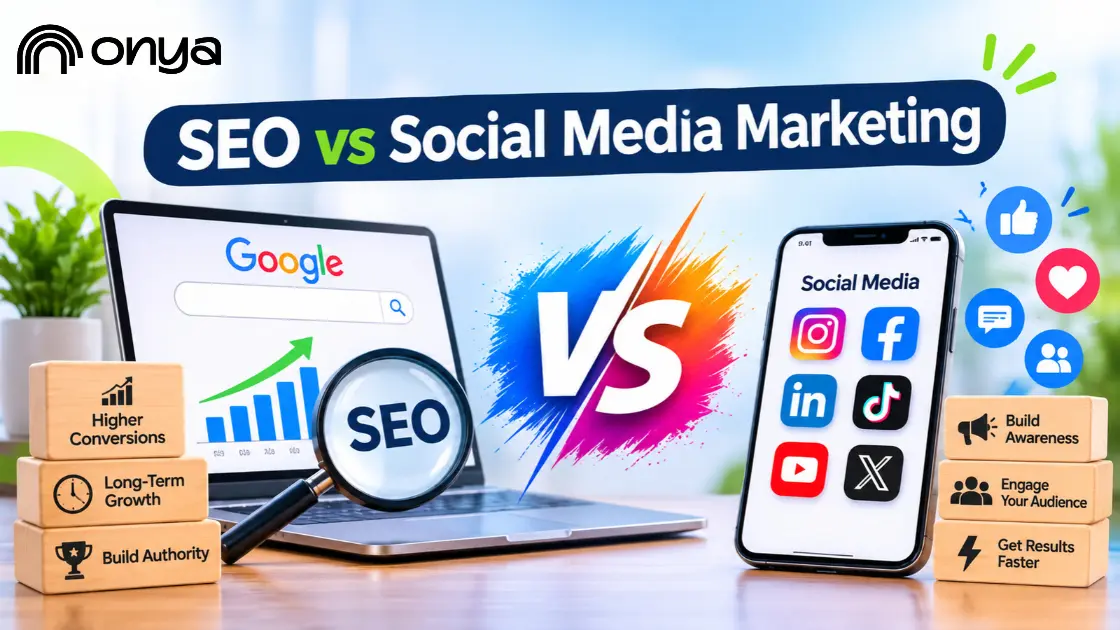
All marketing budgets ultimately end up with the same dilemma: whether to invest more in SEO to get better rankings or to focus on social media to create visibility and engagement. SEO has been the main driving force behind digital visibility for decades now. However, the dynamics are changing due to the increased amount of time that people are spending on social media platforms.
Both methods have proven to be effective. However, both involve a certain level of investment. This is the reason why decision-making becomes difficult for those who cannot invest fully in everything. The correct approach depends on the current needs of the business, and that is what this blog is all about. If you have been looking for an answer, this blog explains the differences between SEO vs. social media marketing and which one is the best alternative for most businesses.
Quick Answer: SEO or Social Media Marketing?
Both work, but not towards the same purpose. SEO creates high-converting traffic over time from those searching for a solution. Social media creates brand awareness and increases reach in a shorter time and sometimes brings leads and sales.
- SEO builds over time and creates high conversion
- Social media creates awareness and reach faster
- Combining both will get you the best results
Understanding SEO and Its Relevance in 2027
SEO, also known as Search Engine Optimization, is the process of improving website visibility on search engines like Google. To rank, it requires efforts such as keyword targeting, backlinking, quality content, and much more in order to make a website appear higher in the SERPs.
If you're asking whether SEO is still relevant, the answer is yes, but it's not the same as it was five years ago.
Keywords, backlinks, and quality content are what continue to attract the majority of the traffic to any website. The difference is that while search engines used to rank the content, artificial intelligence such as ChatGPT and Google AI Overviews analyze the content and pick quotes from it.
Here’s how the traditional vs. latest SEO differs.
Traditional SEO builds the foundation. AI search optimization builds on top of it. Skipping either one means missing out on a growing part of how people find information today. Businesses looking to strengthen that second layer can start with our guide on improving brand visibility in AI search engines.
Understanding Social Media Marketing and Its Importance in 2027
Social Media Marketing involves the practice of the brand through content, paid ads, partnerships, and community engagement on platforms like Instagram, LinkedIn, Facebook, and TikTok. It helps build brand awareness comparatively quickly than SEO while engaging with the target audience and also driving traffic and sales.
Social media is not only about visibility. It is where customers make their purchasing decisions. Companies that leverage it effectively have two times more leads than those that do not use it.
How does it work?
- 66% of marketers consider lead generation as one of the benefits of social media
- Short-form video posts like Reels attract new customers without spending a penny on ads
- Paid campaigns bring precision and scale, which cannot be obtained through organic content
Different platforms reward different approaches. Learn more by reading our article on Instagram Reels for business success, which explains how to leverage organic videos to the fullest extent possible, and our profitable paid social media strategy, which explains how to build your paid campaigns.
Comparing Organic SEO vs. Social Media Marketing
The numbers make the trade-off clear. SEO costs more time upfront. But it helps produce leads that actually convert at a significant higher rate and keep working longer after the initial efforts. Social media moves faster. It helps build awareness pretty fast, but that visibility fades the moment the content or ad spend stops.
SEO vs. Social Media Marketing: Which Delivers Better ROI?
While it is true that SEO takes time and pays off with patience, social media takes less time but requires creativity. What is more important to understand is that both channels do not compete for the same kind of ROI.
Where SEO Delivers
SEO brings ROI through search intent and sustainability. SEO attracts people who are looking for a solution and therefore have a high conversion rate, even higher than most other marketing channels. A well-ranked website will also continue to attract traffic and leads year after year without much additional effort.
Where Social Media Delivers
Social media brings ROI through speed and reach. Social media places a brand in front of a large audience very quickly, long before SEO starts showing its results. Social media generates an ROI of $5.20 per dollar invested organically, which makes it very cost-effective even with a lower conversion rate.
Why the Best Strategy Often Combines Both
Considering SEO and social media as conflicting strategies means overlooking the way people choose what to buy today. A user comes across a brand on Instagram, follows it for a couple of weeks, and then decides to look for the company on Google to make the purchase. Social media gets the person on the journey. SEO captured it at the finish line while building trust and credibility.
Here are a few reasons why it works better together than using each strategy separately:
- Social media generates awareness before SEO has something to capitalize on, which is especially important for smaller companies struggling with visibility for small online businesses
- SEO captures the demand generated by social media, catching up with people when they search with intention, although without an optimized website, it will be just website traffic, not leads
- Both channels cover the weak spot of another channel. SEO fails to catch people who didn't start searching yet, while social media fails to attract people who are actively searching for a solution
Companies asking themselves why their website is not generating leads often discover that the real gap is much earlier in the sales funnel, in the channel that was supposed to bring the right people there.
Conclusion
SEO and social media marketing do not compete against each other for the same budget line. They address different problems at different stages of the buying process, and the companies that get the best results are those using both tools with purpose rather than relying on one and hoping it will do the job.
Before allocating additional resources into either of these channels, it is important to have a clear understanding of whom these resources will benefit. The guide on how to find your target audience can be the next step in ensuring that every single dollar invested in SEO or social media marketing reaches the most suitable prospects.
Ready to Build a Strategy That Actually Works Together?
At Onya, we build SEO and social media strategies that complement each other instead of competing for attention. If you’re trying to figure out where your marketing budget should go, let’s talk and build a plan around what your business actually needs right now.
Frequently Asked Questions (FAQs)
Can social media marketing replace SEO?
No. Social media builds fast visibility, but SEO captures people actively searching with intent. The two solve different problems.
How long does SEO take to show results compared to social media?
SEO typically takes 6 to 12 months to build momentum, while social media can produce visibility within days.
Does social media activity affect SEO rankings?
Social media engagement does not directly boost Google rankings, but it drives traffic, backlinks, and brand searches that support SEO indirectly.
Which platform should I start with if I can only choose one?
Start with social media for faster visibility, or SEO if you want long-term, higher-converting traffic that compounds over time.
How do I measure ROI for SEO versus social media?
Track SEO through organic traffic, rankings, and conversion rate. Track social media through engagement, reach, and cost per lead from paid campaigns.