Expert insights on digital advertising, strategy, and growth
Marketing Insights
September 17, 2026
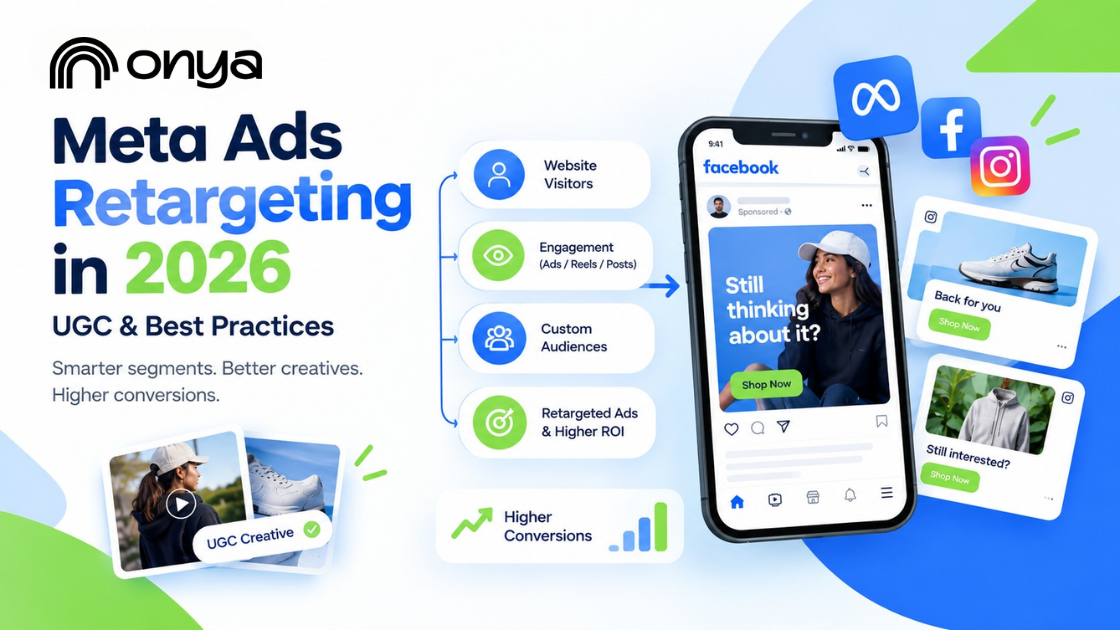
How to optimize UGC for meta ads retargeting 2026?
Meta's ad delivery system now treats creative as a relevance signal, not just the audience behind it. A repeated, generic ad loses ground even when the targeting is accurate, because the platform rewards ads that actually resolve something for the specific person seeing them. That's a meaningful shift from how retargeting used to work, and most campaigns haven't caught up to it yet.
At Onya, we manage Meta retargeting across higher education, healthcare, and business clients, and the gap we see most often isn't a budget problem or a platform problem. It's a strategy problem. The same ad running to every past visitor, with no consideration for where that person actually stopped engaging, is where most retargeting spend goes quiet.
This post breaks down what makes Meta ads retargeting work in 2026, from how to segment your audiences correctly to which creative approach fits which stage of the funnel and how to read your results honestly.
Why the Same Retargeting Ad Twice Doesn't Work Anymore
Meta's delivery system reads fatigue in real time. Run the same creative to the same person too many times, and the platform doesn't just get less effective; it actively deprioritizes the ad. Costs climb. Relevance drops. You end up paying more to reach people who already told you, by not converting, that the first version didn't land.
A few signs this is happening in your account:
Frequency is past 4-5x with no lift in clicks or conversions.
CPMs are creeping up on an audience that hasn't grown.
The same creative has run 30+ days with no rotation.
One ad is going to everyone who visited, regardless of how far they got.
None of this means Meta ad retargeting stopped working. It simply means the strategy behind it hasn't kept up. Retargeting still earns its spot in the funnel — but only when the creative and audience logic change with the person seeing it, not when an ad gets built once and left to run.
How Retargeting with Facebook Ads Works
Meta ad retargeting relies on one core piece of infrastructure: the Meta Pixel, a snippet of code on your website that tracks visitor activity and reports it back to Meta. Without it, you can't build an audience from your website activity.
Here's the sequence:
Someone visits your site or engages on Facebook or Instagram.
The Pixel logs that action and sends it to Meta.
Meta matches it to a user profile.
Your campaign serves ads to that person next time they're in-feed.
Pixel-only setups are common but increasingly incomplete. Browser blockers and iOS privacy settings mean a chunk of signal never makes it through. Pairing the pixel with the Conversions API closes that gap, since server-side data doesn't rely on the visitor's browser cooperating.
If you're still deciding where to put ad spend in the first place, this breakdown of Google Ads vs Meta Ads covers how the two platforms differ.
How Retargeting Instagram Ads Works
Instagram retargeting uses engagement and website activity to reconnect with people who have already interacted with your brand. Instead of relying only on broad audience targeting, you can build audiences from actions people take across Instagram, Facebook, and your website.
Here’s the basic sequence:
Someone watches your Reel, interacts with a post, visits your profile, or lands on your website.
Meta receives signals from that interaction through its platform and tracking tools.
Those signals can be used to create or update a retargeting audience.
Your Instagram campaign then delivers relevant ads to people who match your audience criteria.
For example, someone might watch a large portion of a product Reel but leave without visiting your website. You can create an audience around that type of engagement and show them a follow-up ad with more product information or a different creative.
Website visitors can also be retargeted on Instagram when the appropriate Meta tracking and audience setup is in place. The Meta Pixel can send website events to Meta, while the Conversions API can complement browser-based tracking with server-side event data.
The key is to treat Instagram retargeting as a continuation of the customer's first interaction, not simply another opportunity to display the same ad. Someone who watched a Reel, visited a product page, or abandoned a cart may need a different message at each stage.
That makes audience segmentation and creative rotation just as important as the retargeting campaign itself.
Build Retargeting Audiences Around Behavior, Not Channel
Most accounts build one audience: everyone who visited in the last 30 days. That treats a person who reads one page the same as someone who almost converted, and they need completely different ads. Group your audiences by what the person actually did, not which channel they came from:
Engagement-based — visited your site or watched most of a video, but took no further action. They know you exist; they're not sold yet.
Intent-based — started something and didn't finish: an abandoned cart, an unfinished application. This is your highest-intent group; they've told you exactly what they want.
Relationship-based — people you already have data on, email lists, and past customers. Worth prioritizing since first-party data holds up better as tracking degrades, part of why retargeting still earns its place in 2026.
Each group stalled for a different reason, so each needs a different message. That's what makes the next step, matching UGC retargeting ads to the right hook, actually work.
Match the Hook to the Reason They Stalled
The product doesn't need three versions. The first three seconds do. Someone who barely looked needs a different opener than someone who almost bought, and matching that opener to the actual hesitation is what separates UGC that converts from UGC that just adds frequency.
Awareness Hook: For Visitors Who Left Too Early They saw the ad or landed on the site but never connected it to a problem they actually have. The fix isn't a better product shot; it's leading with the problem itself, in plain language, before the product ever shows up. If the hook doesn't name what they're struggling with, the product looks irrelevant no matter how good it is.
Proof Hook: For Visitors Who Hesitated Cart abandoners clicked, then talked themselves out of it. Usually it's one unanswered objection: will this actually work for someone like me? Answer it with something concrete, not a general claim:
A specific timeframe ("after two weeks")
A specific result, not a vague one
An unpolished, real moment over a staged one
Decision Hook: For Visitors Who Are Almost Ready This is someone deep in consideration, not a past buyer. They've viewed pricing, come back more than once, and maybe started a form or cart and stopped. They don't need convincing anymore; they need a reason to stop deliberating: a deadline, a guarantee, or a direct answer to what's still holding them back.
Rotate the opener before the offer. When frequency climbs and results dip, the hook usually goes stale first, not the product or the price.
Meta Ads Retargeting Best Practices: How Often to Refresh UGC Creative?
The same clip that converted well two weeks ago starts losing steam the moment your audience has seen it too many times, and leaving it running past that point burns the budget instead of saving it.
Watch performance, not the calendar. Two numbers tell you when it's time to replace a creative:
Frequency past roughly 3-5x with no lift in clicks or conversions
CTR declining on a specific asset, not just the campaign average
When both start moving the wrong way, replace the creative, usually every 2-3 weeks for an active retargeting segment, sooner for smaller audiences that see the same ad more often.
Refreshing doesn't always mean a full reshoot. Often the fastest fix is swapping the opening hook or format on existing footage. If you're running low on raw material to pull from, this breakdown of UGC content ideas is a good next stop before you schedule a new shoot.
Formatting UGC for Facebook and Instagram Retargeting
A strong hook still underperforms if the format looks like an ad instead of a Reel. A few non-negotiables for retargeting social media content on Facebook and Instagram:
A few things worth getting right:
Shoot vertical, 9:16, for Stories and Reels, where most retargeting inventory runs
Front-load the hook; the first two to three seconds decide whether someone stays.
Burn in captions, since most Feed and Stories viewing happens with sound off
Skip the polish; handheld framing and natural lighting read as authentic, which matters more with a warm audience than production value
Facebook and Instagram audiences don't always respond the same way. With retargeting Instagram ads, you'll often see more visual, lifestyle-driven clips perform best, campus life, and product-in-use moments.
When retargeting with Facebook ads, you're often reaching an older or more decision-adjacent audience, parents in a higher-ed context, for example, so slightly more direct, information-forward creative can perform better there. Running the same UGC on both, with small adjustments to pacing or caption tone, tends to outperform picking one platform and skipping the other.
These aren't universal retargeting ads best practices; they're specific to warm audiences who've already seen your brand once and are deciding whether the second look is worth their time.
Are Your UGC Retargeting Ads Actually Working?
Vanity metrics won't tell you if it's actually paying off. Check these at the individual-asset level, not the campaign average:
Frequency and CTR trend per asset — a declining CTR on one specific clip is your earliest fatigue signal, well before overall cost per result moves.
Cost per result by audience segment — lumping every stalled visitor into one report hides which segment is actually underperforming.
Performance by platform — retargeting with Facebook ads and retargeting Instagram ads rarely perform identically, so review them separately.
If none of this is tracked at that level, the honest answer is, "You don't know whether retargeting is working; you just know it's running.
This is usually where teams either build the reporting themselves or bring in someone who already has the system for it. At Onya, matching hooks to funnel stage, formatting for each platform, and reporting on individual assets isn't an add-on; it's the default way we run Meta ads retargeting for every client, higher education, ecommerce, or otherwise.
Conclusion
Retargeting on social media only works when the strategy behind it does. Segment audiences by behavior, match each hook to the reason someone stalled, and refresh creative before fatigue sets in — that's what separates UGC retargeting ads that convert from ones that just add frequency. This discipline applies whether you're running retargeting with Facebook ads, retargeting Instagram ads, or both at once.
Onya is a full-service digital marketing agency that builds this whole system: strategy, creative, platform-specific formatting, and asset-level reporting, not just the retargeting piece. If you want a team that follows retargeting ads best practices end to end, see what Onya can do for your business. Contact us now!
Frequently Asked Questions (FAQs)
What counts as UGC in a Meta retargeting ad? Content that looks like it's from a real person, not a brand. Think testimonials, honest reviews, or day-in-the-life clips.
How is retargeting different from a regular Meta ad? Regular ads target people who don't know you yet. Retargeting shows ads only to people who already visited or engaged with your brand.
Can the same UGC clip work on Facebook and Instagram? Yes, but results differ. Instagram favors lifestyle content, Facebook often does better with more direct messaging.
Do I need a big budget for UGC retargeting ads? No. Polished, expensive-looking ads often perform worse with a warm audience than something that looks real.
How do I know if my UGC creative needs to be replaced? Watch frequency and CTR on that specific ad. When frequency rises and CTR drops, it's time to swap it.
Top 4 Instagram Statistics To Remember Going Into 2023
Instagram is one of the best places to shop online. In fact, if your brand doesn’t have an Instagram account, you might be missing out on a lot (we’ve said it before and we’ll keep saying it). The app provides plenty of opportunities to reach your target audience and to scale your business, especially in this day and age. Here are the top 4 Instagram Statistics that tell us why you should be on the platform today and moving into the new year.
44% of people shop on Instagram weekly.
According to Hootsuite, Instagram dethroned Facebook in its advertising reach (increasing by 20.5% this year.) Plus, millions of people use the Instagram Shopping feature to scroll through catalogs and complete purchases, making it a top platform in the online shopping world.
50% of people use the app to discover new brands.
A lot of people use Instagram to look for new brands to follow because it’s a great source for the latest updates, information, promotions, and more from businesses. You can post anything on Instagram from a site-wide sale and fun memes to videos on tips and tricks that help people in their day-to-day lives. As a result, it’s become beneficial for people to follow brands on Instagram.
58% of people are more interested in brands after seeing their Instagram Stories.
You can never underestimate the power of a good Instagram Story. The feature launched in 2016 and has taken over the world by storm. It’s also been proven to work for brands because accounts that post stories are able to reach more people than those who don’t. Get on Instagram Story Advertising today in order to broaden your reach. It’s short, sweet, and unique to sharing all kinds of useful and engaging information.
90% of people on Instagram follow at least one business account.
Who doesn’t follow Lego to see their latest and greatest epic creations? Or Nike for the best discounts on their sportswear? Or how about sustainable clothing organizations that are seeking to make a real difference in the world? Everyone on Instagram will follow at least 1 brand because there’s so much to gain from doing so. It also gives you a more entertaining experience when you browse through your feed. After all, it’s no secret that sometimes brands will have more interesting content than your friends (hey, it’s no offense to them - the endless pictures of Fido just aren’t cutting it anymore).
So, if you run a business and aren’t on Instagram, 2023 is your year to make the jump! It’s full of possibilities and there’s simply so much you can gain from advertising on the app. Looking for more strategic ways to get going on Instagram? We’d love to talk. Reach out to Onya today!
You just wrote a great blog post. Perhaps your best ever. You posted it to your website and added the perfect photos and infographics. Now what? It’s time to learn how to promote your blog by building out a plan to share it on social media.
Promoting your blogs on social media through repurposing content takes just as much time (if not more) than writing the actual content. Fortunately, social media gives you an easy and creative outlet, and we’re here to help you with the strategy.
Include Link to Blog on All Social Media Profiles
The quickest and easiest way to promote your blog is by including the link in all of your social media profiles. You can either include the general URL or update it each time you publish a new post.
Art of Sharing Blog Content on Social Media
Sharing your blog content on social media isn’t a matter of dropping every new link online. It’s an art form that requires creativity, time and strategic planning. We promise the extra effort makes a big difference. Here are a few tips to get you started:
Sharing your blog content on social media isn’t a matter of dropping every new link online. It’s an art form that requires creativity, time and strategic planning. We promise the extra effort makes a big difference. Here are a few tips to get you started:
1. Appeal to the Visual Sense
It’s a proven fact that Tweets, Facebook posts and LinkedIn posts with photos get more engagement than those without. The newer social sites such as Instagram, Tik Tok and Pinterest are solely based on images, proof that people crave visual appeal. You’ve already taken the time to choose the perfect photos for your blog post, so be sure to use them in your social media posts as well. Also, consider creating a branded “feature” image (or several) for sharing purposes. Free tools such as Canva and PicMonkey can be helpful in doing this.
2. Use Engaging Language
Social media was created for people, not businesses. Therefore, you should always be striving to humanize your brand and have real conversations with your followers. Don’t just drop links, but rather inspire your audience to actually engage with you online. Post questions, ask for feedback, and respond to comments. The beauty of promoting your blog content on social media is that you’re simultaneously building your brand, enhancing your public relations and driving more people to your site.
3. Post Multiple Times on the Same Platform
Sharing the same content multiple times on one platform is a challenging task, but one we totally recommend trying. The new Facebook and Instagram algorithms specifically make it even more difficult to get new content in front of your audience. If you do it strategically, chances are nobody will even notice what you’re up to. Use engaging language and never post the exact same message on social media twice. Mix up your headlines and customize your posts depending on which platform you’re using.
4. Don’t Settle for One Headline
Yes, we know headline writing is the hardest part of blog writing. And yes, we’re telling you to challenge yourself to write more than one headline for each new piece of content. This is especially important if you’re following the tip above and posting the same content multiple times on each platform. For the purpose of SEO, the title of your blog should be straightforward and keyword based. But for the purpose of social media, the title of your blog should be creative and attention-grabbing.
Customizing Your Social Media Posts
Each of your social media platforms have a life of their own, and should be treated as so. When you’re publishing new content online, it’s essential to customize your posts. Here are the nitty gritty details:
Facebook
Remember when we told you to humanize your brand? Facebook is the perfect place to do just that. The Facebook algorithm favors storytelling, so steer clear of using promotional language. You have unlimited characters to share your story, so we recommend including the first few lines of your post, giving some background, or asking your readers a question. And don’t forget to include that visual appeal.
Twitter
Twitter is the perfect place to tease your audience with a snappy headline, interesting image and a link to your new blog content. These types of tweets will first serve as an RSS feed, informing new followers that you have a blog and existing followers that there’s new content to be read. Tweeting your own content also positions you as a thought leader with expertise in your specific field, as opposed to retweeting other thought leaders. Be sure to strategically include hashtags, @mentions and photos/videos to get your content noticed by those who are genuinely interested.
LinkedIn
LinkedIn has its own publishing platform, so we don’t recommend copying and pasting your blog content on LinkedIn. After all, you want people to be visiting your site for new content! Instead, if you’re looking for how to promote your blog, find relevant LinkedIn groups and join their discussion. Be cautious of sounding too spammy by adding your links every time you post but instead contribute your knowledge in an authentic way. Answer questions, provide resources and position yourself as a thought leader. This tactic takes more time, but you are guaranteed to get your brand in front of people who are genuinely interested in your product or service.
Pinterest
Although Pinterest mainly focuses on images, it’s one of the quickest and easiest ways to promote new blog content. When you add a new post, think of each Pin as a header image for your blog, teasing the written content behind the image. Pinterest is also great for organizing your content into themes with the use of personalized Pin Boards.
Instagram
Instagram is the trickiest when promoting content because your profile is the only place you can include a direct link. We recommend trying it out by ‘gramming a relevant photo and posting about your new content in the caption. The key is to add the phrase “link in profile” at the end of your post, so your followers know where to find your blog. You can then edit your profile link to reflect your new blog posts. Instagram can be a good tool for letting your followers know you have a blog, and we recommend testing it out a few times and seeing how your audience responds.
Be in the know with the most useful pieces of information in marketing. Make sure to subscribe to our weekly emails to be the first to know.
TikTok is the hottest new social media platform. But what does it actually do? You’re probably thinking it’s just some lip-syncing video app for teens. Although younger generations are gaining a stronger foothold in the economy, they are notoriously difficult to market to. However, TikTok provides the crucial first step into marketing to Gen Z.
Described as a mashup of Vine, Twitter and Instagram, TikTok provides an entertaining and relaxed platform where you can highlight a less curated version of your brand.
Why Now?
Only 3.1% of working professionals aged 16 to 64 say that their companies use TikTok for marketing activities (Hootsuite Digital 2022).
The potential audience aged 18+ that marketers can reach with ads on TikTok amounts to 19.4% of total internet users – suggesting there is untapped potential (Hootsuite Digital 2022):
It’s not as over-saturated as Facebook, Instagram, or YouTube
It’s cheaper to advertise on as there isn’t a strong influencer community yet; there are far fewer users competing for sponsorship and ad placements
With a predominantly youthful demographic, TikTok will help you create meaningful connections and interactions with Gen Z
Where Do I Start?
You need to understand how the app works. Generally, there are two main areas, the “For You Page”, and the “Following” page.
For You Page
You’ll find some of the most popular videos on the “For You Page”. At first, the app will show you all genres of popular content. Once you begin engaging with videos through “liking” and “sharing”, the TikTok algorithms will streamline your interests.
Consumers don’t need to be following anyone to have a positive user experience, making it an attractive marketing tool. Businesses have the capability to reach their target markets better than ever before.
Following Page
The “following” tab will show the most up-to-date content from the pages you follow – this usually depends on your interests.
So, What’s the Key to Success in TikTok?
Successful brands are taking the same approach as social media users. Create content that reveals your brand’s true personality. The more fun you have with it and the more relaxed the content is, the more likely users are to feel connected to your brand. This connection is one of the only ways to establish trust between the products or services sold and the consumer.
Here are three key strategies:
Challenges
Influencers
Advertising
TikTok Challenges
TikTok is known for its incredible reach and the ability to go viral overnight. So why not create or sponsor a TikTok challenge?
Challenges are the bread-and-butter of TikTok. They have extreme viral potential. So long as they are easy to replicate and intriguing enough for the audience to want to participate.
Do your research
Create a hashtag worth sharing
Don’t lose sight of your brand
It must be memorable
Choose an appropriate audio
Establish clear rules and guidelines
Promote your challenge
Brands can create a community around a branded hashtag. When a user clicks on the sponsored hashtag, it leads to the hashtag challenge page. The hashtag challenge page features the brand logo, challenge description, sponsorship disclaimer and the ability to link to the company’s website or shoppable landing page.
GUESS sponsored the #InMyDenim challenge. They gathered more than 5,500 user-generated videos, a 14.3% engagement rate, 53.5 million video views, and more than 12,000 new followers for their TikTok profile.
Influencer Created Content
You’ve seen how successful influencer marketing can be on other social media platforms. Why not carry this strategy across to TikTok?
Businesses can pay TikTok influencers to:
Talk about your product in a TikTok video
Post about it in the video description
Link to your brand in the description
Businesses do not need to collaborate with big-name TikTok users to be successful. Instead, you can work with various users within your niche market or followers who frequently comment and engage with your brand posts.
Advertisements
TikTok has launched its very own advertising platform, ‘TikTok for Business’, making it that much easier to track your brand metrics.
Businesses can now also pay to have their ads shown to TikTok users:
TopView: Ads can be the very first thing users see when opening the TikTok app.
Infeed Videos: Ads can pop up in between user content.
Brand Takeovers: By creating images, GIFS and videos that link to your webpages or challenges, ads have the capability to take over TikTok for the day.
Wrapping Up Our TikTok Guide
Marketing to younger generations may be difficult, but it is not impossible. TikTok offers an avenue for businesses to engage with the Gen Z market, by playing by their rules and remaining authentic to the brand. Ultimately, this is no easy feat, which is why our TikTok guide into 2023 is so timely.
If you have any questions, want to learn more, or are interested in our social media strategy services, we’ve got you covered. Give Onya a call today to learn more!
Has your email marketing felt a bit static lately? Is your readership open rate or click-through rate declining? Perhaps content seems to be lacking or ideas just aren’t flowing like they once were. For us here at Onya, let us reassure you by saying: we’ve been there.
If you’re putting minimal effort into your email campaigns, it may be time to take a step back and consider email marketing best practices. Email marketing is important because it is a key way to connect with current and potential clients. In fact, email is also 40 times more effective at acquiring new customers than Facebook or Twitter. For ten years in a row, email is the channel generating the highest ROI for marketers. For every $1 spent, email marketing generates $38 in ROI. When you want to grow your business, acquire new customers, launch a new product, or offer a promotion, you turn to email because they are interested audiences who want to hear more.
So how do you start to refresh and grab your audience’s attention once again? Listed below are some helpful suggestions to get the juices flowing and, more importantly, increase the response from your audiences.
Reduce Massive Amounts of Text
Nobody wants to wade through large amounts of text, especially in an email. The majority of people will be reading on their mobile devices and will quickly lose interest if a 25-minute read is required. It can also be difficult to read long paragraphs on your phone so breaking things up into digestible bits will greatly enhance the user experience. Not to mention, your reader’s time is valuable, and they know that. Respect their time, and yours, by getting to the point, and quickly.
Use Responsive, Visually Appealing Layouts
Ever get an email and think, “Man, this looks so bad. Not worth my time”. Or better yet, “This email is amazing! You’ve got my attention”. Design and layout play a big role in making sure audiences see what they need to see. Email marketing services have all kinds of email templates to choose from. Be sure to scroll through their options when you’re in need of design inspiration. Using your own branding, create 2-3 templates that can be used on a consistent basis. When the time comes to send an email, it’s easier to build when you only have to swap out content and images. Remember that the type of content being shared will dictate the best layout (i.e. if you have a video, make sure the video image is embedded and towards the top of the email).
Practice Good Communication
You don’t need to be an English major to send effective messages, but you do need to practice writing clearly and concisely. When writing for consumers, you’re writing for a population with an attention span that’s less than 8 seconds. Some helpful tips for effective messaging include:
Personalizing the subject line - The subject line is your first impression and invitation to present more information. By including personalized elements like a person’s name, you can boost open rates by 50%.
Avoiding Spam-Heavy Words - You might be offering “luxury” experiences or giving something away for “free” but your subject line is not the place to mention it. Make it evident that your content is meaningful and that you’re not here to waste time. Here are 100+ words to also be wary of when developing email content.
Keep It Short - As mentioned above, the longer you ramble on, the more likely readers are to bail and move to the next email. The general rule of thumb is to present the problem, present your solution, and give them something to do about it. While you might not have an actual problem at hand, it's helpful to ask the question, give a response, and give them options.
Try Fun and Unique Topics
Not all emails have to be a sales push. In fact, the more interesting content you share with audiences, the more likely they’ll be to engage with your company. Here are some helpful topics and styles to consider:
Surveys - This can be as simple as posing the question: What problem can I help you solve? There are a host of options to choose from and an easy way to gain feedback quickly.
Devotionals - These are short, contemplative, and inspiring pieces to encourage your readers when they first open their email. It gives them a pause to breathe and reflect before diving into their work.
Podcast and/or Video Highlights - Content isn’t and shouldn’t always be text. Give them links to listen to your latest discussion with the local mayor or invite them to watch a video on how to change a tire. Get them active by providing varying sets of content.
Tips & Tricks/Professional Development - How to’s and professional development emails are resources that audiences can always refer back to. Give them sound bites of your top 5 keys to success or links to the best resources like training new hires.
Behind the Scenes - For those who are actively involved and like working with your company, a behind-the-scenes look is always intriguing. Give them the inside scoop and provide pictures or links to a blog detailing the keys to your success.
List Maintenance - This might seem like more of an obligatory task but in reality, it’s always good to check in with subscribers who haven’t responded in some time to find out if they still want to be on the list. You might also consider polling them to find out how you can better serve their interests or reduce frequency.
Segment Your Audience Lists
If you want to ensure you’re only sending relevant content, segmentation is key. Once a user has signed up or purchased a product, you can ask them to choose their preferences by asking what interests them and what kind of content they’d like to continue to receive. Segmented email campaigns have been shown to drive a 760% increase in revenue, giving plenty of reason to consider adding this as a tactic.
Review and Iterate
One of the greatest tools in verifying your email marketing is on target is the back-end analytics. While open rate can be telling, what’s more intriguing is the click-through rate. When testing new email formats or content types, watch to see if people are engaging the way you thought they would. If you included a video, are they watching it? If you shared an interactive poll, are they taking part? For other email templates, the look and feel might also generate more interest. Test and study 1-3 month’s worth of email campaigns and see which ones had the highest engagement. From there, it’s a matter of tweaking and iterating for maximum effectiveness.
Troubleshooting and improving your email marketing can really pay off in the long run. One business boosted its click rate by 842%, getting more leads and sales as a result. Here at Onya, we’re always looking for new ways to get in touch and share ways in which email marketing has become one of the best ways to engage with those around us. Connect with us to learn more.
How to Find Your Digital Marketing Soulmate: A Guide to Choosing the Perfect Agency
Ok, so, you've decided it's time to take your digital marketing game to the next level and partner with an agency. Smart move! But with approximately a gazillion agencies out there, how do you find the one that's right for you? Don't worry, we've got your back. As a digital marketing agency ourselves, we're spilling the tea on how to find your perfect match. Let's dive in!
Know Thyself (and Thy Goals)
Before you start swiping right on agencies, take a good hard look in the mirror. What are your business goals? Are you looking to boost brand awareness, generate leads, increase sales, or all of the above? Having a clear idea of what you want to achieve will help you find an agency that aligns with your objectives.
Pro tip: Write down your top three marketing goals. This will be your north star when evaluating potential agencies.
Do Your Homework (But Make It Fun)
Research doesn't have to be a snooze-fest. Start by checking out agency websites and social media profiles. Are they practicing what they preach? If an agency claims to be a social media guru but their last tweet was from 2019, that's a red flag bigger than the one in a bull-fighting arena.
Also, don't be shy about asking for case studies or examples of their work. It's like checking out someone's dating profile – you want to see the goods before you commit.
Look for Chemistry (The Professional Kind)
Just like in dating, chemistry matters in business relationships too. When you're chatting with potential agencies, pay attention to how they communicate. Do they speak your language, or are they drowning you in jargon? A good agency should be able to explain complex concepts in a way that doesn't make your head spin.
Check Their Street Cred
In the world of digital marketing, reputation is everything. Check out online reviews and testimonials, but don't stop there. Ask the agency for references and actually call them. It's like getting the inside scoop from your potential date's ex – sometimes uncomfortable, but often enlightening.
Size Matters (Sometimes)
When it comes to agencies, bigger isn't always better. A large agency might have more resources, but a smaller one might offer more personalized attention. Think about what's important to you. Do you want to be a big fish in a small pond, or are you cool with being one of many clients?
Show Me the Money (Talk)
Let's talk turkey – or in this case, budgets. Be upfront about what you can spend. A good agency will be transparent about their pricing and what you can expect for your investment. If an agency is being cagey about costs, that's a red flag. Remember, the cheapest option isn't always the best, but you shouldn't have to sell a kidney to afford good marketing either.
Jack of All Trades or Master of One?
Some agencies are like Swiss Army knives – they do a bit of everything. Others specialize in specific areas like SEO, social media, or content marketing. Decide whether you want a one-stop shop or a specialist. There's no right or wrong answer, it just depends on your needs.
Tech Talk
In today's digital world, the tools an agency uses can make or break your campaigns. Ask about their tech stack. Are they using cutting-edge tools, or are they still relying on spreadsheets and guesswork? A good agency should be able to explain how their technology will benefit your business without making you feel like you're in a sci-fi movie.
The Culture Club
Company culture isn't just for internal teams – it matters in agency partnerships too. Look for an agency whose values align with yours. If you're all about innovation and risk-taking, an agency with a more conservative approach might not be the best fit.
The Commitment Question
Before you put a ring on it (or in this case, sign a contract), make sure you're on the same page about commitment. Some agencies require long-term contracts, while others offer more flexibility. Think about what works best for you and your business.
The Proof is in the Pudding (or the KPIs)
How does the agency measure success? They should be able to clearly explain their reporting process and the key performance indicators (KPIs) they track. If they can't tell you how they'll prove their worth, it might be time to swipe left.
The Secret Sauce
Every agency has its own unique approach or methodology. Ask them what sets them apart from the competition. If their answer is "We're the best!" without any substance to back it up, that's about as red as flags come.
The Future's So Bright, You Gotta Wear Shades
We say it all the time, digital marketing is evolving. A forward-thinking agency should be able to talk about emerging trends and how they're preparing for the future. If they're still hung up on strategies from five years ago, they might not be the best partner for long-term success.
The Human Touch
At the end of the day, you're not just hiring an agency – you're partnering with people. Make sure you actually like the folks you'll be working with. You don't need to become BFFs, but a good working relationship can make all the difference.
Trust Your Gut
After you've done all your research, checked references, and asked all the right questions, don't forget to listen to your instincts. If something feels off, it probably is.
The Bottom Line
Finding the perfect digital marketing agency is a bit like finding your soulmate. It takes time, effort, and sometimes a few false starts. But when you find the right match, it can be transformative for your business.
Remember, a great agency should feel like an extension of your team. They should be passionate about your success, bring fresh ideas to the table, and have the skills and experience to back up their talk.
So, are you ready to start your search for "the one"? Armed with these tips, you're well on your way to finding your perfect digital marketing match. And hey, if you're feeling a spark with us after reading this, we're always up for a first date (aka a consultation). No pressure though – we believe in playing it cool. Happy agency hunting, and may the digital marketing odds be ever in your favor!
Onya September 2024 Email #3 - Why Hiring a Digital Marketing Agency Matters to Your Success
We know you're always looking for ways to take your organization to the next level. Well, buckle up, because we're about to dive into why partnering with a digital marketing agency might just be the secret sauce you've been missing.
Let's face it: Staying up to date with the online world is a wild ride. Keeping up with the latest trends, tools, and tactics can feel like a full-time job in itself. That's where we come in. As a digital marketing agency, we eat, sleep, and breathe this stuff, so you don't have to.
But why does hiring an agency like ours matter so much for your success? Let's break it down.
We're the Swiss Army Knife of Marketing
Think of us as your one-stop shop for all things digital marketing. Want to dominate social media? That's our jam. Looking to climb the Google rankings? We're basically mountain climbers in the SEO world.
By hiring an agency, you're not just getting one person's expertise – you're tapping into a whole team of specialists. We've got content creators, SEO wizards, PPC gurus, social media mavens, and data analysts all under one roof. It's like assembling the Avengers of marketing, minus the capes (although we're totally open to the idea).
We Keep You Ahead of the Curve
Remember when everyone thought TikTok was just for dancing teens? Yeah, we were already helping businesses crush it on the platform while others were still figuring out how to do the Renegade.
The digital world moves at lightning speed, and staying ahead of trends can make or break your marketing efforts. A study by Gartner found that 63% of marketing leaders struggle to keep pace with changes in the digital landscape. That's where we come in. We're constantly learning, adapting, and experimenting with new strategies so you don't have to.
We Save You Time (and Sanity)
Let's be real: you've got a business to run. Do you really have time to learn the ins and outs of Facebook's ad manager, master the art of email marketing, and keep up with Google's ever-changing algorithm? Didn't think so.
By outsourcing your digital marketing to us, you're freeing up valuable time to focus on what you do best – running your business. And trust us, your sanity will thank you.
We Bring Fresh Perspectives
When you're deeply involved in your business day in and day out, it can be hard to see the forest for the trees. We bring an outside perspective that can spark new ideas and approaches you might not have considered.
Plus, we work with clients across various industries, which means we can often apply successful strategies from one sector to another in innovative ways. It's like cross-pollination, but for marketing ideas.
We're Data Nerds (and Proud of It)
In the world of digital marketing, data is king. We don't just throw spaghetti at the wall and see what sticks. We use advanced analytics tools to track, measure, and optimize every aspect of your campaigns.
According to a report by Forrester, companies that are insights-driven are 2.8 times more likely to report double-digit year-over-year growth. We're not just guessing what works – we're using cold, hard data to drive results.
We Scale With You
Whether you're a scrappy startup or a Fortune 500 company, we can tailor our services to fit your needs and budget. As your organization grows, we can scale our efforts accordingly. It's like having a marketing department that expands and contracts to fit your needs perfectly.
We Keep You Consistent Across Channels
Consistency is key. Your brand needs to present a unified message whether someone's encountering you on Instagram, Google, or your website. We ensure that your brand voice, visuals, and messaging are cohesive across all platforms, creating a seamless experience for your audience.
We're Cost-Effective (No, Really!)
Now, we know what you're thinking: "Hiring an agency sounds expensive!" But hear us out. When you factor in the costs of hiring full-time employees (salaries, benefits, training) and investing in various marketing tools and technologies, working with an agency often comes out as the more cost-effective option.
Plus, Content Marketing Institute found that content marketing (one of our specialties) generates three times as many leads as traditional outbound marketing but costs 62% less. Talk about bang for your buck!
We're Always Learning and Improving
The digital marketing landscape is always evolving, and so are we. We invest heavily in ongoing training and education for our team. When you hire us, you're not just getting our current knowledge – you're benefiting from our commitment to staying at the cutting edge of our field.
We're Accountable
Unlike that gym membership you swore you'd use more often, we actually deliver on our promises. We set clear, measurable goals and provide regular reports on our progress. If something's not working, we pivot and try new approaches until we find what does.
We stand behind these ten rock-solid reasons why hiring a digital marketing agency like ours can be a game-changer for your organization's success. We're not just here to boost your likes or clicks (although we're pretty good at that too). We're here to be your strategic partner, helping you navigate the complex digital landscape and achieve real, measurable business results.
Ready to take your digital marketing to the next level? Let's chat. We promise we won't make you do any TikTok dances... unless you want to, of course.
Onya September 2024 Email #2 - How To Set Clear Goals for Successful Marketing Partnerships
Working together with a strong Marketing Agency can be a powerful way to expand your reach, tap into new audiences, and achieve objectives in ways you never before imagined (we can speak to it well!). However, the success of these Marketing Partnerships hinges on setting clear, well-defined goals from the outset.
This blog below will guide you through the process of establishing effective goals for your marketing partnerships, ensuring both organization and marketing agency are aligned and working towards mutual success.
Start with Your Overall Business Objectives
Before diving into specific partnership goals, it's important to have a solid understanding of your broader business objectives. Ask yourself:
What are your organization’s primary goals for the year?
How does this partnership fit into your overall marketing strategy?
What specific areas of your organization do you want to improve through this collaboration?
By aligning your partnership goals with your overarching organizational objectives, you ensure that the collaboration contributes meaningfully to your growth and success.
Define Specific, Measurable Goals
Once you've established how the partnership fits into your broader strategy, it's time to define specific goals. The key here is to make these goals SMART: Specific, Measurable, Achievable, Relevant, and Time-bound. Some examples might include:
Increase website traffic by 25% within six months
Generate 500 qualified leads within the first quarter of the partnership
Boost social media engagement rates by 15% across all platforms in three months
Achieve a 10% increase in sales of a specific product line within one year
By setting concrete, measurable goals, you create a clear roadmap for success and make it easier to track progress throughout the partnership.
Consider Both Quantitative and Qualitative Objectives
While quantitative goals are essential for measuring success, don't overlook the importance of qualitative objectives. These might include:
Enhancing brand perception in a specific market segment
Improving customer satisfaction scores
Strengthening your position as a thought leader in your industry
Balancing quantitative and qualitative goals provides a more holistic view of the partnership's impact on your organization.
Establish Key Performance Indicators (KPIs)
For each goal you set, determine the key performance indicators (KPIs) you'll use to measure progress. These might include:
Website traffic metrics (unique visitors, page views, time on site)
Lead generation numbers and conversion rates
Social media engagement metrics (likes, shares, comments)
Sales figures and revenue growth
Customer satisfaction scores or Net Promoter Score (NPS)
By clearly defining your KPIs, you create a shared language for assessing the partnership's performance and make it easier to identify areas for improvement.
Ensure Mutual Benefit
A successful marketing partnership should benefit both parties. When setting goals, consider your partner's objectives and how they align with your own. Look for areas of overlap where you can create win-win situations. This might involve:
Co-creating content that showcases both brands' expertise
Developing joint promotional campaigns that drive traffic and leads for both groups
Sharing data and insights to improve targeting and personalization efforts
By focusing on mutual benefits, you foster a stronger, more collaborative relationship with your partner.
Set Realistic Timelines
When establishing goals, be sure to set realistic timelines for achievement. Consider factors such as:
The length of the partnership agreement
Seasonal fluctuations in your industry
The time required to implement new strategies or technologies (work with your Marketing Agency and ask what timelines look like for others)
Setting achievable timelines helps maintain motivation and prevents frustration if results don't materialize as quickly as hoped.
Plan for Regular Check-ins and Adjustments
Goal-setting isn't a one-time activity. Plan for regular check-ins with your partner to review progress, discuss challenges, and make necessary adjustments. This might involve:
Monthly performance reviews
Quarterly strategy sessions
Annual goal-setting meetings
By maintaining open lines of communication and being willing to adapt your goals as circumstances change, you increase the likelihood of long-term success.
Document and Communicate Goals Clearly
Once you've established your goals, document them clearly and share them with all stakeholders involved in the partnership. This includes:
Creating a formal partnership agreement that outlines goals and expectations
Developing a shared dashboard for tracking KPIs and progress
Establishing clear roles and responsibilities for achieving each goal
Clear documentation and communication ensure that everyone is on the same page and working towards the same objectives.
Setting clear (and meaningful) goals is the foundation of any successful marketing partnership. By aligning your objectives with overall organizational strategy, defining specific and measurable targets, considering both quantitative and qualitative goals, establishing clear KPIs, ensuring mutual benefit, setting realistic timelines, planning for regular check-ins, and documenting everything clearly, you set the stage for a productive and rewarding collaboration.
The key to successful goal-setting is flexibility and open communication. As your partnership, but really, long-term friendship evolves, be prepared to revisit and refine your goals to ensure they continue to drive meaningful results for both parties. With clear, well-defined goals in place, you will be well-positioned to deliver significant value and thrive online!
Onya September 2024 Email #1 - 5 Questions to Ask Before Hiring an Agency
As many organizations are discovering, partnering with the right marketing agency can be a game-changer! However, with countless agencies vying for your attention, how do you separate the wheat from the chaff? Before you sign on the dotted line, it's crucial to ask the right questions to ensure you're making an informed decision.
Here are five essential questions to ask before hiring an agency:
#1 What's your track record with businesses in my industry?
Experience matters, especially when it comes to your specific industry. While a marketing agency might boast impressive results, it's important to determine whether they have relevant experience in your particular field.
Ask for case studies or examples of work they've done for organizations similar to yours. This will give you insight into their understanding of your industry's unique challenges and opportunities. An agency with a proven track record in your sector is more likely to hit the ground running and deliver results faster.
Don't be afraid to also ask for references from current or past clients in your industry. Speaking directly with these references can provide valuable insights into the agency's strengths, weaknesses, and overall performance.
#2 How do you measure success and report on results?
A reputable agency should have a clear and transparent approach to measuring and reporting on the success of their campaigns.
Ask about their key performance indicators (KPIs) and how they align with your goals. Do they focus solely on vanity metrics like likes and followers, or do they dig deeper into metrics that truly impact your bottom line, such as conversions, lead quality, and return on investment (ROI)?
Inquire about their reporting process. How often will you receive reports, and in what format? Will you have access to real-time data through a dashboard? Understanding how the agency communicates results will help you gauge their commitment to transparency and accountability.
#3 What's your approach to strategy development and execution?
A one-size-fits-all approach rarely yields optimal results in digital marketing. Look for an agency that takes the time to understand your business, goals, and target audience before developing a tailored strategy.
Ask about their process for strategy development. Do they conduct thorough market research and competitor analysis? How do they identify your target audience and develop buyer personas? Understanding their approach will give you insight into the depth of their strategic thinking.
Additionally, inquire about their execution process. How do they adapt strategies based on real-time data and performance? A flexible approach that allows for continuous optimization is crucial for regular online changes.
#4 How do you stay up-to-date with industry trends and algorithm changes?
With new technologies, platforms, and algorithm changes emerging regularly, it's crucial to partner with an agency that stays ahead of the curve.
Ask about their approach to ongoing education and professional development. Do they attend industry conferences or workshops? Do they have partnerships with major platforms like Google or Facebook that provide them with early access to new features or insights?
An agency that invests in staying current with industry trends is better equipped to leverage new opportunities for your organization and navigate potential challenges.
#5 What does your onboarding process look like, and how long does it typically take?
The onboarding process sets the tone for your entire relationship with the agency. A smooth, well-structured onboarding can lead to better collaboration and faster results.
Ask for a detailed breakdown of their onboarding process. What information will they need from you? How long does it typically take to get campaigns up and running? Understanding the timeline and requirements upfront will help you prepare and set realistic expectations.
Inquire about the team members you'll be working with and their roles. Will you have a dedicated account manager? How often will you have check-ins or strategy meetings? Clear communication channels and defined roles are essential for a successful partnership.
Choosing the right digital marketing agency is a critical decision that can significantly impact your organization’s growth and success. By asking these five questions, you'll gain valuable insights into an agency's expertise, approach, and fit for your specific needs.
Remember, the right agency should feel like an extension of your team, aligned with your goals and values. Don't rush the decision-making process – take the time to thoroughly vet potential partners and trust your instincts.
By doing your due diligence and asking the right questions, you'll be well-equipped to make an informed decision and find an agency that can truly drive your digital marketing success!