Expert insights on digital advertising, strategy, and growth
Marketing Insights
September 17, 2026
How to optimize UGC for meta ads retargeting 2026?
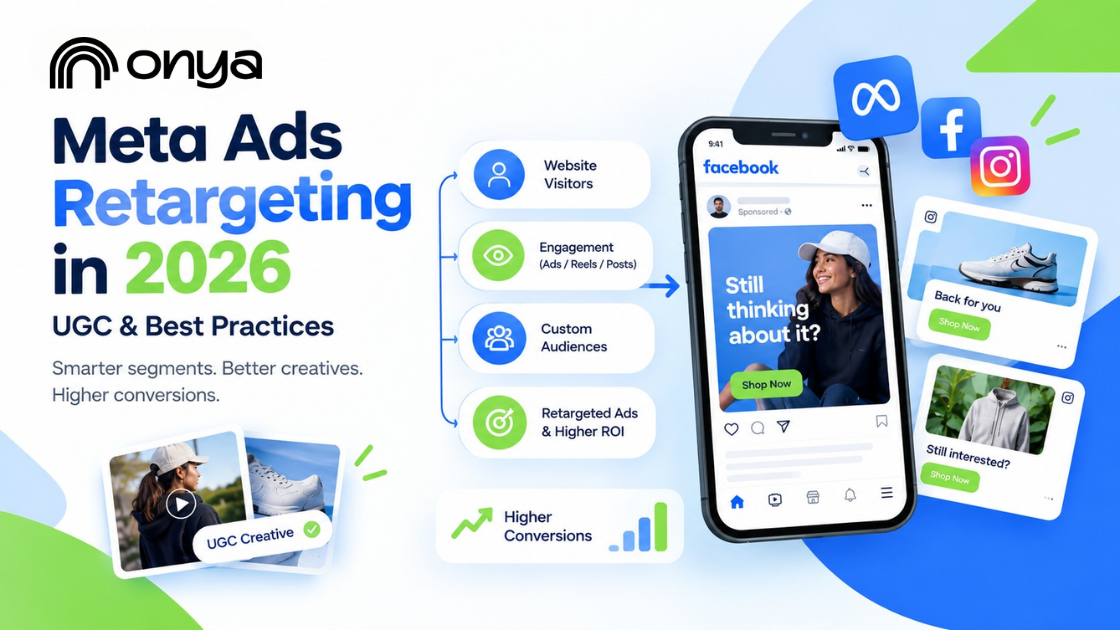
Meta's ad delivery system now treats creative as a relevance signal, not just the audience behind it. A repeated, generic ad loses ground even when the targeting is accurate, because the platform rewards ads that actually resolve something for the specific person seeing them. That's a meaningful shift from how retargeting used to work, and most campaigns haven't caught up to it yet.
At Onya, we manage Meta retargeting across higher education, healthcare, and business clients, and the gap we see most often isn't a budget problem or a platform problem. It's a strategy problem. The same ad running to every past visitor, with no consideration for where that person actually stopped engaging, is where most retargeting spend goes quiet.
This post breaks down what makes Meta ads retargeting work in 2026, from how to segment your audiences correctly to which creative approach fits which stage of the funnel and how to read your results honestly.
Why the Same Retargeting Ad Twice Doesn't Work Anymore
Meta's delivery system reads fatigue in real time. Run the same creative to the same person too many times, and the platform doesn't just get less effective; it actively deprioritizes the ad. Costs climb. Relevance drops. You end up paying more to reach people who already told you, by not converting, that the first version didn't land.
A few signs this is happening in your account:
Frequency is past 4-5x with no lift in clicks or conversions.
CPMs are creeping up on an audience that hasn't grown.
The same creative has run 30+ days with no rotation.
One ad is going to everyone who visited, regardless of how far they got.
None of this means Meta ad retargeting stopped working. It simply means the strategy behind it hasn't kept up. Retargeting still earns its spot in the funnel — but only when the creative and audience logic change with the person seeing it, not when an ad gets built once and left to run.
How Retargeting with Facebook Ads Works
Meta ad retargeting relies on one core piece of infrastructure: the Meta Pixel, a snippet of code on your website that tracks visitor activity and reports it back to Meta. Without it, you can't build an audience from your website activity.
Here's the sequence:
Someone visits your site or engages on Facebook or Instagram.
The Pixel logs that action and sends it to Meta.
Meta matches it to a user profile.
Your campaign serves ads to that person next time they're in-feed.
Pixel-only setups are common but increasingly incomplete. Browser blockers and iOS privacy settings mean a chunk of signal never makes it through. Pairing the pixel with the Conversions API closes that gap, since server-side data doesn't rely on the visitor's browser cooperating.
If you're still deciding where to put ad spend in the first place, this breakdown of Google Ads vs Meta Ads covers how the two platforms differ.
How Retargeting Instagram Ads Works
Instagram retargeting uses engagement and website activity to reconnect with people who have already interacted with your brand. Instead of relying only on broad audience targeting, you can build audiences from actions people take across Instagram, Facebook, and your website.
Here’s the basic sequence:
Someone watches your Reel, interacts with a post, visits your profile, or lands on your website.
Meta receives signals from that interaction through its platform and tracking tools.
Those signals can be used to create or update a retargeting audience.
Your Instagram campaign then delivers relevant ads to people who match your audience criteria.
For example, someone might watch a large portion of a product Reel but leave without visiting your website. You can create an audience around that type of engagement and show them a follow-up ad with more product information or a different creative.
Website visitors can also be retargeted on Instagram when the appropriate Meta tracking and audience setup is in place. The Meta Pixel can send website events to Meta, while the Conversions API can complement browser-based tracking with server-side event data.
The key is to treat Instagram retargeting as a continuation of the customer's first interaction, not simply another opportunity to display the same ad. Someone who watched a Reel, visited a product page, or abandoned a cart may need a different message at each stage.
That makes audience segmentation and creative rotation just as important as the retargeting campaign itself.
Build Retargeting Audiences Around Behavior, Not Channel
Most accounts build one audience: everyone who visited in the last 30 days. That treats a person who reads one page the same as someone who almost converted, and they need completely different ads. Group your audiences by what the person actually did, not which channel they came from:
Engagement-based — visited your site or watched most of a video, but took no further action. They know you exist; they're not sold yet.
Intent-based — started something and didn't finish: an abandoned cart, an unfinished application. This is your highest-intent group; they've told you exactly what they want.
Relationship-based — people you already have data on, email lists, and past customers. Worth prioritizing since first-party data holds up better as tracking degrades, part of why retargeting still earns its place in 2026.
Each group stalled for a different reason, so each needs a different message. That's what makes the next step, matching UGC retargeting ads to the right hook, actually work.
Match the Hook to the Reason They Stalled
The product doesn't need three versions. The first three seconds do. Someone who barely looked needs a different opener than someone who almost bought, and matching that opener to the actual hesitation is what separates UGC that converts from UGC that just adds frequency.
Awareness Hook: For Visitors Who Left Too Early They saw the ad or landed on the site but never connected it to a problem they actually have. The fix isn't a better product shot; it's leading with the problem itself, in plain language, before the product ever shows up. If the hook doesn't name what they're struggling with, the product looks irrelevant no matter how good it is.
Proof Hook: For Visitors Who Hesitated Cart abandoners clicked, then talked themselves out of it. Usually it's one unanswered objection: will this actually work for someone like me? Answer it with something concrete, not a general claim:
A specific timeframe ("after two weeks")
A specific result, not a vague one
An unpolished, real moment over a staged one
Decision Hook: For Visitors Who Are Almost Ready This is someone deep in consideration, not a past buyer. They've viewed pricing, come back more than once, and maybe started a form or cart and stopped. They don't need convincing anymore; they need a reason to stop deliberating: a deadline, a guarantee, or a direct answer to what's still holding them back.
Rotate the opener before the offer. When frequency climbs and results dip, the hook usually goes stale first, not the product or the price.
Meta Ads Retargeting Best Practices: How Often to Refresh UGC Creative?
The same clip that converted well two weeks ago starts losing steam the moment your audience has seen it too many times, and leaving it running past that point burns the budget instead of saving it.
Watch performance, not the calendar. Two numbers tell you when it's time to replace a creative:
Frequency past roughly 3-5x with no lift in clicks or conversions
CTR declining on a specific asset, not just the campaign average
When both start moving the wrong way, replace the creative, usually every 2-3 weeks for an active retargeting segment, sooner for smaller audiences that see the same ad more often.
Refreshing doesn't always mean a full reshoot. Often the fastest fix is swapping the opening hook or format on existing footage. If you're running low on raw material to pull from, this breakdown of UGC content ideas is a good next stop before you schedule a new shoot.
Formatting UGC for Facebook and Instagram Retargeting
A strong hook still underperforms if the format looks like an ad instead of a Reel. A few non-negotiables for retargeting social media content on Facebook and Instagram:
A few things worth getting right:
Shoot vertical, 9:16, for Stories and Reels, where most retargeting inventory runs
Front-load the hook; the first two to three seconds decide whether someone stays.
Burn in captions, since most Feed and Stories viewing happens with sound off
Skip the polish; handheld framing and natural lighting read as authentic, which matters more with a warm audience than production value
Facebook and Instagram audiences don't always respond the same way. With retargeting Instagram ads, you'll often see more visual, lifestyle-driven clips perform best, campus life, and product-in-use moments.
When retargeting with Facebook ads, you're often reaching an older or more decision-adjacent audience, parents in a higher-ed context, for example, so slightly more direct, information-forward creative can perform better there. Running the same UGC on both, with small adjustments to pacing or caption tone, tends to outperform picking one platform and skipping the other.
These aren't universal retargeting ads best practices; they're specific to warm audiences who've already seen your brand once and are deciding whether the second look is worth their time.
Are Your UGC Retargeting Ads Actually Working?
Vanity metrics won't tell you if it's actually paying off. Check these at the individual-asset level, not the campaign average:
Frequency and CTR trend per asset — a declining CTR on one specific clip is your earliest fatigue signal, well before overall cost per result moves.
Cost per result by audience segment — lumping every stalled visitor into one report hides which segment is actually underperforming.
Performance by platform — retargeting with Facebook ads and retargeting Instagram ads rarely perform identically, so review them separately.
If none of this is tracked at that level, the honest answer is, "You don't know whether retargeting is working; you just know it's running.
This is usually where teams either build the reporting themselves or bring in someone who already has the system for it. At Onya, matching hooks to funnel stage, formatting for each platform, and reporting on individual assets isn't an add-on; it's the default way we run Meta ads retargeting for every client, higher education, ecommerce, or otherwise.
Conclusion
Retargeting on social media only works when the strategy behind it does. Segment audiences by behavior, match each hook to the reason someone stalled, and refresh creative before fatigue sets in — that's what separates UGC retargeting ads that convert from ones that just add frequency. This discipline applies whether you're running retargeting with Facebook ads, retargeting Instagram ads, or both at once.
Onya is a full-service digital marketing agency that builds this whole system: strategy, creative, platform-specific formatting, and asset-level reporting, not just the retargeting piece. If you want a team that follows retargeting ads best practices end to end, see what Onya can do for your business. Contact us now!
Frequently Asked Questions (FAQs)
What counts as UGC in a Meta retargeting ad? Content that looks like it's from a real person, not a brand. Think testimonials, honest reviews, or day-in-the-life clips.
How is retargeting different from a regular Meta ad? Regular ads target people who don't know you yet. Retargeting shows ads only to people who already visited or engaged with your brand.
Can the same UGC clip work on Facebook and Instagram? Yes, but results differ. Instagram favors lifestyle content, Facebook often does better with more direct messaging.
Do I need a big budget for UGC retargeting ads? No. Polished, expensive-looking ads often perform worse with a warm audience than something that looks real.
How do I know if my UGC creative needs to be replaced? Watch frequency and CTR on that specific ad. When frequency rises and CTR drops, it's time to swap it.
Advertising used to be a series of educated guesses and assumptions. While that still plays a role within the industry, it is not as prevalent as it once was. This is in no small part due to the effectiveness of online ad channels. And, there is no online advertising platform like Google Ads.
Google Ads allows businesses to directly advertise to their target market. It is appropriate for all objectives from awareness to consideration to conversions. It works across Google properties including search, Gmail, YouTube, and affiliated websites. Despite this scope and influence, many businesses struggle to get the most out of Google Ads. Here are the most common mistakes businesses make.
#1 Putting The Wrong Keywords Together In An Ad Group
You wouldn’t pair a lovely Shiraz with a piece of grilled cheese, as the end result may be lackluster. In very much the same way you wouldn’t group together irrelevant keywords, as your results will be less than ideal. All the keywords in an ad group should be closely related to a specific theme. We often see things like “men’s hoodies” and “blue t-shirts” put together in the same ad group, instead of having two separate respective ad groups.
The proper approach allows your keywords, ad copy, and destination page on your website to align as much as possible. For the above example, you should have blue t-shirt keywords triggering ads that promote your blue t-shirts. Then, send users to the blue t-shirts page on your website. This will give your keywords a higher quality score from Google and leads to better performance.
#2 Ignoring The Search Terms Report
The search terms report is a source of valuable info for your search ads. It shows what people actually searched for to make your ads appear. It can reveal both where money is being wasted, and where there are opportunities to amplify what’s working.
The search terms report could reveal that your ads for drinking glasses are getting clicks from people searching for eyeglasses. This is when you need to add negative keywords. It could also reveal that there are search terms that are leading to great results but haven’t been added as a keyword.
#3 Misunderstanding Broad Match Keywords
Broad-match keywords match searches that are related to the keyword. This means there might only be a weak link between what you’re offering and what the user is searching for. This might have led to an aversion to using them, but they are worth trialing under the right circumstances. When paired with one of Google’s Smart bidding strategies, broad match keywords can increase conversions. All the while still being efficient, and uncovering new keywords you should target.
We see accounts that use broad keywords excessively or with the wrong bidding strategy. This can lead to an excessive amount of wasted spending. This should be avoided at all costs.
#4 Settling For Poor Data Quality In Your Products Feed
A good feed for a product is vital for success on Google Shopping. It lets Google know exactly what you’re selling so your ads can be served at the right moments. It can be difficult to set up and update your product feed, so it can be tempting to leave it alone once your Shopping ads are running.
We often see data quality issues with feeds. Things like the incorrect brand being listed on products, barcode numbers being left out, or product size not being included. Even though they seem like small changes, fixing up details like the above can improve your Shopping performance significantly over time.
#5 Using Last Click Conversion Attribution
The conversion attribution model you use is important for understanding which ads and targeting led to the conversions you’ve recorded. The last-click attribution model is commonly used. It gives all the credit to the ads and targeting that led to the final click before the user converted, potentially ignoring several earlier clicks that helped that user convert.
This means that some keywords, for example, could be bringing you business but are showing zero conversions. There are other attribution models that can be chosen to give credit differently, such as equality among all the clicks involved on the path to a conversion. The best option is data-driven attribution, which uses your account’s conversion history to determine how the credit for a particular conversion should be distributed.
#6 Confusing Google About Which Conversions To Aim For
Google’s Smart bidding options can help you generate more conversions compared to manual bidding. But Smart bidding will be ineffective if Google’s machine learning technology is looking for the wrong type of conversion.
We’ve seen Smart bidding be derailed by incorrect conversion settings. For example, a Smart Shopping campaign will perform better if it is only trying to generate eCommerce sales, rather than newsletter sign-ups and app downloads as well.
Make sure your campaigns’ goal settings and your account’s conversion action settings are in order so you can make the most of Smart bidding. This can be a bit of a challenge though.
This is why we have a dedicated team of experts to ensure you get ongoing powerful results on your Google Ads to spend. Let us help get you started on the right foot by booking a consultation today!
Have you ever asked yourself "should I Facebook Ads run for my business" or something along those lines? As an experienced online marketer, I get this question a lot from new and experienced online business owners. If you're one of these people searching for answers, you're in the right place.
You’re ready to run Facebook Ads if you want to increase business exposure.
You’re ready to run Facebook Ads if you're not satisfied with the results you get from boosting posts.
Facebook Ads ≠ Boosting Posts
Boosting posts is the most expensive way to advertise. In contrast to creating a Facebook Ad Campaign, the targeting, retargeting and other capabilities are not the same.
You WILL see better results from Facebook Ads.
You’re ready to run Facebook Ads if you want to give yourself the gift of TIME.
When you put together your Facebook Ad Campaign, there is work up front, but after you hit "publish," the hard work is over.
Instead of posting frequently online to get business exposure, you can let your ads run on autopilot, doing the hard work for you.
Of course, checking in on your campaign is important, but I guarantee it'll cost a fraction of the time as planning & creating organic social media content.
You’re ready to run Facebook Ads if you want to see measurable results from your marketing efforts.
You're able to choose what you want your campaign to achieve (sales, leads, etc.) and target your ideal audience. Your ads are published with a CTA button, which means people don't have to click on the link in your bio to take action. Check out the key elements of a sales page to make sure your ads convert once people land there.
The way ads are set up allows for results to come quicker, and you don't have to work as hard to get results.
There is always an ROI if you apply the right strategy.
How to Successfully Grow Your Business On LinkedIn in 2023
LinkedIn is one of the most powerful and effective ways to network in our digital age. Networking with successful individuals with similar interests as you is always well worth the time and engagement. This is true for all industries.
However, many LinkedIn users overlook some of the incredibly useful tools and resources of the platform.
Thankfully, the LinkedIn platform has been designed to hasten the way we connect and receive information from others. Making it a prime tool for when you need to check tasks off the list in a jiffy.
Utilize Polls for Feedback
Your time is valuable. Therefore, using quick and effective tools is an absolute necessity when it comes to optimizing your productivity. We recognize that research and development are crucial for the advancement of any business. This is where LinkedIn Polls comes to the rescue. Polls have gained popularity since their reintroduction to the platform in May 2020. Additionally, polls are shown to be used interchangeably across all industries.
Whatever feedback you receive from knowledgeable people within your industry is a treasure that should be used to your advantage. Using a poll on a topic that seems undecipherable to your team could save time on your problem-solving efforts. Asking meaningful and intentional questions is also important. Think about how it would benefit your overall strategic efforts.
A Surface-Level Look at LinkedIn Polls:
Polls can have 2, 3, or 4 answer options
Answers can be no longer than 30 characters
Polls can run for 1 day, 3 days, 1 week, or 2 weeks
The content or duration of a poll cannot be edited after posting
Looking for an opinion? Maybe an answer to a tough question? Trying to boost your company's exposure? Polls are a convenient route to follow.
Join and Create Your Own Groups
LinkedIn Groups make connecting with people who share your same pursuits and passions effortless. With the number of groups reaching well over 2 million, it’s safe to say you’ll be able to find a few that coincide with your industry and interests.
Benefits of Joining Groups
Being that Groups are generally focused on a singular topic, they can save you the time and headache of scrolling through a newsfeed full of discussions, links, and posts. The ability to narrow in on a matter of interest is perhaps one of the most appealing and useful components of conducting your research via LinkedIn Groups.
Once you find some great groups within your niche that you enjoy visiting frequently, it can work to that as a learning resource for not just you, but your team as well. A large majority of the content you’ll find LinkedIn users posting within groups are links to useful articles and tools, commentary on their ideologies concerning their business tactics and strategy, and really anything that they feel could be applicable to others’ success.
Perhaps most importantly, you’ll be able to network and increase the exposure of you and your business to a large number of people within your field that you may not have been able to reach otherwise. These valuable connections can lead to conversions and help lengthen your prospect list.
Now that you know how advantageous Groups are, you’ll probably want to eventually join the ranks and build a group of your very own.
Quick tips for constructing your first LinkedIn Group:
Name your group something that is easily searchable.
Spend some time writing a quality about section, this could very well be the deciding factor that entices potential members to join.
Ensure that your privacy settings are set to standard, so you’ll be visible in searches.
After posting some content on LinkedIn, start inviting your connections to join, and be sure to promote your group elsewhere to gain even more traction.
Build Your Email List
Don’t be afraid to send messages and start conversations with people in your network, although this is a more manual option, people tend to respond more positively when they are asked personally to be added to your email listings.
Develop and promote an incentive for joining your email list. The incentive you choose could be as simple as a special offer or discount code, free template or checklist downloads, or even case studies, just to name a few. Anything that could be of some value to your target audience would be suitable here.
Target users within groups of similar interests or encourage those within your own group to join.
It’s important for us to note here that it is highly recommended you ask for permission when adding anyone to your email list, as well as being mindful that you are only adding those with pertinent interest in your industry/business.
Recruit Your Employees
The contributions that your employees put forth each day to keep your business alive and well are truly invaluable. Not to mention, their ability to spread the good word of your business with their connections and beyond. Employee brand advocacy is excellent for expanding your brand’s overall reach and exposure to ideal audiences.
Tips for Starting Your Employee Brand Advocacy Program
Set in place specific and measurable goals. Not only will these provide great pillars to work towards but will help tremendously in calculating your program’s ROI and determining how to successfully strategize moving forward.
Ensure the longevity of your program. Design a loose framework for your employees to follow to help guide them and keep them motivated well into the future.
Not sure how to get your employees on board with advocating for your brand online? LinkedIn’s Official Guide to Employee Advocacy provides brilliant techniques for empowering your employees to grow their networks and advocate for your brand!
Now that you have the know-how necessary to boost your success on the LinkedIn platform, start exercising your new skills and figure out how you can best tailor your LinkedIn experience to benefit yourself and your business! Looking for more tips on working with Social Media Management and advertising? Give Onya a call today!
5 Keys to Increasing Your Business’s Social Searchability
Social media marketing is continuously evolving. Brands must make it a point to adapt and not get lost in the crowd. Audiences have increasingly become more reliant on using social platforms as a means of discovering potential product/service solutions.
Therefore, it is important to understand that your audience is using social media beyond its networking capabilities. Social media is now approached as a resourceful search engine as well.
In order to help your brand stay ahead of the curve, here are 5 tips to boost your social searchability.
1. Optimize Social Profiles
Ensuring your social media profiles are fully optimized and complete is an essential first step in getting your business seen for who you truly are. Although this may seem like a no-brainer, the accuracy of simple profile features such as your
business address
contact information
services
company info
can often be overlooked. As you revamp your profiles, take time to review these fields and edit accordingly if needed.Making your profile as easy to search as possible should be your core goal, therefore:
use plenty of keywords in your description
make your username obvious to your brand
inject profile content that is compelling enough to attract your ideal customer.
2. Publish Shareable/Savable Content
Raising within the search inquiry ranks can be a breeze for businesses that receive a lot of engagement on the posts they share. How does one provoke more engagement on their social media posts? A great way to start is by publishing more shareable and savable content for your followers.
Shareable content can prompt your audience to put in the work for you when it comes to placing your brand in front of similar audiences. According to Infographic World, “Most people want to share content that is useful or helpful to others, so the data must be valuable to the viewer and easily digested to be worthy of sharing.”
3. Publish Evergreen Content
Evergreen content is search-optimized content that is continually relevant and stays “fresh” for readers over a long period of time. This form of content creation can be pivotal when trying to climb up the search engine rankings due to its long lifespan. Key audience groups can discover and refer back to evergreen content that is months, or maybe even more, old.
Evergreen content can share many of the same characteristics as shareable or savable content, but is most commonly created in the following formats:
Blogs
Testimonials
Tutorials
Checklists
Educational Resources
4. Use Keywords in your Social Media Content Writing
Including keywords that speak to your brand and services not only increases your chances of appearing in front of the right audiences via search but can mean all the difference in making a good marketing strategy, a great one.
Per SEO Design Chicago, “keywords are the words or phrases that describe what a piece of content is about.” When potential customers are searching for solutions to their pain points, the words and phrases you include with your profile and post content play a major role in determining where your brand appears in search listings.
5. Share Video Content
Social search engines heavily favor and prioritize fresh, short-form video content. Consistently uploading videos to your pages can be huge for boosting your searchability quickly and effectively. In a 2022 survey conducted by Wyzowl, it was uncovered that 86% of video marketers say video has been effective for generating leads and 87% of video marketers reported that video gives them a positive ROI.
These wildly significant statistics prove just how advantageous video marketing on social media can be.
Make your audience aware that your business is the prime solution to their pain points when you boost your searchability factor on social media.
Looking to attract even more business? Give Onya a call today to create a strategy that weaves these elements together seamlessly in 2023
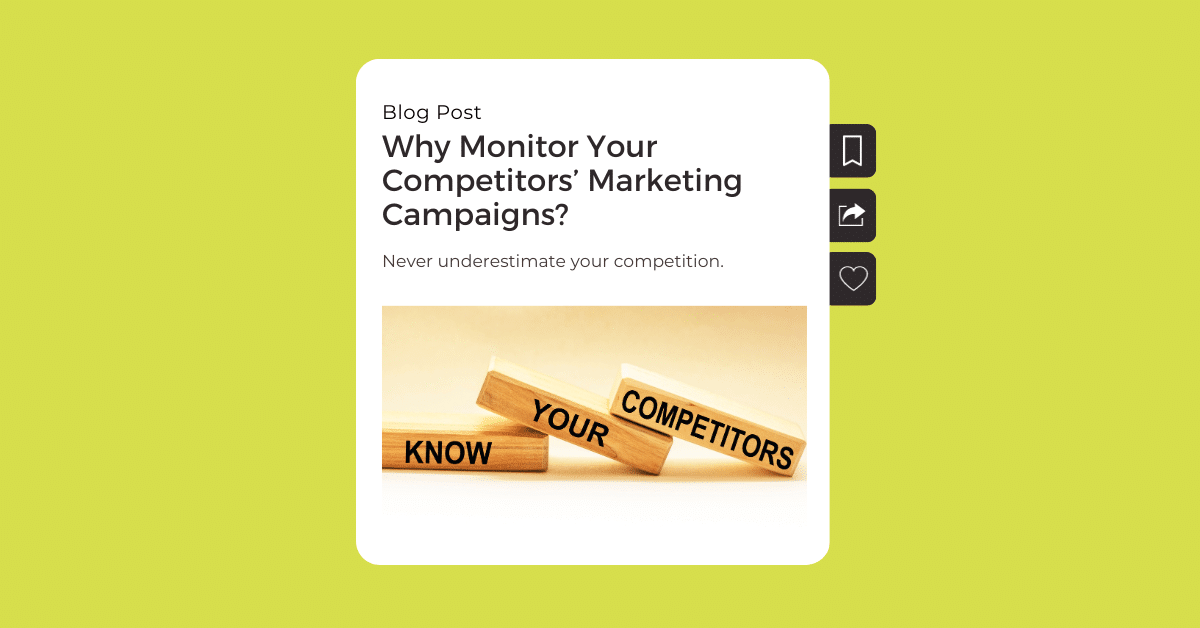
Here's Why You Need to Monitor Your Competitors’ Marketing Campaigns
Never underestimate your competition.
In marketing, it’s vital to stay competitive, and that means monitoring what others are up to in your market. Competitor monitoring provides you with an opportunity to observe trends, see what works and adjust your strategy to help ensure success for your business. But what is the best approach for analyzing your competition’s marketing campaigns?
Understanding Competitor monitoring
While keeping a close watch on the competition can feel like spying or cheating, it’s an effective way of improving your marketing campaigns. Competitor monitoring allows you to look at the methods your competitors are using to help spark new and exciting ideas for your campaigns. Marketing spending is on the rise, but it’s still important that your business uses its resources wisely.
To monitor your competition effectively, you will need a strategy. Even if your monitoring is light-touch, it’s essential to understand what you’re tracking and why. Monitoring can be a fun process, especially if you have a keen interest in the industry.
Choosing Who to Watch
To get the best results from your competitive monitoring, you need to think about the types of companies you want to monitor. It can be your direct competition, companies that target the same audiences as you, and companies of similar size and marketing budgets to your own. As part of your strategy, keep a record of the businesses you will monitor and renew the list periodically. You can then prioritize which companies to monitor daily or weekly, and others monthly and annually.
What Are You Monitoring?
When businesses analyze the competition, they take an interest in all kinds of things, from their annual accounts down to the suppliers they’re using. But in terms of marketing, there are several areas you’ll want to monitor, including:
Marketing campaigns
Monitoring marketing campaigns helps you see the approaches that others are taking with their work. Conducting this kind of competitor analysis will help you understand which campaigns performed effectively, their reach, and what impact they had on social media. You could also conduct a sentiment analysis. It will help you understand more about how the campaign was received and what people’s feelings towards it were.
Social media analysis
Social media analysis is ideal for up-to-date, real-time monitoring of your competition. By monitoring the content they publish and the responses and the platforms they are using, you can make smarter decisions about your social media activity.
Content analysis
What content is your competition putting out, and how does it compare to your own? From the content on their website to blog content, you can learn a lot about others’ activities to help you strengthen your offering.
Ways of Monitoring Marketing Campaigns
There are several methods you can adopt to monitor marketing campaigns effectively. Some useful ideas for competitive monitoring include:
Signing up for newsletters
By signing up to the newsletters, you can receive updates about new products and promotions as soon as they’re announced. Email marketing remains an effective medium for generating sales, and you could learn from your competition’s newsletters when they land in your inbox.
Using competitor analysis tools
There are tools available that can help you track the progress of your campaigns against others. They can also provide an overview of the various marketing activities of different businesses. Some top competitor analysis tools include Pi Datametrics, SpyFu and QuickSprout. Using these tools can provide you with some easy-to-read statistics to populate your monitoring without manual effort.
Analyzing their social media
Your rivals will be most active on social media. Monitoring their activity is an excellent way for you to see what they’re doing and how they’re being received. While you can look at the quantitative data for social media, you should also look at the qualitative data and see how users are responding. Review the comments and the sentiment related to different posts. It’s also worth inspecting the social media of the audiences you want to attract. Influencers, in particular, can provide some fascinating insight into how different audiences feel about specific brands and products.
Keyword analysis
Using the right keywords significantly boosts search engine optimization (SEO). By conducting keyword analysis, you can figure out which keywords are proving the most effective for your competition and use them for your content. There could also be opportunities for you to identify keywords being used in searches that are being ignored by businesses. You can then use them to edge out your competition.
Competitive monitoring helps your business to stay on top. The data you gather can provide some valuable insights for your marketing campaigns, keeping them innovative and cutting-edge. These insights offer useful audience data, helping you make smarter, more straightforward decisions while saving you money by focusing your energies in the right place.
To help you understand how competitive monitoring can work for your business, contact Onya today. We can provide you with a variety of marketing services to help your business create the right impact.
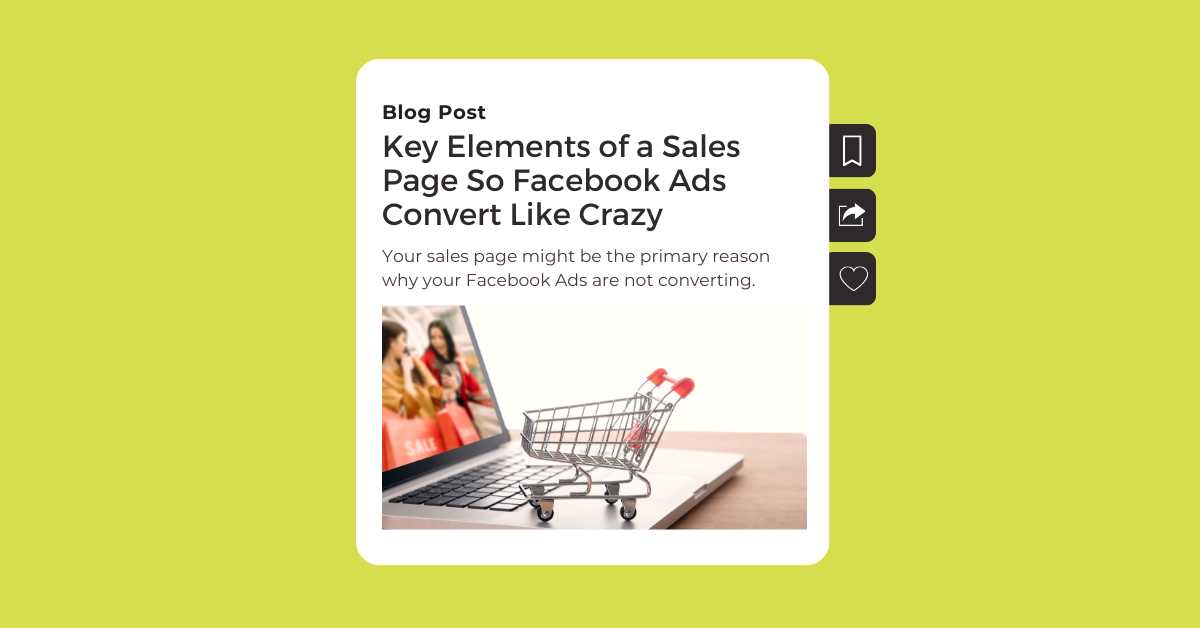
Key Elements of a Sales Page So Facebook Ads Convert Like Crazy
Your sales page might be the primary reason why your Facebook Ads are not converting. It's great that your Facebook Ad gets clicked on, but your website has to drive the end result. There are key elements to a sales page that you need to consider adding in order to reach your conversion goals.
Think about it:
You see a great ad.
You click on it.
The website page you land on…
Isn’t related to the ad at all.
Is not optimized for mobile.
There's no CTA button to click.
The list goes on.
Your website is so important. Work on your website, test it and get it ready before you run Facebook Ads. Let's talk about how you can do this by knowing what they key elements are for a sales page.
Sales Page Key Elements for Facebook Ads Conversion
Key Element #1: Your Unique Sales Proposition (USP)
Many people do something very similar to what you do, so what makes you different? Why should someone purchase from you vs someone else? What can they get from you that they won’t get anywhere else?
Are you feeling overwhelmed thinking, “What if I’m not unique?”
REMEMBER - The fact that you, as a human individual, are different than anyone else selling the same thing as you. YOU might be the USP. You just have to explain it in a way that helps your audience understand the value you (and only you) deliver.
Key Element #2: Show Your Face
I don’t mean take a selfie and throw it up onto the internet. I’m saying use professional headshots and genuine photos that encapsulate your brand. It might have bright colors, a graphic in the background, and be in black and white. Whatever makes sense for your brand.
It’s important to showcase who you are. It builds trust, and it shows confidence. We all want to purchase from people that are confident in themselves, right? Otherwise, we likely won’t have confidence that we’ll get value for our money.
Key Element #3: Show The Transformation
Your audience right now is struggling with something that you have the solution for. Ponder this:
What is your ideal audience saying, doing, and feeling BEFORE they purchase?
What is your ideal audience saying, doing, and feeling AFTER they purchase?
With this, you’re able to list out the key results. Be sure to include a mix of measurable results and mindset results. For example, you’ll increase traffic to your website by as much as 100%, AND you’ll feel confident that your website has exactly what your audience needs to purchase.
Key Element #4: Social Proof
Have you noticed this on sales pages and Instagram? Industry leaders are constantly sharing screenshots of their FB groups, DMs, and emails that showcase insane the results their clients are getting? That’s called social proof.
Social proof is one of the most effective selling methods. When your audience sees that someone else went through what your audience is currently going through, and they came out the other side with RESULTS, they will want to convert. It takes the guesswork out of it. It’s an informal testimonial that is trustworthy.
Key Element #5: Your Call To Action (CTA)
This is where things are missed. When someone clicks to view your sales page, you want them to be able to purchase right away. You do not want them to have to scroll miles down your sales page before they find a CTA button to purchase.
Make it accessible. It sounds so simple, but so often I see sales pages where I can’t find the CTA button. Don’t be that person.
Make sure you have a CTA button on your sales page that requires no scrolling.
Key Element #6: Your Sales Page Length
It’s controversial. Some people say your sales page should be short. Some say it should be long. But here’s my take:
Free to Low-Ticket Offers
These should have shorter sales pages with the core elements. You want to make sure you’re answering all your audience’s questions, but you also don’t want to confuse them. If your sales page is too long, the low cost of your offer gets lost in translation. Your audience becomes overloaded with information instead of being drawn in by the low price of your offer. The price of your offer is a selling point, so your sales page doesn’t have to work so hard.
Mid to High-Ticket Offers
These sales pages should be longer. You want to address any question that might come up for your audience so they can make an educated purchase decision. Of course, you want to have CTA buttons throughout your sales page, but the rule of thumb is that the longer people scroll on your page, the more they read, the more likely they are to purchase.
Key Element #7: Optimization
Your sales page should meet everything on this checklist:
Mobile optimized
Related to your advertisement
Relevant language to your audience
Easy to navigate
Remember Facebook and Instagram are mobile apps. Yes, they have websites, but when you advertise on FB & IG, the mobile reach is MUCH higher. That means it is absolutely crucial to have a mobile-optimized website. Make sure the loading time is appropriate, that your images aren’t cut off, and that your text is legible.
Bonus Tip
The page your audience lands on after a Facebook Ad has to make converting EASY. Want to know if your website is causing your ads to not perform? Go to your Facebook Ad account, look at the cost per click (CPC), and look at the cost per result (CPR). A vast difference between the CPC and CPR means you need to update your website so it’s easier for your audience to convert. Additionally, a high CPC means your ad needs to be updated.
Make sure you know what next steps to take in your Facebook Ad journey. Connect with us today!
Each year has its faux pas and 2022 was no exception. The Instagram mistakes listed below are ones we see repeated year after year (see #2) but others are more common recently and we want to be sure you enter 2023 with a fresh perspective and clear understanding so you don’t make the same mistake twice.
6 Most Common Instagram Mistakes of 2022
#1 Hashtags in Bios
Using general #socialmedia hashtags in your bio will not get you more traction or discovery from followers. It actually allows people to click on the hashtag and exit your profile, potentially leading them to a competitor.
#2 URLs in captions
URLs are not clickable inside your Instagram captions. While you can list a simple URL, we recommend staying away from custom URLs that are too long and complicated for people to copy. One thing you can (and should) do is use tools like linktree in your bio so you can always direct people to your main page and have them click one link, leading to multiple sites that are important to your business.
#3 Not Utilizing Reels
We hear it all the time: “I don't want to show my face”, “It takes too long to make”, “I don’t know how to use it”....there are always excuses to not use reels. However, reels can be short and they can be incredibly effective in their reach! Don’t waste this amazing tool. Be sure to run reels when you can as videos are a big hit in scrolling these days.
#4 Over-Utilizing Reels
Yes, there is such a thing. Just because reels get you in front of most people, doesn’t mean it should be the only type of content you run via Instagram. You’ll bore people and likely end up creating videos about nothing. Reels should always come paired with a content strategy so you’re hitting people with the right reels at the right time.
#5 Not Using a Strategy
If you’re a business or a prominent and growing influencer, you can no longer wing it on social media. Your page and content need to have a purpose. There is so much content out in the social sphere lacking direction, making it all the more important for you to have a guide. Before you create a post, ask yourself, “What is the goal of this post?” If you can answer, and it helps with the overarching goals of your business, you’re on the right track.
#6 Not Talking About Your Offer Enough
It’s so easy to get caught up in wanting to provide value without being “salesy” but your product/service solves someone’s problem. You have to talk about your offer in order to sell and make someone’s life easier. They may have to see your offer 5X before they consider buying. And that’s ok.
Looking for additional Instagram tips in 2023? We’d love to help point you in the right direction. Connect with us today by sending us an email or connecting with us through social.
How We Manage Social Media Marketing (and 5 Tips You Can Learn!)
We understand firsthand how much time can go into running social media each day, week and month. We used to log in every single day to multiple platforms to create new posts, follow and share content from our community, and engage with our audience – all while still trying to run a business. Along the way, we learned a thing or two and we are confident our social media management tips can help save you great time and hassle.
As a business owner or marketing director, you may not have anyone helping you with social media, which can make it feel like a daunting use of your time. We’re here to tell you that:
Social media is not a waste of time, and
There are many strategies you can put into place to better manage your social media accounts on a recurring basis.
Here are our top five social media management tips you can incorporate into your marketing strategy:
1. Choose the Right Platforms
Choosing the right social media platforms and doing away with the rest will save you a lot of time throughout the week, creating a more successful social media presence for your business.
You only need to be on the social media platforms where your target audiences go. How do you know what those are? Be sure you first understand your target audience — considering factors like age, gender, ethnicity, hobbies and interests. We recommend choosing 2-4 social media platforms so you can focus on posting only the best content and engaging with your audience, instead of trying to keep up with every single social platform each day.
2. Spend Time Building a Content Calendar
Creating a content calendar saves us a ton of time in the long run. Each week, we dedicate time to choose the content we want to share and write the accompanying copy. Taking this time will eliminate the need to scramble each day and figure out what to post. Need help setting up your social media content calendar? We can help you!
3. Schedule Posts in Advance
By automating social media posts, we’ve found we can stay active on social media, even on days when we’re too busy to think about it. With your calendar already created, it shouldn’t take much time to schedule your posts. Some social sites like Facebook and Twitter actually allow you to schedule posts straight from their platforms. For other platforms like Instagram, LinkedIn, and Pinterest, we utilize streamlined scheduling platforms that aggregate content and send when you mark them as ready to go.
4. Set Aside Time to Engage
If you’re going to be on Fun Social media, then you might as well be genuine in your engagement. While it can take some time, we never recommend automating responses on social. Here's what we do instead: for five to ten minutes a day, or every other day, we respond to comments, messages and reviews. Addressing our audience's concerns or bad experiences also allows them to be more engaged with us. Don't forget to thank your audience as well for their consistent support! It always helps us as our own business to focus directly on real responses so that our followers know it’s us and that we actually care about what we post online.
5. Don’t Forget to Analyze
To spend social media time wisely, we want to make sure posts meet goals. Of course, we highly recommend getting started at identifying specific goals for your social media efforts (brand awareness, website traffic, sales, etc.). Then, set aside time and identify the right tools for analyzing your social media efforts on a monthly basis. Using Google Analytics, you can see the traffic your posts are generating and which platforms are performing the best. Some social media scheduling tools also include robust analytics.
We always do everything here at Onya with intentionality. When it comes to managing social media, we don’t just do it because it needs to be done. We do so in a way that is tailored to the right audiences, in the right place and at the right time. We’ve learned a thing or two and hope you continue to join along in our efforts to change the game with successful marketing. Are you looking to learn more? Contact our team today and we can set up a free strategy call!
Using Your Community to Create Strategic Target Market
Are you using any strategies to reach your target market?
Maybe a better Market Analysis, first question is do you know who your audience is and what they care about? We’re not talking about buyer personas or demographic data (still important, but not always the real driving factor). We’re talking about the most influential people who matter to your brand. Who are these people? What do they want to see, hear, and learn? What do they contribute to the community?
A few years ago, we started interviewing business owners and community advocates, covering pivotal moments when an event or experience dramatically shifted the direction of their story and what it means to them to function as a business, especially in today’s digital world.
We found these discussions fascinating, so we started talking to more local entrepreneurs and exploring their plot twists, the pain points that led them to start their businesses, and their thoughts on marketing and communications.
You see, face-to-face communication always nets the most valuable information. Interviews minimize distractions, eliminate groupthink, and foster deep thought.
For our team, we were experiencing first-hand how businesses were thinking and what they liked (and didn’t like) about partnerships or clients they worked with. It gave us direct insight into how they made business decisions.
https://www.onyamark.com/our-work/
Not only that, it reminded us as a company that we are not our target market. We needed to keep perspective and look outside ourselves with marketing strategies. Interviewing gave us a fun but practical perspective that allowed us to better tailor our services and offerings to our future clients.
Benefits of Conducting Interviews
When it comes to impact, your small business’s marketing and communications will only succeed if you tell the right stories to the right people. That means understanding who you are speaking to and what matters to them. That’s where interviewing comes into play. Here are some of the biggest benefits you can expect to see from engaging in this medium.
1. 360 View of Your Business
Interviewing other business leaders provides a 360-degree view of how your organization is perceived. It’s all too easy for organizations to develop their ideas about how they are seen by others. Without the input of external audiences, these impressions are little more than self-perceptions. They may contain kernels of truth, but they aren’t complete. Target audience interviews allow outsiders to offer their perspectives on your brand and can also shed light on gaps.
2. Deeper Audience Understanding
Interviews help you gain a much deeper understanding of the people or groups who are impacted by or support your brand. They give you fresh insights into why certain people feel connected to your business and story. In addition, they clarify the values and motivations behind specific connections.
3. Engaging in Conversations
Interviewing your customers or community partners in person allows you the unique opportunity to engage one-on-one. You’re able to ask follow-up questions, probe for deeper answers, and gather incredibly substantial insights. In-person interviews also allow you to capture the interviewees’ raw emotions and behaviors better than any other method.
4. Discovery of New Directions
Conducting interviews allows you to gain unique insights into what your customers or potential clients are looking for in your line of work. It could be as simple as a trustworthy friend or as complex as a group of well-respected business leaders. This information should be invaluable to your brand, especially if patterns develop after multiple interviews.
5. Learn the Language
If you don't work in a client-facing role on a regular basis, then you might not be as familiar with the language and vocabulary they’re using. If you use business jargon or highly technical language, they might not understand what you're talking about. Interviews are a great chance to learn how your audience speaks so you can communicate with them more effectively.
6. Network Growth
Word-of-mouth marketing continues to be one of the most effective ways to grow a brand. Not only do interviews allow you to grow your network, but they establish a deeper level of trust between you and the person you are interviewing; thus making them more likely to expose you to their networks in the future. In conclusion, it also allows you to identify new audiences you never even thought about in the past.
By talking with the most influential people in your brand, you have the opportunity to learn from them and what they want to see and hear. You’ll learn what they read and share online, and how they engage with your competitors. From these interviews, you’ll be able to put yourself in your customer’s shoes and think about what they go through daily, and then frame your content marketing in a way that resonates with your target market.