Expert insights on digital advertising, strategy, and growth
Marketing Insights
September 17, 2026
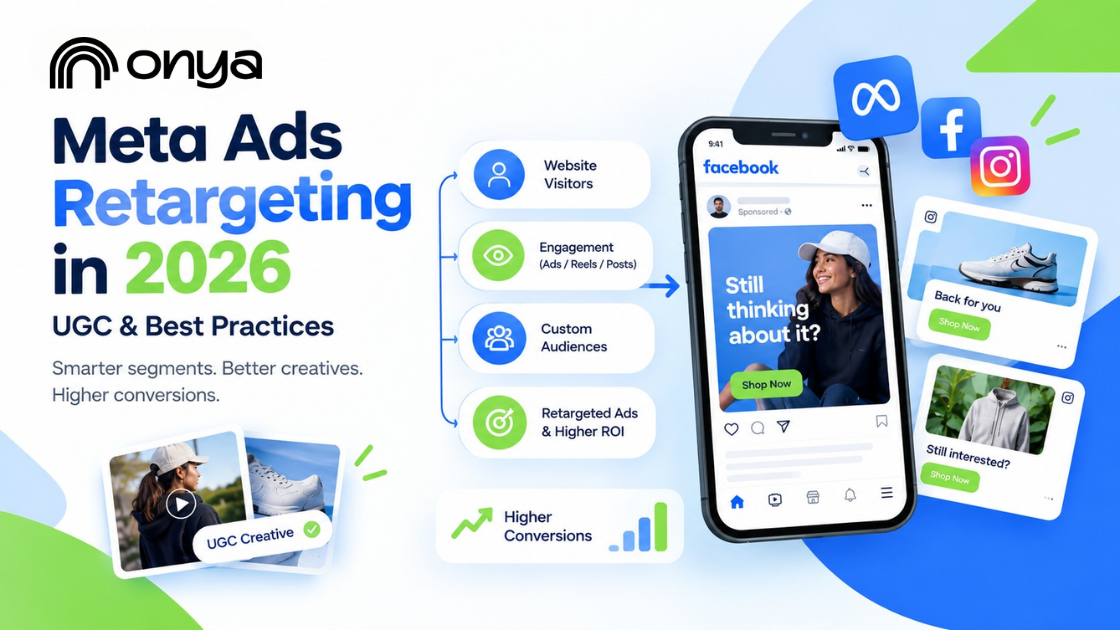
How to optimize UGC for meta ads retargeting 2026?
Meta's ad delivery system now treats creative as a relevance signal, not just the audience behind it. A repeated, generic ad loses ground even when the targeting is accurate, because the platform rewards ads that actually resolve something for the specific person seeing them. That's a meaningful shift from how retargeting used to work, and most campaigns haven't caught up to it yet.
At Onya, we manage Meta retargeting across higher education, healthcare, and business clients, and the gap we see most often isn't a budget problem or a platform problem. It's a strategy problem. The same ad running to every past visitor, with no consideration for where that person actually stopped engaging, is where most retargeting spend goes quiet.
This post breaks down what makes Meta ads retargeting work in 2026, from how to segment your audiences correctly to which creative approach fits which stage of the funnel and how to read your results honestly.
Why the Same Retargeting Ad Twice Doesn't Work Anymore
Meta's delivery system reads fatigue in real time. Run the same creative to the same person too many times, and the platform doesn't just get less effective; it actively deprioritizes the ad. Costs climb. Relevance drops. You end up paying more to reach people who already told you, by not converting, that the first version didn't land.
A few signs this is happening in your account:
Frequency is past 4-5x with no lift in clicks or conversions.
CPMs are creeping up on an audience that hasn't grown.
The same creative has run 30+ days with no rotation.
One ad is going to everyone who visited, regardless of how far they got.
None of this means Meta ad retargeting stopped working. It simply means the strategy behind it hasn't kept up. Retargeting still earns its spot in the funnel — but only when the creative and audience logic change with the person seeing it, not when an ad gets built once and left to run.
How Retargeting with Facebook Ads Works
Meta ad retargeting relies on one core piece of infrastructure: the Meta Pixel, a snippet of code on your website that tracks visitor activity and reports it back to Meta. Without it, you can't build an audience from your website activity.
Here's the sequence:
Someone visits your site or engages on Facebook or Instagram.
The Pixel logs that action and sends it to Meta.
Meta matches it to a user profile.
Your campaign serves ads to that person next time they're in-feed.
Pixel-only setups are common but increasingly incomplete. Browser blockers and iOS privacy settings mean a chunk of signal never makes it through. Pairing the pixel with the Conversions API closes that gap, since server-side data doesn't rely on the visitor's browser cooperating.
If you're still deciding where to put ad spend in the first place, this breakdown of Google Ads vs Meta Ads covers how the two platforms differ.
How Retargeting Instagram Ads Works
Instagram retargeting uses engagement and website activity to reconnect with people who have already interacted with your brand. Instead of relying only on broad audience targeting, you can build audiences from actions people take across Instagram, Facebook, and your website.
Here’s the basic sequence:
Someone watches your Reel, interacts with a post, visits your profile, or lands on your website.
Meta receives signals from that interaction through its platform and tracking tools.
Those signals can be used to create or update a retargeting audience.
Your Instagram campaign then delivers relevant ads to people who match your audience criteria.
For example, someone might watch a large portion of a product Reel but leave without visiting your website. You can create an audience around that type of engagement and show them a follow-up ad with more product information or a different creative.
Website visitors can also be retargeted on Instagram when the appropriate Meta tracking and audience setup is in place. The Meta Pixel can send website events to Meta, while the Conversions API can complement browser-based tracking with server-side event data.
The key is to treat Instagram retargeting as a continuation of the customer's first interaction, not simply another opportunity to display the same ad. Someone who watched a Reel, visited a product page, or abandoned a cart may need a different message at each stage.
That makes audience segmentation and creative rotation just as important as the retargeting campaign itself.
Build Retargeting Audiences Around Behavior, Not Channel
Most accounts build one audience: everyone who visited in the last 30 days. That treats a person who reads one page the same as someone who almost converted, and they need completely different ads. Group your audiences by what the person actually did, not which channel they came from:
Engagement-based — visited your site or watched most of a video, but took no further action. They know you exist; they're not sold yet.
Intent-based — started something and didn't finish: an abandoned cart, an unfinished application. This is your highest-intent group; they've told you exactly what they want.
Relationship-based — people you already have data on, email lists, and past customers. Worth prioritizing since first-party data holds up better as tracking degrades, part of why retargeting still earns its place in 2026.
Each group stalled for a different reason, so each needs a different message. That's what makes the next step, matching UGC retargeting ads to the right hook, actually work.
Match the Hook to the Reason They Stalled
The product doesn't need three versions. The first three seconds do. Someone who barely looked needs a different opener than someone who almost bought, and matching that opener to the actual hesitation is what separates UGC that converts from UGC that just adds frequency.
Awareness Hook: For Visitors Who Left Too Early They saw the ad or landed on the site but never connected it to a problem they actually have. The fix isn't a better product shot; it's leading with the problem itself, in plain language, before the product ever shows up. If the hook doesn't name what they're struggling with, the product looks irrelevant no matter how good it is.
Proof Hook: For Visitors Who Hesitated Cart abandoners clicked, then talked themselves out of it. Usually it's one unanswered objection: will this actually work for someone like me? Answer it with something concrete, not a general claim:
A specific timeframe ("after two weeks")
A specific result, not a vague one
An unpolished, real moment over a staged one
Decision Hook: For Visitors Who Are Almost Ready This is someone deep in consideration, not a past buyer. They've viewed pricing, come back more than once, and maybe started a form or cart and stopped. They don't need convincing anymore; they need a reason to stop deliberating: a deadline, a guarantee, or a direct answer to what's still holding them back.
Rotate the opener before the offer. When frequency climbs and results dip, the hook usually goes stale first, not the product or the price.
Meta Ads Retargeting Best Practices: How Often to Refresh UGC Creative?
The same clip that converted well two weeks ago starts losing steam the moment your audience has seen it too many times, and leaving it running past that point burns the budget instead of saving it.
Watch performance, not the calendar. Two numbers tell you when it's time to replace a creative:
Frequency past roughly 3-5x with no lift in clicks or conversions
CTR declining on a specific asset, not just the campaign average
When both start moving the wrong way, replace the creative, usually every 2-3 weeks for an active retargeting segment, sooner for smaller audiences that see the same ad more often.
Refreshing doesn't always mean a full reshoot. Often the fastest fix is swapping the opening hook or format on existing footage. If you're running low on raw material to pull from, this breakdown of UGC content ideas is a good next stop before you schedule a new shoot.
Formatting UGC for Facebook and Instagram Retargeting
A strong hook still underperforms if the format looks like an ad instead of a Reel. A few non-negotiables for retargeting social media content on Facebook and Instagram:
A few things worth getting right:
Shoot vertical, 9:16, for Stories and Reels, where most retargeting inventory runs
Front-load the hook; the first two to three seconds decide whether someone stays.
Burn in captions, since most Feed and Stories viewing happens with sound off
Skip the polish; handheld framing and natural lighting read as authentic, which matters more with a warm audience than production value
Facebook and Instagram audiences don't always respond the same way. With retargeting Instagram ads, you'll often see more visual, lifestyle-driven clips perform best, campus life, and product-in-use moments.
When retargeting with Facebook ads, you're often reaching an older or more decision-adjacent audience, parents in a higher-ed context, for example, so slightly more direct, information-forward creative can perform better there. Running the same UGC on both, with small adjustments to pacing or caption tone, tends to outperform picking one platform and skipping the other.
These aren't universal retargeting ads best practices; they're specific to warm audiences who've already seen your brand once and are deciding whether the second look is worth their time.
Are Your UGC Retargeting Ads Actually Working?
Vanity metrics won't tell you if it's actually paying off. Check these at the individual-asset level, not the campaign average:
Frequency and CTR trend per asset — a declining CTR on one specific clip is your earliest fatigue signal, well before overall cost per result moves.
Cost per result by audience segment — lumping every stalled visitor into one report hides which segment is actually underperforming.
Performance by platform — retargeting with Facebook ads and retargeting Instagram ads rarely perform identically, so review them separately.
If none of this is tracked at that level, the honest answer is, "You don't know whether retargeting is working; you just know it's running.
This is usually where teams either build the reporting themselves or bring in someone who already has the system for it. At Onya, matching hooks to funnel stage, formatting for each platform, and reporting on individual assets isn't an add-on; it's the default way we run Meta ads retargeting for every client, higher education, ecommerce, or otherwise.
Conclusion
Retargeting on social media only works when the strategy behind it does. Segment audiences by behavior, match each hook to the reason someone stalled, and refresh creative before fatigue sets in — that's what separates UGC retargeting ads that convert from ones that just add frequency. This discipline applies whether you're running retargeting with Facebook ads, retargeting Instagram ads, or both at once.
Onya is a full-service digital marketing agency that builds this whole system: strategy, creative, platform-specific formatting, and asset-level reporting, not just the retargeting piece. If you want a team that follows retargeting ads best practices end to end, see what Onya can do for your business. Contact us now!
Frequently Asked Questions (FAQs)
What counts as UGC in a Meta retargeting ad? Content that looks like it's from a real person, not a brand. Think testimonials, honest reviews, or day-in-the-life clips.
How is retargeting different from a regular Meta ad? Regular ads target people who don't know you yet. Retargeting shows ads only to people who already visited or engaged with your brand.
Can the same UGC clip work on Facebook and Instagram? Yes, but results differ. Instagram favors lifestyle content, Facebook often does better with more direct messaging.
Do I need a big budget for UGC retargeting ads? No. Polished, expensive-looking ads often perform worse with a warm audience than something that looks real.
How do I know if my UGC creative needs to be replaced? Watch frequency and CTR on that specific ad. When frequency rises and CTR drops, it's time to swap it.
How To Set Clear Goals for Successful Marketing Partnerships
Working together with a strong Marketing Agency can be a powerful way to expand your reach, tap into new audiences, and achieve objectives in ways you never before imagined (we can speak to it well!). However, the success of these collaborations hinges on setting clear, well-defined goals from the outset.
This blog below will guide you through the process of establishing effective goals for your marketing partnerships, ensuring both the organization and marketing agency are aligned and working towards mutual success.
Start with Your Overall Business Objectives
Before diving into specific partnership goals, it's important to have a solid understanding of your broader business objectives. Ask yourself:
What are your organization’s primary goals for the year?
How does this partnership fit into your overall marketing strategy?
What specific areas of your organization do you want to improve through this collaboration?
By aligning your partnership goals with your overarching organizational objectives, you ensure that the collaboration contributes to meaningful growth and success.
Define Specific, Measurable Goals
Once you've established how the partnership fits into your broader strategy, it's time to define specific goals. The key here is to make these goals SMART: Specific, Measurable, Achievable, Relevant, and Time-bound. Some examples might include:
Increase website traffic by 25% within six months
Generate 500 qualified leads within the first quarter of the partnership
Boost social media engagement rates by 15% across all platforms in three months
Achieve a 10% increase in sales of a specific product line within one year
By setting concrete, measurable goals, you create a clear roadmap for success and make it easier to track progress throughout the partnership.
Consider Both Quantitative and Qualitative Objectives
While quantitative goals are essential for measuring success, don't overlook the importance of qualitative objectives. These might include:
Enhancing brand perception in a specific market segment
Improving customer satisfaction scores
Strengthening your position as a thought leader in your industry
Balancing quantitative and qualitative goals provides a more holistic view of the partnership's impact on your organization.
Establish Key Performance Indicators (KPIs)
For each goal you set, determine the key performance indicators (KPIs) you'll use to measure progress. These might include:
Website traffic metrics (unique visitors, page views, time on site)
Lead generation numbers and conversion rates
Social media engagement metrics (likes, shares, comments)
Sales figures and revenue growth
Customer satisfaction scores or Net Promoter Score (NPS)
By clearly defining your KPIs, you create a shared language for assessing the partnership's performance and make it easier to identify areas for improvement.
Ensure Mutual Benefit
A successful marketing partnership should benefit both parties. When setting goals, consider your partner's objectives and how they align with your own. Look for areas of overlap where you can create win-win situations. This might involve:
Co-creating content that showcases both brands' expertise
Developing joint promotional campaigns that drive traffic and leads for both groups
Sharing data and insights to improve targeting and personalization efforts
By focusing on mutual benefits, you foster a stronger, more collaborative relationship with your partner.
Set Realistic Timelines
When establishing goals, be sure to set realistic timelines for achievement. Consider factors such as:
The length of the partnership agreement
Seasonal fluctuations in your industry
The time required to implement new strategies or technologies (work with your marketing agency and ask what timelines look like for others)
Setting achievable timelines helps maintain motivation and prevents frustration if results don't materialize as quickly as hoped.
Plan for Regular Check-ins and Adjustments
Goal-setting isn't a one-time activity. Plan for regular check-ins with your partner to review progress, discuss challenges, and make necessary adjustments. This might involve:
Monthly performance reviews
Quarterly strategy sessions
Annual goal-setting meetings
By maintaining open lines of communication and being willing to adapt your goals as circumstances change, you increase the likelihood of long-term success.
Document and Communicate Goals Clearly
Once you've established your goals, document them clearly and share them with all stakeholders involved in the partnership. This includes:
Creating a formal partnership agreement that outlines goals and expectations
Developing a shared dashboard for tracking KPIs and progress
Establishing clear roles and responsibilities for achieving each goal
Clear documentation and communication ensure that everyone is on the same page and working towards the same objectives.
Setting clear (and meaningful) goals is the foundation of any successful marketing partnership. By aligning your objectives with overall organizational strategy, defining specific and measurable targets, considering both quantitative and qualitative goals, establishing clear KPIs, ensuring mutual benefit, setting realistic timelines, planning for regular check-ins, and documenting everything clearly, you set the stage for a productive and rewarding collaboration.
The key to successful goal-setting is flexibility and open communication. As your partnership evolves, be prepared to revisit and refine your goals to ensure they continue to drive meaningful results for both parties. With clear, well-defined goals in place, you will be well-positioned to deliver significant value and thrive online!
As many organizations are discovering, partnering with the right marketing agency can have a great impact on their overall success! However, with countless agencies vying for your attention, how do you separate those that could be a good fit from those that don’t have your best interest? Before you sign on the dotted line, it's crucial to ask the right questions to ensure you're making an informed decision.
Here are five essential questions to ask before hiring an agency:
#1 What's your track record with businesses in my industry?
Experience matters, especially when it comes to your specific industry. While a marketing agency might boast impressive results, it's important to determine whether they have relevant experience in your particular field.
Ask for case studies or examples of work they've done for organizations similar to yours. This will give you insight into their understanding of your industry's unique challenges and opportunities. An agency with a proven track record in your sector is more likely to hit the ground running and deliver results faster.
Don't be afraid to also ask for references from current or past clients in your industry. Speaking directly with these references can provide valuable insights into the agency's strengths, weaknesses, and overall performance.
#2 How do you measure success and report on results?
A reputable agency should have a clear and transparent approach to measuring and reporting on the success of their campaigns.
Ask about their key performance indicators (KPIs) and how they align with your goals. Do they focus solely on vanity metrics like likes and followers, or do they dig deeper into metrics that truly impact your bottom line, such as conversions, lead quality, and return on investment (ROI)?
Inquire about their reporting process. How often will you receive reports, and in what format? Will you have access to real-time data through a dashboard? Understanding how the agency communicates results will help you gauge its commitment to transparency and accountability.
#3 What's your approach to strategy development and execution?
A one-size-fits-all approach rarely yields optimal results in digital marketing. Look for an agency that takes the time to understand your business, goals, and target audience before developing a tailored strategy.
Ask about their process for strategy development. Do they conduct thorough market research and competitor analysis? How do they identify your target audience and develop buyer personas? Understanding their approach will give you insight into the depth of their strategic thinking.
Additionally, inquire about their execution process. How do they adapt strategies based on real-time data and performance? A flexible approach that allows for continuous optimization is crucial for regular online changes.
#4 How do you stay up-to-date with industry trends and algorithm changes?
With new technologies, platforms, and algorithm changes emerging regularly, it's crucial to partner with an agency that stays ahead of the curve.
Ask about their approach to ongoing education and professional development. Do they attend industry conferences or workshops? Do they have partnerships with major platforms like Google or Facebook that provide them with early access to new features or insights?
An agency that invests in staying current with industry trends is better equipped to leverage new opportunities for your organization and navigate potential challenges.
#5 What does your onboarding process look like, and how long does it typically take?
The onboarding process sets the tone for your entire relationship with the agency. A smooth, well-structured onboarding can lead to better collaboration and faster results.
Ask for a detailed breakdown of their onboarding process. What information will they need from you? How long does it typically take to get campaigns up and running? Understanding the timeline and requirements upfront will help you prepare and set realistic expectations.
Inquire about the team members you'll be working with and their roles. Will you have a dedicated account manager? How often will you have check-ins or strategy meetings? Clear communication channels and defined roles are essential for a successful partnership.
Choosing the right digital marketing agency is a critical decision that can significantly impact your organization’s growth and success. By asking these five questions, you'll gain valuable insights into an agency's expertise, approach, and fit for your specific needs.
Remember, the right agency should feel like an extension of your team, aligned with your goals and values. Don't rush the decision-making process – take the time to thoroughly vet potential partners and trust your instincts.
By doing your due diligence and asking the right questions, you'll be well-equipped to make an informed decision and find an agency that can truly drive your digital marketing success!
Blaming the Algorithm Again? It May Be You. How to Focus on Important Elements the Algorithm Loves
Is it actually the algorithm? Or do you refuse to show up on stories and reels?
Is it actually the algorithm? Or are you just copying your competitor’s content?
Is it actually the algorithm? Or do you need a strategy to back up your posts?
Our point? It’s not always appropriate to blame the algorithm.
Many know that algorithms have become the invisible hand guiding our online experiences. From social media feeds to search engine results, these complex formulas determine what content we see and when we see it. For content creators and marketers, understanding and working with these algorithms is crucial for success. However, when things don't go as planned, it's all too easy to point fingers at the algorithm. But what if the problem isn't the algorithm, but our approach to it?
The Blame Game
It's a common scenario: You've crafted what you believe is the perfect piece of content, but it fails to gain traction. The knee-jerk reaction is often to blame the platform's algorithm for not recognizing your brilliance. While it's true that algorithms are sometimes unpredictable, this mindset overlooks a crucial fact: Algorithms are designed to serve users, not creators.
Instead of viewing algorithms as obstacles, we need to see them as tools that can help us reach our audience more effectively. By understanding what these algorithms prioritize, we can align our content strategy to work with them, not against them.
Understanding Algorithm Priorities
While each platform's algorithm is unique, they generally share some common goals:
1. User Engagement: Algorithms favor content that keeps users on the platform longer and encourages interaction.
2. Relevance: Content that aligns with users' interests and previous interactions is prioritized.
3. Quality: High-quality, original content is typically favored over low-effort or duplicative material.
4. Timeliness: Fresh, current content often gets a boost, especially for news and trending topics.
5. User Satisfaction: Algorithms aim to show content that users find valuable and enjoyable.
By focusing on these elements, we can create content that algorithms are more likely to promote.
Strategies for Algorithm-Friendly Content
Prioritize User Value
Before creating any piece of content, ask yourself: "What value does this provide to my audience?" Content that educates, entertains, or solves problems is more likely to engage users and, in turn, be favored by algorithms.
Encourage Interaction
Design your content to spark conversation and engagement. Ask questions, encourage comments, and create opportunities for your audience to interact. This signals to the algorithm that your content is generating meaningful engagement.
Stay Consistent and Active
Algorithms often favor accounts that post regularly and consistently. Develop a content calendar and stick to it. This doesn't mean sacrificing quality for quantity – find a balance that works for you and your audience.
Leverage Trends Wisely
While jumping on every trend isn't advisable, strategically participating in relevant trends can boost your visibility. However, ensure that your trend-related content still aligns with your brand and provides value to your audience.
Optimize for Platform-Specific Features
Each platform has unique features that its algorithm tends to favor. For example, Instagram's algorithm may prioritize Reels, while LinkedIn might favor long-form articles. Familiarize yourself with these features and incorporate them into your strategy.
Focus on Quality Over Quantity
While consistency is important, don't sacrifice quality for the sake of posting frequently. High-quality, well-crafted content is more likely to engage users and be favored by algorithms in the long run.
Understand Your Audience
Use analytics tools to understand when your audience is most active and what types of content they engage with most. Tailor your posting schedule and content strategy accordingly.
Embrace Native Content
Whenever possible, create content directly on the platform rather than sharing links to external sites. Many algorithms favor native content as it keeps users on the platform longer.
Be Authentic and Original
Algorithms are increasingly sophisticated at detecting and deprioritizing unoriginal or overly promotional content. Focus on creating authentic, original content that resonates with your audience.
Adapt and Evolve
Algorithms are constantly changing. Stay informed about updates and be prepared to adapt your strategy. What worked yesterday might not work tomorrow.
The Human Element
While understanding and working with algorithms is important, it's crucial not to lose sight of the human element. At the end of the day, you're creating content for people, not algorithms. Focus on building genuine connections with your audience, understanding their needs, and providing real value.
Remember too that algorithms are designed to surface content that users find valuable and engaging. By focusing on creating high-quality, relevant content that resonates with your audience, you're already aligning yourself with the algorithm's goals.
It's easy to blame the algorithm when our content doesn't perform as well as we'd hoped. However, by shifting our perspective and focusing on creating value for our audience, we can work more effectively within the constraints of these digital gatekeepers.
So the next time you're tempted to blame the algorithm, take a step back and ask yourself: "Am I truly creating content that serves my audience?" If the answer is yes, keep refining your approach. If it's not, it might be time to rethink your strategy. The algorithm might just be doing its job – helping users find the content they truly value.
Mastering Competitors in Social Media Marketing: Stay Ahead of the Curve
You always want to stay one step ahead of your competition. But how on earth do you do that when they seem to be dominating online? What is it about their pages that pop? Why can’t you seem to get any engagement, let alone conversions?
One powerful tool in your arsenal is competitive gap analysis – a strategic approach that can help you identify opportunities, refine your tactics, and gain a significant edge online and in the market. In this comprehensive guide, we'll explore how to conduct a thorough gap analysis against your competitors and what actions you should take based on your findings.
Understanding Competitive Gap Analysis
Competitive gap analysis in social media marketing is the process of evaluating your organization's social media performance against your competitors. This analysis helps you identify areas where you're falling behind, where you're leading the pack, and where there are untapped opportunities in the market.
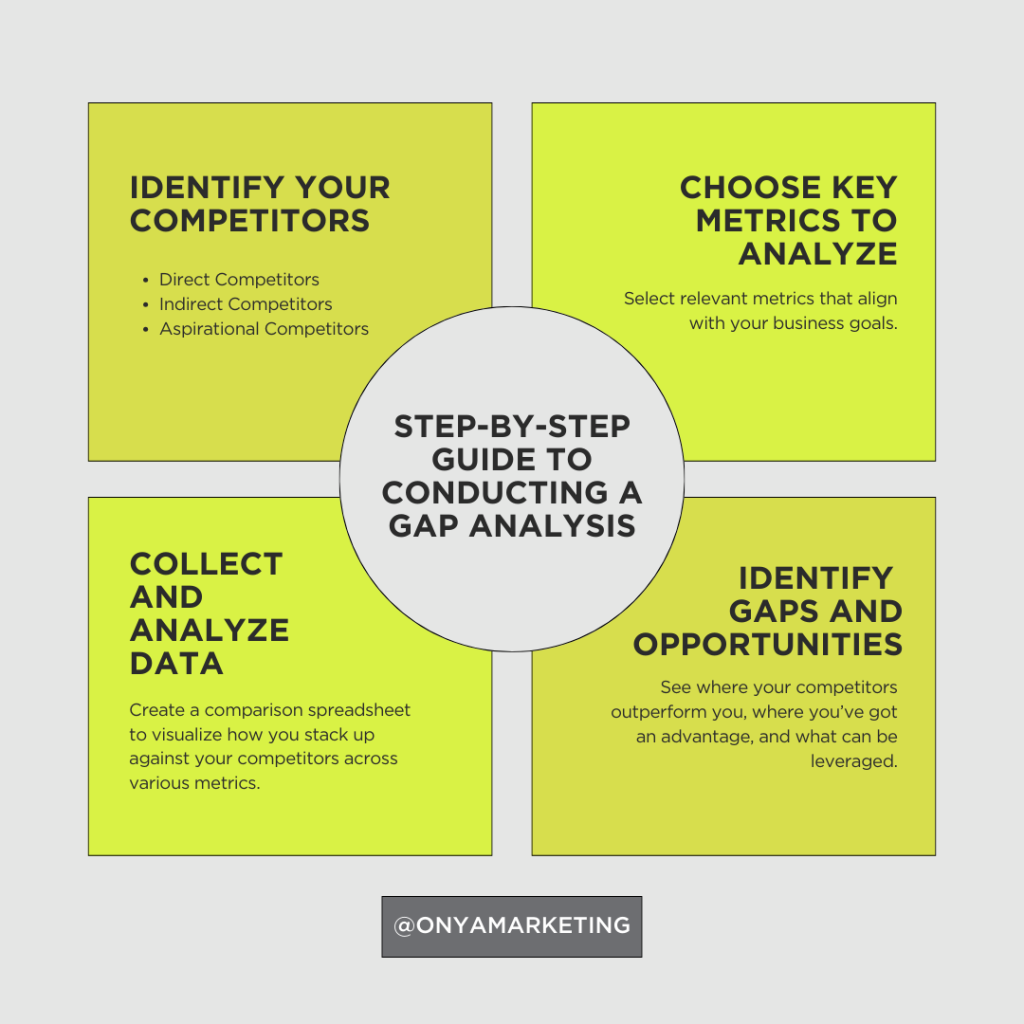
The key components of a competitive gap analysis include:
Identifying your competitors
Analyzing their social media presence
Comparing your performance to theirs
Identifying gaps and opportunities
Conducting a regular gap analysis can reap several benefits:
Improved strategic planning: Understanding your position in the market allows for more informed decision-making.
Better resource allocation: You can focus your efforts and budget on areas that will yield the highest return.
Enhanced competitive advantage: By addressing weaknesses and capitalizing on strengths, you can outperform your rivals.
Step-by-Step Guide to Conducting a Gap Analysis
So how do you best begin? What does this mean for you and your team as you review your online presence?
#1 Identify Your Competitors
Start by creating a list of your competitors. This should include:
Direct competitors: Businesses offering similar products or services to the same target audience.
Indirect competitors: Companies that solve the same problem but with a different approach.
Aspirational competitors: Industry leaders you aim to mimic or surpass.
#2 Choose Key Metrics to Analyze
Select relevant metrics that align with your business goals. Common metrics include:
Follower growth rate
Engagement rates (likes, comments, shares)
Content types and posting frequency
Ad performance (reach, click-through rates, conversions)
#3 Collect and Analyze Data
Use social media analytics tools like Sprout Social, Hootsuite, or native platform analytics to gather data. Go ahead and create a comparison spreadsheet to visualize how you stack up against your competitors across various metrics. Be detailed and see if you’re able to take some of the hard numbers and trend them out. Remember, what gets measured, get’s improved.
#4 Identify Gaps and Opportunities
Analyze your data to pinpoint:
Areas where competitors outperform you
Areas where you have an advantage
Untapped markets or content types that neither you nor your competitors are fully leveraging
This part of your review is CRUCIAL. Be as detailed as possible when looking across trends. Look at details even with keywords your competitors use or don’t use. Look to see what content types you are or aren’t including. Look to see what topics you are or aren’t including that might be hurting your online reputation. It all matters in seeing what works and understanding where YOU may have something that your competitors don’t.
Taking Action Based on Gap Analysis Results
Once you've identified the gaps, it's time to take action. Here are some key areas to focus on:
Improving Content Strategy
If your analysis reveals that certain content types are underperforming compared to your competitors, it's time to reassess your approach. For instance, if you notice that your competitors are gaining significant traction with video content while your text-based posts are lagging, consider incorporating more video into your strategy.
Enhancing Engagement Tactics
Look at how your competitors are fostering community engagement. Are they responding promptly to comments? Hosting live Q&A sessions? Leveraging user-generated content? Implement the strategies that are working well for them while adding your unique twist.
Optimizing Ad Campaigns
Analyze your competitors' ad strategies. Are they targeting specific demographics that you're overlooking? Are they using ad formats that you haven't explored? Use these insights to refine your targeting and experiment with new ad types. Why is this important? A report by Statista shows that digital ad campaign spending is projected to reach $835.82 billion by 2026, emphasizing the growing importance of effective ad strategies.
Exploring New Platforms or Features
If your competitors are finding success on platforms where you're not present, it might be time to expand your social media footprint. Similarly, be quick to adopt new features on existing platforms to stay ahead of the curve.
Competitive gap analysis is not a one-time task but an ongoing process that should be integrated into your social media strategy. By regularly assessing your position relative to competitors and taking data-driven actions (even if it’s just once a year), you can continually refine your approach and stay ahead.
Remember, the goal isn't to simply imitate your competitors but to learn from their successes and failures while carving out your unique position in the market. Use the insights gained from your gap analysis to inform your strategy, but always stay true to your brand's voice and values.
Now that you're armed with the knowledge to conduct a thorough competitive gap analysis, it's time to put these strategies into action. Start by identifying your key competitors and gathering data on their social media performance. With persistence and a data-driven approach, you'll be well on your way to dominating your niche in the social media sphere!
The 8 Greatest Online Threats Your Organization Needs to Worry About
We know being online and visible is a must for businesses nowadays. But with that comes a whole host of potential threats that can seriously disrupt operations or damage reputations if not properly addressed. From malicious hackers to disgruntled employees, the risks are very real.
Here are the 8 biggest online threats your organization should be aware of, why they're so dangerous, and what you can do to protect yourself and continue posting and driving online growth.
Malware/Viruses
Malicious software designed to infiltrate systems and wreak havoc comes in many forms like viruses, trojans, ransomware and more. Over 230,000 new malware samples are detected daily. Just one infection can cripple productivity by corrupting data, monitoring user activity, or locking you out entirely until a ransom is paid.
Use reputable antivirus/anti-malware software and keep it updated, along with your operating system and other programs. Be extremely cautious with email attachments, links, downloads, and untrusted websites that could harbor malicious code. Enable firewalls, use strong unique passwords, back up data regularly, avoid sensitive activities on public Wi-Fi, enable two-factor authentication where possible, and stay informed on the latest security threats and best protection practices.
Phishing Attacks
Phishing relies on cleverly crafted emails or websites to trick users into handing over login credentials or downloading malware. A shocking 30% of phishing emails get opened. With that kind of open rate, it only takes one wrong click from an employee to potentially compromise business data and finances.
Train employees to recognize faulty emails and messages and test them with drill runs. You’ll be glad they know what to look for and will avoid major breaches by doing so.
DDoS Attacks
A distributed denial of service (DDoS) attack overwhelms systems by flooding servers with bogus traffic from multiple sources. This can completely shut down websites and online operations. Over 2.9 million DDoS attacks were recorded in the first half of 2021 alone.
To prevent DDoS attacks, implement rate limiting and traffic filtering mechanisms to restrict the volume of incoming traffic and block malicious sources. Your organization could also use a web application firewall to detect and mitigate common DDoS attack patterns. Employ load balancing and content delivery networks to distribute traffic across multiple servers and geographic locations. Regularly update and patch systems to eliminate vulnerabilities that could be exploited in DDoS attacks. Additionally, have a documented incident response plan and consider using a DDoS mitigation service from a reputable provider.
Data Breaches
Whether caused by hacking, human error, or system glitches, data breaches expose sensitive business information to malicious actors. With 83% of organizations having experienced more than one data breach, the threat of losing proprietary data or failing compliance is very real.
Similar to what has already been mentioned, you will want to work with reputable service providers to place protective barriers and give training to employees to avoid major data breaches (especially if you have personal, client information on hand).
Insider Threats
Not all threats come from external actors. Disgruntled employees, contractors with excessive access privileges, or those succumbing to external persuasion can sabotage ops from the inside. A shocking 34% of data breaches involved internal actors in 2021.
Disgruntled employees who also haven’t had correct access to system resources revoked could also post openly on managed social media accounts and damage a brand’s well-established reputation. Organizations would do well to provide appropriate access where needed but maintain control over systems and accounts so that they can be adjusted as needed.
Social Engineering Attacks
Hackers use psychology and manipulation to trick people into divulging sensitive info or taking compromising actions. From phishing to pretexting to baiting, 98% of cyber attacks rely on social engineering as an attack vector.
Again, organizations should be training employees on how to recognize over-engineered and emotional messages asking specifically for information or taking major actions that could be damaging. They should also be trained on submitting those types of messages or calls to a compliance hotline for a key leader to review.
Advanced Persistent Threats (APTs)
APTs are prolonged, targeted attacks by hostile groups to gain ongoing access to a system while remaining undetected. They are difficult to detect and often motivated by theft of proprietary data or cyber espionage.
In addition to protecting your systems and accounts, situations like this really should involve the authorities and above as they would have the ability and resources to address more advanced threats like this.
Unpatched Software Vulnerabilities
Every piece of software has flaws, and unpatched systems with known vulnerabilities give hackers an easy way in. It takes organizations over 6 months on average to deploy security patches, leaving ample time to be exploited.
In this case, we would always recommend that organizations vet chosen software before buying as it could end up costing them more in the long run.
So what can you do to mitigate these risks?
First and foremost, having a strong cybersecurity strategy with up-to-date tools, processes, and employee training is critical. Implement firewalls, antivirus software, DDoS mitigation services, encryption, multi-factor authentication, and access controls. Continuously monitor for threats and quickly patch any vulnerabilities.
But just as importantly, build a culture of security awareness across your organization. Provide ongoing training to educate employees on threats like phishing, social engineering, and data handling best practices. Encourage them to be vigilant and report any suspicious activity immediately.
The threats are out there, but by being proactive and implementing robust security measures, you can minimize online risks and focus on running your business with peace of mind. Why, again, does it matter for Digital Marketing Agencies to care about these threats? Because they are threats to how end-users see your brand and can negatively impact your online presence, both in social media and beyond.
The Online Battleground: A Digital Marketing Survival Guide
The internet has become a vast, uncharted territory where businesses of all sizes are vying for attention, and if you're not there, you're missing out on a massive chunk of potential customers. But fear not, we’re here to equip you with the ultimate guide to conquer the online realm and emerge victorious.
Why Does Online Presence Matter?
Imagine your business as a cozy little cafe tucked away in a bustling city. Sure, the locals might know about your scrumptious pastries and top-notch coffee, but what about the masses of hungry customers wandering the streets, oblivious to your existence? That's where an online presence comes into play. It's like putting up a gigantic neon sign that screams, "Hey, we're here, and we've got what you need!"
One-third of online consumers use the internet to search for local businesses daily, as per a 2019 Statista survey.
But it's not just about being visible; it's about being accessible. In today's world, customers expect convenience at their fingertips. They want to be able to browse your offerings, read reviews, and even make purchases without ever leaving their cozy couches. An online presence caters to this modern-day demand, making it easier for customers to find you and engage with your business.
The Digital Checklist: What You Need to Do
Now that you understand the importance of an online presence, it's time to roll up your sleeves and get to work. Here's a checklist of essential tasks to tackle:
✅ Build a Website
Think of your website as your virtual storefront. It should be visually appealing, user-friendly, and packed with all the information a potential customer might need. Still, just over a quarter of small businesses (28%) have no website, according to a new report from Top Design Firms. Don't be part of that statistic! Your website should be visually appealing, user-friendly, and packed with all the information a potential customer might need.
From your product or service offerings to your business hours and contact details, make sure it's all there. And don't forget to optimize it for mobile devices – we live in a world where people are constantly on the go.
✅ Embrace Social Media
Social media platforms are like bustling town squares where people gather to share, connect, and discover. Claim your spot by creating business accounts on platforms like Facebook, Instagram, Twitter, and LinkedIn. Use them to showcase your products or services, engage with customers, and even run targeted advertising campaigns. But remember, it's called "social" media for a reason – interact, respond to comments, and don't just broadcast.
✅ Get Local
Local search is huge, especially for small businesses. According to Google, 46% of all Google searches are looking for local information. Make sure you claim and optimize your Google My Business listing, as well as listings on other local directories like Yelp and Bing Places. This will help customers in your area find you more easily when searching for businesses like yours.
✅ Content is King
Creating and sharing valuable content is key to building an online presence that resonates with your target audience. A study by Demand Metric found that content marketing costs 62% less than traditional marketing and generates about 3 times as many leads. Blog posts, videos, infographics – the possibilities are endless. Not only does this establish you as an authority in your industry, but it also helps with search engine optimization (SEO), making it easier for people to find you when searching for relevant keywords.
✅ Analyze and Refine
The digital world is always evolving and shifting to the needs of users, which means you need to stay on top of your game. Regularly analyze your website's performance using tools like Google Analytics, monitor your social media engagement, and pay attention to customer feedback. Use these insights to refine your strategies and make data-driven decisions about where to focus your efforts.
Consistency is Crucial
Building an online presence isn't a one-and-done deal; it requires consistent effort and dedication. Set aside time each week to create new content, interact with your audience, and monitor your performance. Consistency breeds familiarity, and familiarity breeds trust – two essential ingredients for turning casual browsers into loyal customers.
So, there you have it, small business owners – your ultimate guide to conquering the online realm. It might seem daunting at first, but with a solid strategy and a bit of elbow grease, you'll soon be enjoying the sweet spoils of digital success. Now go forth and claim your rightful place in the virtual world! And of course, if you need help shaping this strategy, please reach out to Onya to learn more!
Four Essential Qualifiers for Using Trends Successfully in Your Content Strategy (And Not Falling Prey to Shiny Toys)
“Can we implement this random trend last minute that we heard brings, like, 10X the reach?”
While the ask may sound simple and enticing, our answer is usually no. Mostly because it will disrupt strategy and not resonate with many audiences.
Trends come and go at a dizzying pace. From the latest social media craze to viral video challenges, it's tempting to jump on every bandwagon in hopes of capturing audience attention and engagement.
However, blindly following trends without a strategic approach can be a recipe for wasted effort. To truly leverage trends effectively in your content strategy, you need to apply a discerning lens and ensure they meet certain qualifiers.
Here are four essential criteria to consider before incorporating a trend into your content plan.
#1 Relevance to Your Brand and Audience
The first and most crucial qualifier is relevance. Does the trend align with your brand values, messaging, and target audience? Jumping on a trend that doesn't resonate with your core identity and consumer base can come across as inauthentic or even alienating.
For example, if you're a luxury fashion brand catering to a sophisticated, affluent audience, leveraging a viral dance challenge popularized by Gen Z might not be the most appropriate fit. Instead, focus on trends that speak directly to your brand's essence and the interests of your target consumers.
#2 Longevity and Staying Power
While some trends burn brightly and fade just as quickly, others have the potential for longevity and sustained relevance. Before investing significant resources into a trend, assess its staying power and potential for long-term impact. Short-lived fads may garner a temporary spike in engagement, but they're unlikely to contribute to your long-term content strategy or brand building efforts.
Take the example of the "You" Netflix series, which spawned a slew of memes and social media conversations. While capitalizing on this trend might have been advantageous for brands in the entertainment or pop culture space, its relevance was inherently tied to the show's lifecycle and cultural zeitgeist. In contrast, the broader trend of binge-watching and the rise of streaming platforms has proven to have more enduring relevance and strategic value for content creators.
Effective content strategies require a consistent, cohesive approach across multiple channels and platforms. When evaluating a trend, consider its scalability and potential for seamless integration into your existing content ecosystem. Can it be adapted and repurposed for various formats, such as video, social media posts, blog articles, or email campaigns?
The "Van Life" trend, which emerged as a lifestyle movement embracing minimalism and adventure, offers a prime example of scalability. Brands in the outdoor, travel, or automotive industries could explore this trend through long-form video content, social media highlights, blog posts featuring van life influencers, or even product integrations catering to the unique needs of this niche audience.
Leland Gilmore, with his dogs Oakley and George, near Mount Hood in Oregon. “These are little escape vessels, escape pods,” said Mr. Gilmore, whose business, Benchmark Vehicles makes custom vans for up to $300,000, van not included.Credit...Andy Cochrane (Grabbed from the New York Times)
#4 Measurable Impact and ROI
Ultimately, any content strategy should be driven by measurable goals and a clear return on investment (ROI). While leveraging trends can undoubtedly boost engagement and brand awareness, it's crucial to quantify their impact on key performance indicators (KPIs) such as website traffic, lead generation, sales, or customer loyalty.
Consider the rise of sustainability and eco-conscious consumption as a global trend. Brands that have effectively integrated this trend into their content strategies, such as Patagonia's "Don't Buy This Jacket" campaign or REI's #OptOutside movement, have not only garnered significant engagement and media attention but also demonstrated a measurable impact on brand perception, customer loyalty, and even sales.
By rigorously evaluating trends against these four qualifiers – relevance, longevity, scalability, and measurable impact – you can ensure that your content strategy remains purposeful, authentic, and aligned with your overarching business objectives. Remember, trends should serve as valuable tools in your content arsenal, not fleeting distractions that divert you from your core messaging and mission.
If qualified marketing trends sound like something you can get on board with, and want to learn more, reach out to Onya today. We’d love to share how we’ve helped many achieve success according to their audience's needs!
Evergreen Content: The Key to Sustainable Online Growth
Content is king. You’ve heard it before. However, not all content is created equal. While trendy topics and viral posts can generate a temporary spike in traffic, they often have a short shelf life. To achieve sustainable online growth, organizations need to focus on creating evergreen content – content that remains relevant and valuable over an extended period.
What is Evergreen Content?
Evergreen content is timeless and enduring, providing value to readers long after its initial publication. Unlike time-sensitive or news-based content, evergreen content does not become outdated or lose its relevance quickly. Examples of evergreen content include:
How-to Guides and Tutorials: Step-by-step instructions on completing a task or solving a problem never go out of style. These guides are particularly useful for products, services, or skills that remain relevant over time.
Frequently Asked Questions (FAQs): Addressing common questions or concerns about your industry, products, or services can help establish your authority and provide valuable information to your audience.
Listicles and Roundups: Curated lists of resources, tips, or recommendations are easy to consume and can be updated regularly to maintain their relevance.
Industry Glossaries and Definitions: Providing clear explanations of key terms and concepts in your field can be an invaluable resource for both newcomers and industry veterans.
Case Studies and Success Stories: Detailed accounts of successful projects, campaigns, or customer experiences can inspire and guide others, regardless of when they were published.
The Benefits of Evergreen Content
But why does it matter in the long run? Why should my organization care to put time and energy into generating this type of information? Investing in evergreen content can yield numerous benefits, including:
Improved Search Engine Optimization (SEO): Evergreen content has a better chance of ranking well in search engine results over time, as it remains relevant and continues to accumulate backlinks and social shares.
Increased Website Traffic: High-quality evergreen content can attract new visitors to your website through search engines and social media shares, even years after its initial publication.
Established Authority and Trust: By providing valuable and timeless information, evergreen content can position your organization as a trusted authority in your industry.
Cost-Effectiveness: While creating evergreen content may require more upfront effort, it can pay dividends in the long run by continuing to drive traffic and engagement without the need for constant updates or republishing.
Leveraging Evergreen Content for Growth
To leverage evergreen content effectively and see a return on investment, organizations should:
#1 Conduct thorough keyword research to identify topics and queries that have enduring relevance and search volume.
#2 Invest time and resources in creating comprehensive, high-quality content that provides in-depth insights and answers to common questions or pain points.
#3 Optimize evergreen content for search engines by incorporating relevant keywords, meta descriptions, and alt tags for images.
#4 Promote evergreen content through social media channels, email newsletters, and other marketing channels to increase visibility and drive initial traffic.
#5 Regularly update and refresh evergreen content to ensure it remains accurate and relevant while also adding new sections or resources as needed.
#6 Analyze the performance of evergreen content using metrics such as organic traffic, backlinks, and social shares, and use these insights to inform future content strategy.
By incorporating evergreen content into your overall content marketing strategy, you and your brand can build a solid foundation for sustainable online growth, establish yourself as a trusted authority in your industry, and continue to attract and engage their target audience for years to come. If you need additional assistance in creating or leveraging this type of content for ongoing visibility, reach out to Onya today!
For organizations looking to expand their reach and attract new followers on Instagram, getting featured on the Explore page is a major goal.
The Instagram Explore page surfaces popular Viral posts from accounts you don't already follow, making it a prime discovery area. Getting your content on this highly visible page can drive a huge influx of new eyes to your account.
Why the Explore Page Matters
The Explore page is one of the most viewed areas of Instagram, with over 200 million Instagrammers visiting it daily. It's essentially free advertising for whichever accounts and posts get featured there. According to Instagram, 59% of users visit the Explore page daily.
Getting on the Explore page opens the door for your content to reach a vastly wider audience beyond just your current followers. It exposes your brand to users who may have never heard of you. This increased visibility and new eyes on your account leads to more followers, engagement, website traffic, and sales.
In one case study, travel blogger @Wanderlustcrew received over 30,000 new followers within 24 hours after having a photo featured on the Explore page. Beauty brand ColourPop reported gaining over 11,500 followers from being on the Explore page. Getting featured has the potential for massive reach and growth.
The Top 3 Pillars to Getting on the Explore Page
While there are no guarantees, there are some strategies and best practices to increase your chances:
#1 Use Relevant & Trending Hashtags
Hashtags are one of the primary ways Instagram's algorithm detects content that could be a hit and surfaces it on the Explore page. Use a mix of popular, trending hashtags and more niche ones relevant to your brand. Identify trending hashtags in your industry and hop on them. But don't go overboard - stick to around 5-10 per post.
#2 Post Share-Worthy, Engaging Content
It should go without saying, but the Explore page favors visually striking photos and videos that are likely to interest and engage many users. Use high-quality, eye-catching imagery, and incorporate elements like thoughtful captions, humor, and Stories to drive engagement through likes, comments, shares, and saves.
#3 Stay Active & Consistent
The algorithm gives preference to accounts that post consistently over those with occasional, sporadic posts. Stick to a regular cadence, whether that's daily, multiple times per week, or weekly. Additionally, engage back with your audience through likes, comments, and responding to comments and DMs to prove you're an active account.
How to Sustain Continued Explore Page Exposure
Getting on the Explore page once is exciting, but the real challenge is sustaining that visibility over time and avoiding being just a one-hit-wonder. Here are some tips:
Analyze your top posts - Look at the types of content, hashtags, captions, etc. that got you on the Explore page in the first place and try to replicate what worked.
Watch the trends - Hop on hashtags and content trends early and repeatedly. Pay close attention to what's resonating and performing well.
Curate a cohesive aesthetic - A distinct, consistent style, color palette, editing, etc. makes your posts more recognizable and memorable.
Engage your new audience - When people discover you on Explore, give them a reason to stick around through amazing content and engagement.
Getting featured on Instagram's Explore page is incredibly valuable for organizations looking to get discovered and expand their reach and audience. By leveraging the right hashtags, creating ultra-engaging content, posting consistently, and continuously adjusting to what works best, you'll increase your chances of getting seen by those coveted Explore page users. If you’re looking for ways to get seen on the Explore page, reach out to Onya today to learn more!
The image and videos above are from this page: https://about.instagram.com/features/search-and-explore