Expert insights on digital advertising, strategy, and growth
Marketing Insights
September 17, 2026
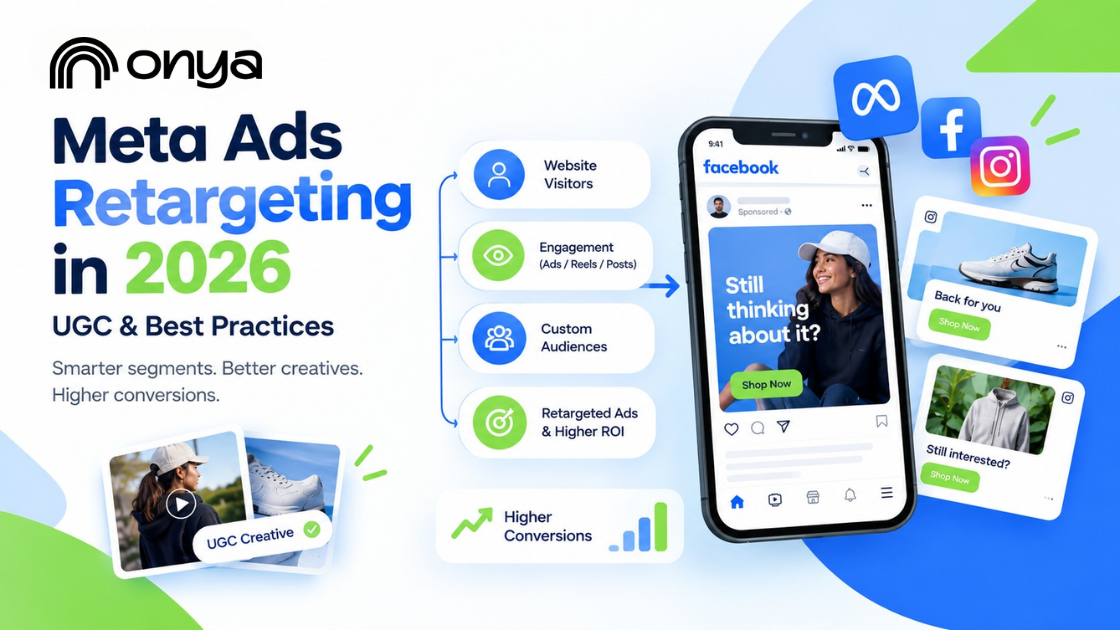
How to optimize UGC for meta ads retargeting 2026?
Meta's ad delivery system now treats creative as a relevance signal, not just the audience behind it. A repeated, generic ad loses ground even when the targeting is accurate, because the platform rewards ads that actually resolve something for the specific person seeing them. That's a meaningful shift from how retargeting used to work, and most campaigns haven't caught up to it yet.
At Onya, we manage Meta retargeting across higher education, healthcare, and business clients, and the gap we see most often isn't a budget problem or a platform problem. It's a strategy problem. The same ad running to every past visitor, with no consideration for where that person actually stopped engaging, is where most retargeting spend goes quiet.
This post breaks down what makes Meta ads retargeting work in 2026, from how to segment your audiences correctly to which creative approach fits which stage of the funnel and how to read your results honestly.
Why the Same Retargeting Ad Twice Doesn't Work Anymore
Meta's delivery system reads fatigue in real time. Run the same creative to the same person too many times, and the platform doesn't just get less effective; it actively deprioritizes the ad. Costs climb. Relevance drops. You end up paying more to reach people who already told you, by not converting, that the first version didn't land.
A few signs this is happening in your account:
Frequency is past 4-5x with no lift in clicks or conversions.
CPMs are creeping up on an audience that hasn't grown.
The same creative has run 30+ days with no rotation.
One ad is going to everyone who visited, regardless of how far they got.
None of this means Meta ad retargeting stopped working. It simply means the strategy behind it hasn't kept up. Retargeting still earns its spot in the funnel — but only when the creative and audience logic change with the person seeing it, not when an ad gets built once and left to run.
How Retargeting with Facebook Ads Works
Meta ad retargeting relies on one core piece of infrastructure: the Meta Pixel, a snippet of code on your website that tracks visitor activity and reports it back to Meta. Without it, you can't build an audience from your website activity.
Here's the sequence:
Someone visits your site or engages on Facebook or Instagram.
The Pixel logs that action and sends it to Meta.
Meta matches it to a user profile.
Your campaign serves ads to that person next time they're in-feed.
Pixel-only setups are common but increasingly incomplete. Browser blockers and iOS privacy settings mean a chunk of signal never makes it through. Pairing the pixel with the Conversions API closes that gap, since server-side data doesn't rely on the visitor's browser cooperating.
If you're still deciding where to put ad spend in the first place, this breakdown of Google Ads vs Meta Ads covers how the two platforms differ.
How Retargeting Instagram Ads Works
Instagram retargeting uses engagement and website activity to reconnect with people who have already interacted with your brand. Instead of relying only on broad audience targeting, you can build audiences from actions people take across Instagram, Facebook, and your website.
Here’s the basic sequence:
Someone watches your Reel, interacts with a post, visits your profile, or lands on your website.
Meta receives signals from that interaction through its platform and tracking tools.
Those signals can be used to create or update a retargeting audience.
Your Instagram campaign then delivers relevant ads to people who match your audience criteria.
For example, someone might watch a large portion of a product Reel but leave without visiting your website. You can create an audience around that type of engagement and show them a follow-up ad with more product information or a different creative.
Website visitors can also be retargeted on Instagram when the appropriate Meta tracking and audience setup is in place. The Meta Pixel can send website events to Meta, while the Conversions API can complement browser-based tracking with server-side event data.
The key is to treat Instagram retargeting as a continuation of the customer's first interaction, not simply another opportunity to display the same ad. Someone who watched a Reel, visited a product page, or abandoned a cart may need a different message at each stage.
That makes audience segmentation and creative rotation just as important as the retargeting campaign itself.
Build Retargeting Audiences Around Behavior, Not Channel
Most accounts build one audience: everyone who visited in the last 30 days. That treats a person who reads one page the same as someone who almost converted, and they need completely different ads. Group your audiences by what the person actually did, not which channel they came from:
Engagement-based — visited your site or watched most of a video, but took no further action. They know you exist; they're not sold yet.
Intent-based — started something and didn't finish: an abandoned cart, an unfinished application. This is your highest-intent group; they've told you exactly what they want.
Relationship-based — people you already have data on, email lists, and past customers. Worth prioritizing since first-party data holds up better as tracking degrades, part of why retargeting still earns its place in 2026.
Each group stalled for a different reason, so each needs a different message. That's what makes the next step, matching UGC retargeting ads to the right hook, actually work.
Match the Hook to the Reason They Stalled
The product doesn't need three versions. The first three seconds do. Someone who barely looked needs a different opener than someone who almost bought, and matching that opener to the actual hesitation is what separates UGC that converts from UGC that just adds frequency.
Awareness Hook: For Visitors Who Left Too Early They saw the ad or landed on the site but never connected it to a problem they actually have. The fix isn't a better product shot; it's leading with the problem itself, in plain language, before the product ever shows up. If the hook doesn't name what they're struggling with, the product looks irrelevant no matter how good it is.
Proof Hook: For Visitors Who Hesitated Cart abandoners clicked, then talked themselves out of it. Usually it's one unanswered objection: will this actually work for someone like me? Answer it with something concrete, not a general claim:
A specific timeframe ("after two weeks")
A specific result, not a vague one
An unpolished, real moment over a staged one
Decision Hook: For Visitors Who Are Almost Ready This is someone deep in consideration, not a past buyer. They've viewed pricing, come back more than once, and maybe started a form or cart and stopped. They don't need convincing anymore; they need a reason to stop deliberating: a deadline, a guarantee, or a direct answer to what's still holding them back.
Rotate the opener before the offer. When frequency climbs and results dip, the hook usually goes stale first, not the product or the price.
Meta Ads Retargeting Best Practices: How Often to Refresh UGC Creative?
The same clip that converted well two weeks ago starts losing steam the moment your audience has seen it too many times, and leaving it running past that point burns the budget instead of saving it.
Watch performance, not the calendar. Two numbers tell you when it's time to replace a creative:
Frequency past roughly 3-5x with no lift in clicks or conversions
CTR declining on a specific asset, not just the campaign average
When both start moving the wrong way, replace the creative, usually every 2-3 weeks for an active retargeting segment, sooner for smaller audiences that see the same ad more often.
Refreshing doesn't always mean a full reshoot. Often the fastest fix is swapping the opening hook or format on existing footage. If you're running low on raw material to pull from, this breakdown of UGC content ideas is a good next stop before you schedule a new shoot.
Formatting UGC for Facebook and Instagram Retargeting
A strong hook still underperforms if the format looks like an ad instead of a Reel. A few non-negotiables for retargeting social media content on Facebook and Instagram:
A few things worth getting right:
Shoot vertical, 9:16, for Stories and Reels, where most retargeting inventory runs
Front-load the hook; the first two to three seconds decide whether someone stays.
Burn in captions, since most Feed and Stories viewing happens with sound off
Skip the polish; handheld framing and natural lighting read as authentic, which matters more with a warm audience than production value
Facebook and Instagram audiences don't always respond the same way. With retargeting Instagram ads, you'll often see more visual, lifestyle-driven clips perform best, campus life, and product-in-use moments.
When retargeting with Facebook ads, you're often reaching an older or more decision-adjacent audience, parents in a higher-ed context, for example, so slightly more direct, information-forward creative can perform better there. Running the same UGC on both, with small adjustments to pacing or caption tone, tends to outperform picking one platform and skipping the other.
These aren't universal retargeting ads best practices; they're specific to warm audiences who've already seen your brand once and are deciding whether the second look is worth their time.
Are Your UGC Retargeting Ads Actually Working?
Vanity metrics won't tell you if it's actually paying off. Check these at the individual-asset level, not the campaign average:
Frequency and CTR trend per asset — a declining CTR on one specific clip is your earliest fatigue signal, well before overall cost per result moves.
Cost per result by audience segment — lumping every stalled visitor into one report hides which segment is actually underperforming.
Performance by platform — retargeting with Facebook ads and retargeting Instagram ads rarely perform identically, so review them separately.
If none of this is tracked at that level, the honest answer is, "You don't know whether retargeting is working; you just know it's running.
This is usually where teams either build the reporting themselves or bring in someone who already has the system for it. At Onya, matching hooks to funnel stage, formatting for each platform, and reporting on individual assets isn't an add-on; it's the default way we run Meta ads retargeting for every client, higher education, ecommerce, or otherwise.
Conclusion
Retargeting on social media only works when the strategy behind it does. Segment audiences by behavior, match each hook to the reason someone stalled, and refresh creative before fatigue sets in — that's what separates UGC retargeting ads that convert from ones that just add frequency. This discipline applies whether you're running retargeting with Facebook ads, retargeting Instagram ads, or both at once.
Onya is a full-service digital marketing agency that builds this whole system: strategy, creative, platform-specific formatting, and asset-level reporting, not just the retargeting piece. If you want a team that follows retargeting ads best practices end to end, see what Onya can do for your business. Contact us now!
Frequently Asked Questions (FAQs)
What counts as UGC in a Meta retargeting ad? Content that looks like it's from a real person, not a brand. Think testimonials, honest reviews, or day-in-the-life clips.
How is retargeting different from a regular Meta ad? Regular ads target people who don't know you yet. Retargeting shows ads only to people who already visited or engaged with your brand.
Can the same UGC clip work on Facebook and Instagram? Yes, but results differ. Instagram favors lifestyle content, Facebook often does better with more direct messaging.
Do I need a big budget for UGC retargeting ads? No. Polished, expensive-looking ads often perform worse with a warm audience than something that looks real.
How do I know if my UGC creative needs to be replaced? Watch frequency and CTR on that specific ad. When frequency rises and CTR drops, it's time to swap it.
Getting stuck in a posting rut happens to the best of us.
This feeling is all too familiar (and frustrating) for those of us in an online space.
There is no need to panic! Let’s chat about how to revive your social media presence, get back into a sustainable routine, and find joy in posting again.
Below are our top 6 tried and true methods for getting the inspiration flowing again when it comes to your content.
But First, Why do I feel this way?
Content Pressure
Many folks feel pressured to constantly produce high-quality and engaging content. This pressure can lead to burnout and make individuals hesitant to post anything at all.
Fear of Judgment
The fear of criticism or negative feedback can hinder people from posting on social media. This fear may stem from concerns about how their content will be perceived by others.
Comparison and Envy
Constantly comparing one's social media presence to others can create feelings of inadequacy and discouragement. This comparison may result in a reluctance to post, as you may feel that your content isn't as good as others'.
Algorithm Anxiety
The ever-changing algorithms on social media platforms can be intimidating. You may fear that their content won't be seen by followers, leading to a decrease in motivation to post regularly.
Time Constraints
Busy schedules and time constraints can limit the amount of time individuals have to dedicate to creating and sharing content on social media platforms.
Before we begin, ask yourself these questions:
Are any of the reasons above key issues that need to be tackled at home or abroad first? The above might require a solid attitude check. Make sure you’re posting for the right reasons.
Which social media platform(s) are you feeling stuck on?
What kind of content have you been creating? Are you switching up types and formats?
What are your specific goals for social media?
What are some examples of posts that have done well in the past?
What are some things you find draining about creating content?
#1 Take a Break
Sometimes all you need is a little distance. Step away from the platform for a few days and think about ANYTHING other than your social media content. Then, come back with fresh eyes. We can guarantee that when you sit back down at your desk, the inspiration will start flowing a bit quicker. And as a reminder, it’s ok to take a break social media will still be there when you get back.
#2 Revisit Your Goals
Know your WHY! Remind yourself why you’re on social media. Are you wanting to connect with colleagues or friends? Are you trying to build your brand? Are you sharing your passions? Refocusing on your goals can guide your content creation and remind you why you started in the first place. Not to mention, should most definitely get you back on track if you are holding to a social media strategy.
#3 Analyze Your Audience
Take note of what your followers respond to the most. Check engagement metrics to understand your community’s preferences or try tailoring your content to match the current topics of conversation in your industry. Know their pain points and know what they’re searching for.
#4 Plan Your Content
Create a content calendar to schedule posts in advance. Batching is key here. Set aside time one day a week to batch the next week or so in order to get content ready. Avoid any last-minute scrambles to ensure consistent posting and higher quality content. The algorithm loves that (and so will your readers).
#5 Use Tools and Resources
Take advantage of apps like Later to schedule content efficiently or Notion to organize your content seamlessly. Technology is here and designed to try and make your life a bit easier. Don’t ignore it! Use them to your advantage and you’ll soon discover how helpful they can be in getting you out of the monotony.
#6 Repurpose Old Content
No need to reinvent the wheel every time you post.
Don’t be afraid to revisit successful posts, especially those that are evergreen. Rephrase, update, add new visuals, use a different format, or share on a new platform for a new take.
Remember that social media is a marathon, not a sprint. Take intentional steps, refocus on your goals, and use tools to streamline your process flow. If you still need help in getting out of the rut, Onya is here to help! Please reach out to us for more tips on how to grow sustainably.
Social Media Not Working? 5 Key Questions for Optimization
Are your social media efforts not working or delivering as expected? Does each month feel like you fall lower and lower beneath the mark you set for your brand? Is it crickets each time you check your channels?
Truth be told, there are several reasons your content may not be working.
Success on social media isn’t just about following trends or hitting arbitrary growth targets. It’s about aligning your strategy with your unique goals and understanding your customer’s/reader’s journey.
But where do you start? Right here with 5 key questions designed to unlock the potential of your social media strategy.
#1 Which metrics align best with my goals?
Start by aligning your social media goals with your overall organizational objectives.
What types of actions are you aiming to hit? If you’re trying to hit everything, the likelihood of your audience taking action is zero. Be sure that your outcomes match what the organization is trying to do.
For instance, if you’re a school that’s trying to encourage volunteer signups for upcoming bake sales, you probably don’t need to be asking people their immediate thoughts on bus schedules on social media.
Here’s a quick guide to help:
Awareness phase - Your potential customer/reader is exploring options. Key metrics include impressions, reach, and growth in followers.
Consideration phase - They’re weighing the pros and cons. Key metrics include engagement rate, website views from social, downloads and CTR.
Conversion Phase - Decision time for your potential customer. Key metrics include email sign-ups, adds-to-cart, checkouts, purchases, link clicks, etc.
Loyalty Phase - Focus on retaining customers and building community. Key metrics include repeat customer rate, engagement rate, shares, and reviews.
#2 What are the pain points of my audience and how can my content provide a solution?
Be obsessed with your target audience. Prove yourself by adding value to their life. Deep dive into the mindset of your customers. Create content that they need at the moment. Relate to your audience as people, not buyers. Seek to solve their pain points.
The best way to do this is to spend time talking to them in person before talking to them online. Meet them, ask them what bothers them. Reach out to them via surveys if you have to. These are all excellent avenues to getting on their level.
#3 What gaps exist between my current strategy and the strategies of successful competitors?
Don’t overlook your competitors! While it’s tempting to focus solely on your strategy, understanding your competition is key to your growth.
It’s not just about who’s out there, but how you can uniquely fill the gaps and stand out. Analyzing your competitors helps you recognize your strengths, pinpoint weaknesses, and identify fresh audiences. Remember that it’s not about copying, it’s about learning from their successes and making those insights work for you.
#4 What can I learn from my top and bottom-performing posts?
Analyze your top and bottom-performing posts to refine your strategy.
Successful content highlights what your audience enjoys, guiding you to repurpose similar themes.
For low performers, identify common issues like topic, format, or timing. Use these insights to adapt and enhance future posts. Better yet, repurpose these posts to see if changing the wording/timing/etc does improve the engagement.
#5 Are my expectations too high?
So many illegitimate experts are spewing off nonsense and creating unrealistic standards for the average organization.
Instagram alone is typically not enough to increase revenue substantially, it is not common for brands to grow by thousands of followers every month, and every piece of content you put out there shouldn’t go viral.
What we’re saying is that your content may be working exactly as it should for the audience you’re catering to and for the business you’re set up to succeed within.
The best way to gauge realistic expectations is by seeing how others perform in your industry and for the normal audience that they’re catering to.
For instance, if you’re a small family-owned repairman, you are likely focused on your local community, not the US as a whole (unless you’re Superman). Your reach will be smaller and much more direct. Does that mean your business won’t do well using social media? No! You have a great opportunity to reach others who may have otherwise not known of your business.
Remember that it’s not about doing all the things. It’s about doing the right things for your organization.
Is social media strategy something you need help with? Let Onya be there to guide you. Reach out to us today to learn more!
Navigating the Storm: A Concise Guide to Effective Crisis Management on Social Media
We all like to go about our day believing the best for our businesses and organizations - hoping and praying all the right marketing efforts will pay off with more clients, more engagement, more inquiries, etc.
But what about when the worst happens? When situations unfold completely outside of marketing strategy? When natural disaster strikes, when people go rogue, when someone dies…..the list can go on. What happens then? What do you do?
In many of these cases, you’ll sometimes see social media pages go quiet. How on earth do you begin to respond to those scenarios? Circumstances you DIDN'T plan for? The ones you didn’t slide into your planned programming?
In this blog post, we will explore the best practices for handling crisis management on your social media accounts and why it matters to your readers.
#1 Prepared Planning
Organizations of all shapes and sizes should always come with a crisis management plan in place. While it may not be able to capture all life scenarios, it should outline realistic situations, who is responding, how to respond, and how to best communicate.
A study by Deloitte found that organizations with crisis management plans and simulations in place respond 30% faster to crises. Regularly conduct crisis simulation exercises to ensure the social media team is well-prepared and can react promptly in a crisis.
#2 Swift Response Time
While many would not expect your social media team to sit at attention 24/7 (and in many cases, resources don’t allow for this), there should be an expectation of quick responses should something occur.
According to a study by Sprout Social, 79% of consumers expect a response on social media within the first 24 hours, and 30% expect a response within one hour.
Let’s say a warehouse fire happens that offsets shipping times and impacts current workers. It is likely not wise to wait a full week to respond online. Be prompt, be direct, and don’t keep people waiting.
#3 Transparency & Honesty
Usually when something happens, the more forthcoming, the better. Organizations should openly acknowledge the issue, take responsibility when appropriate, and provide regular updates to rebuild trust.
A survey by Edelman revealed that 81% of consumers believe that companies should be transparent about how they operate and communicate.
When organizations sweep things under the rug or ignore the issue entirely, it tells consumers that their concerns do not matter and that there is something to hide.
Use this opportunity also also reach out and ask people how they are. See if they’ll respond and provide you with real-time feedback. Or look to provide discounts or help where possible so folks see you engaging and caring about their well-being.
#4 Consistent Messaging Across Platforms
When different messages are sent across different platforms, it can confuse readers as to what may be happening.
Salesforce found that 76% of consumers expect a consistent experience when interacting with a brand across different channels (no matter the situation).
As an organization trying to guide the message, ensure that crisis communication is consistent across all social media platforms to avoid confusion and maintain a unified brand image.
#5 Empathy & Emotional Intelligence
Even if the crisis or issue didn’t directly impact you personally, it did impact someone. This is why empathy is so important to convey when messaging on social media. This is showing that they understand the impact of the crisis on their audience.
PwC showed that 59% of consumers believe businesses have a responsibility to demonstrate empathy.
Navigating a crisis on social media requires a strategic and data-driven approach. By embracing transparency, maintaining consistency, and demonstrating empathy, organizations can weather the storm and also emerge stronger.
Remember, a well-managed crisis can allow brands to showcase their commitment to their audience and build lasting trust. If this is something that your organization needs assistance in managing, Onya would be glad to talk!
The 5 Things You Need to Ask Yourself Before Posting
You're likely reading this because you're interested in exploring social media etiquette further. Posting regularly is a necessity for organizations that want to stay on people's radars. Without a consistent posting schedule, algorithms are less likely to pick you up and surface you frequently. However, hasty or uninformed posts can cause serious issues down the road.
To ensure your organization's social platforms contribute positively to its image and goals, here are the top 5 things to check before hitting that 'Post' button.
#1 Before posting, have I fact-checked for accuracy?
This is a big one. Before sharing any information, it's imperative to fact-check thoroughly. Inaccurate information can damage your organization's credibility and reputation.
According to a study by the Pew Research Center, 64% of Americans say that fake news has caused "a great deal" of confusion about basic facts of current events.
Did you know that it is thought that 10% of the content could be generated by Artificial Intelligence? Furthermore, experts say that “90% of Online Content Will Be AI-generated by 2026”.
This means that fact-checking is doubly important to remain a credible source of information. Ensuring the accuracy of your posts not only builds trust among your audience but also safeguards your organization from potential backlash.
It is critical to stay clear of this type of backlash, considering there is a significant amount of AI-generated content. AI-produced information is not always accurate. And while it can be a valuable tool, it remains distinct from human capabilities.
#2 Am I optimizing my content for each platform before I post?
Tailoring content to suit the specific features and algorithms of each social media platform is essential.
A study by Social Media Today revealed that posts with images receive 2.3 times more engagement on Facebook, while tweets with images are 150% more likely to be retweeted.
Some platforms are designed for videos, others for text, and others for pictures. Adjust and post strategically for the biggest impact. Understanding and utilizing the nuances of each platform can significantly enhance your organization's reach.
#3 Does my post maintain consistency in brand voice?
Maintaining a consistent brand voice across all social platforms is vital for brand recognition and loyalty. According to a survey by Lucidpress, consistent brand presentation across all platforms increases revenue by up to 23%.
Inconsistencies in messaging can confuse your audience and dilute your brand identity. Before posting on Social Media, ensure your content aligns with your organization's established brand voice and values.
#4 Have I monitored for cultural sensitivity prior to posting?
In a globalized world, cultural sensitivity is paramount. A misjudged post can lead to significant backlash and damage your organization's international reputation.
A journal post from Sage Journals found that consumers have stopped purchasing from a brand due to a perceived lack of cultural sensitivity. It's crucial to conduct thorough cultural sensitivity checks to avoid unintentional offense and foster a positive global image.
While we know it’s impossible to please everyone, it’s important to keep kindness at the forefront. Posts that aren’t empathetic or thoughtful about who or how it may affect should be handled with great care.
#5 Before posting visual content, have I double-checked for accessibility?
Accessibility is often overlooked but plays a critical role in social media engagement.
According to the World Health Organization, approximately 15% of the world's population lives with some form of disability.
Ensuring your visual content is accessible to all users, including those with visual impairments, not only broadens your audience but also aligns with ethical and inclusive business practices.
Run your images through alt-text descriptions and check for color contrasts to make your content universally accessible.
All-in-all, a well-thought-out social media strategy involves more than just posting updates. By fact-checking, optimizing content, maintaining brand consistency, monitoring cultural sensitivity, and ensuring accessibility, your organization can confidently navigate the complex landscape of social media, fostering positive relationships and long-term success.
Need help with knowing what or when to post? Onya has got you covered. Reach out today to learn more!
Not putting “you” in your content has its problems. This is what makes people or organizations blend in with other people in their industries!
You need to bring YOU into your content to:
Build the personal brand
Build trust
Stand out
Don’t hear us wrong, it won't work for every piece of content. But how you write your captions, content, and live text is so important if you want to do those three things.
As soon as you start saying “I”, you’re on the path to building a more personal brand. A brand no one else can take from you because you’re the face of it!
Why Does it Matter?
A personal tone contributes to authenticity, which is crucial for building trust with your audience. A report by Cohn & Wolfe found that 91% of consumers globally value honesty about products and services.
A study by Nielsen revealed that 59% of consumers prefer to buy new products from brands familiar to them. A personal tone helps to create brand familiarity and a positive perception.
The Humanizing Brand Experience Report by WP Engine found that 77% of consumers believe a brand is more likely to purchase if the brand feels more human, emphasizing the importance of humanizing the brand through a personal tone.
How I Bring You Into the Content
This doesn’t mean just posting selfies. A lot of the time it boils down to how you write things. This means talking about yourself and telling a story. We know it sounds egotistical but it’s not because you do it in an unhelpful way.
Changing the tone and pronouns
The easiest shift you can make is changing the tone in captions or posts.
“How to” → “How I” (see what we did there with the title?)
“Why You Should” → “Why I”
“What You” → “What I”
Sharing Personal Stories
Share relevant personal or brand stories. This could include anecdotes about your journey, challenges you've overcome, or success stories. Tips are great and daily routines are fine but they need context in the grand scheme of your success and your life.
Show Behind-the-Scenes
Give your audience a glimpse behind the scenes. Showcasing your workspace, team members, or day-to-day operations adds a human touch.
Use Authentic Imagery
Use authentic images and try to avoid stock photos that might feel impersonal. Authentic visuals connect better with your audience.
Engage in Conversations
Respond to comments and messages. Engaging in conversations with your audience helps build a more personal connection. Be present and don’t be afraid of sometimes negative feedback.
Share Personal Opinions
Express your opinions on relevant industry topics. I’ll say it again for the people in the back. Be willing to share thoughts!!! This positions your brand as having a unique perspective and adds a personal touch. It’s ok if not everyone agrees with you. So long as it’s mindful and thought-provoking, it's ok to discuss.
Use Your Voice
Literally. Consider using audio or video content where your audience can hear your voice. This adds a personal punch and allows them to connect with you on a more human level.
It’s simple talking about your experiences and educating people through a different tone. This is how many of these personal brands make it. They speak about themselves but in a way where they’re sharing their learnings so you can still glean value. Are you looking for more ways to add more “You” in your content? Reach out to Onya today to learn more!
How to Best Leverage Instagram Features for Organizational Success
When it comes to using Instagram, the world is your oyster. It has SO many unbelievable features that can be used to make an impact. But, how do you, as an organizational marketer, know which ones to use and when?
As we know, Instagram stands out as a powerhouse for brand promotion and engagement. We understand the challenges organizations face in crafting compelling content that resonates with their target audience and drives them to take action.
In this post, we’ll focus on what features you should hone in on and some great, real-life examples of others who have mastered the feature.
Instagram Stories have become a staple for brands seeking to engage their audience with ephemeral content. Sharing behind-the-scenes glimpses, launches, or limited-time promotions creates a sense of urgency while increasing your chances of reaching the Instagram Explore Page through higher engagement.
Real-Life Example: Nike's use of Stories to showcase athlete takeovers, providing a unique, authentic perspective and fostering a strong connection with their audience.
Instagram Reels: Captivating Audiences with Videos
Short-form videos dominate social media, and Reels allows you to showcase your creativity in a fun and dynamic way. With this feature, we recommend using music, effects, and trending challenges to boost discoverability and engagement.
Real-Life Example: Chipotle's Reels feature quick and entertaining recipe tutorials, reinforcing their brand identity while providing valuable content for their audience.
Instagram Shopping: Turning Browsing into Purchases
Instagram Shopping allows organizations to tag products/services in posts and stories, transforming the platform into a virtual storefront. Make the buying process seamless by providing product details and a direct link to your online store.
Real-Life Example: FashionNova's strategic use of Instagram Shopping tags, simplifying the purchase journey and driving direct sales from their Instagram profile.
Instagram Live: Real-Time Engagement and Connection
Instagram Live is a powerful tool for real-time engagement, allowing you to connect with your audience authentically. With this Instagram feature, we recommend hosting Q&A sessions, launches, or behind-the-scenes events.
Real-Life Example: Dior's use of Instagram Live to broadcast their runway shows, providing an exclusive, real-time experience for their audience and fostering a sense of inclusivity.
User-Generated Content (UGC): Harnessing the Power of Your Community
This is one we encourage across multiple platforms! Encourage your audience to become content creators by sharing their experiences with your products or services. UGC not only builds trust but also provides a fresh perspective on your brand.
Real-Life Example: Starbucks' #StarbucksCupContest, inviting customers to share their artistic cup designs. This not only generated buzz but also created a sense of community around the brand.
Instagram's diverse platform features offer a treasure trove of opportunities for organizations to connect with their audience in meaningful ways. By strategically incorporating these features into your content strategy, inspired by the successful examples above, you can unlock the full potential of Instagram and elevate your organization to new heights of engagement and success. Looking for help on how to make this happen? Reach out to Onya today!
Social media marketing is dead….at least the way many have been doing it.
Most social media marketing strategies exist with the following three areas as a support: Content marketing, Influencer marketing, ads (and more ads).
It’s not to say that any of these things don’t make up a good SMM strategy - but marketing platforms change all the time - and so do user’s behaviors.
Just look at the billboard industry transformation: For decades, billboards used to be printed on massive cutouts. Now, they’re all LED and motion graphics.
In the same way, social media is undergoing some significant changes right now. It’s true that short form content is taking over most platforms. But it’s all moving away from social networking and communication into entertainment.
And not just entertainment - Advertainment. The merging of the terms "advertisement" and "entertainment," had already been gaining traction in digital marketing. Advertainment involves creating advertising content that is entertaining, engaging, and non-disruptive, aiming to capture the audience's attention in a more enjoyable and memorable way.
Here are some key aspects related to the rise of advertainment in digital marketing and what your organization should consider possibly leveraging this next year:
Content Storytelling: Advertainment often relies on compelling storytelling. Brands are leveraging narratives, characters, and plotlines to create content that resonates emotionally with the audience, making the advertising experience more enjoyable and memorable.
Interactive Content: Incorporating interactive elements into advertisements, such as quizzes, polls, and games, enhances user engagement. Interactive advertainment allows users to participate actively, making the experience more immersive and enjoyable.
Branded Content and Partnerships: Collaborations with influencers, content creators, and other brands can help integrate products or messages seamlessly into entertaining content. This approach makes the advertising feel less intrusive and more like a natural part of the user's experience.
Short-form Video Content: Advertisers are leveraging platforms like TikTok, Instagram Reels, and YouTube Shorts which have become popular for short, entertaining videos. Brands are creating catchy and fun videos to capture the audience's attention in a short span and convey their message effectively.
User-Generated Content (UGC): Advertisers and organizations are encouraging users to create their own content that can contribute to advertainment. Brands can feature user-generated content in their marketing efforts, fostering a sense of community and authenticity.
Live Streaming: Live streaming as advertainment provides an opportunity for real-time interaction with the audience. Brands are using live streams for product launches, behind-the-scenes content, and interactive Q&A sessions, creating an entertaining and engaging experience.
Augmented Reality (AR) and Virtual Reality (VR): Leveraging AR and VR technologies to create immersive and entertaining experiences through advertisement purposes is VERY unique these days. This could include interactive AR filters, virtual try-on experiences, or VR simulations that engage users in a unique way.
There are so many other ways to turn your marketing efforts towards the future but this shift isn’t going away anytime soon.
If you are advertising, make it adver-tainment. If you are education, make it edu-tainment. Informational marketing? Make it info-tainment.
People seek to learn and grow while they’re online, but to make their experiences engaging and entertaining is both exciting and revolutionary!
If you want to learn more about this new trend in marketing or how your team can leverage these new techniques, feel free to reach out to Onya today.
Why Consistency Applies to More than a Posting Schedule
Consistency is one of the most popular pieces of advice shared on social media (for good reason). But, are you applying it correctly?
Consistency should not just apply to your posting schedule - it should apply to every area of your online presence.
Where to Apply Consistency
Brand Identity
Consistency is the backbone of a strong brand identity. It's not just about having a recognizable logo or color scheme; it's about creating a cohesive narrative that resonates with your audience. Consistent branding across all platforms fosters trust and familiarity, making your brand easily distinguishable in the crowded social media space.
Tone of Voice
Your brand's personality is communicated through its tone of voice. Whether it's a casual and conversational style or a more formal approach, maintaining a consistent tone helps build a relationship with your audience. Consistency in language and communication style enhances brand recall and ensures that your messaging aligns with your brand values.
Overall Messaging
Crafting a clear and consistent message is important for clear storytelling. From product launches to promotional campaigns, maintaining a unified message reinforces brand positioning and helps in delivering a coherent narrative that your audience can understand and connect with.
Account Aesthetics
Similar to brand identity, visual appeal is a powerful tool in the world of social media. Consistency in account aesthetics, from the choice of imagery to the overall layout, contributes to a visually harmonious profile. A cohesive aesthetic not only attracts attention but also reinforces brand identity, making your content instantly recognizable.
Engagement Strategies
Consistency in engagement strategies is key to building a loyal and interactive community. Responding to comments, messages, and mentions in a timely and consistent manner (using a similar tone of voice mentioned above) shows that your brand values its audience. This level of engagement helps strengthen the relationship between your brand and its followers, fostering a sense of community.
Cohesion Across Accounts
In a space where brands maintain a presence on multiple social media platforms, maintaining cohesion across social channels is vital. Each platform may have its unique characteristics, but a consistent brand presence ensures that your audience experiences a seamless transition when moving from one platform to another.
Why Consistency Matters
Consistency is beneficial to your account as it can grow your engagement, reach, and following as well as create a strong and recognizable brand image, so long as you're thorough! But why?
Increased Engagement - According to a Buffer study, accounts that post once per day receive on average 22% more engagement than those that post less frequently.
Brand Recognition - According to Lucidpress, consistent brand presentation across all platforms can increase revenue by up to 33%.
Audience Trust and Loyalty - A survey by Edelman revealed that 81% of consumers need to trust a brand before making a purchase. Consistency in messaging and content helps build trust with the audience.
Algorithm Favorability - According to Hootsuite, platforms like Instagram prioritize recent and frequent posts in users' feeds, making a consistent posting schedule crucial for visibility.
While posting schedules are valuable, the true power of consistency lies in its ability to weave a coherent and compelling narrative across all facets of your social media strategy. It reminds users that you have it together and that you are well-aware of what’s happening all around you. If this is something you’re struggling to craft in your organization, Onya would love to talk more. Contact us today to chat!
Have you ever thought that the success of social media is impossible to measure? We understand it can be tricky, but it IS possible. A strategy rooted in analytics is key.
First, what is Social Media ROI? ROI= Return on Investment. It measures the value generated by the time and money you’ve placed into social media. As a note, this isn’t always monetary.
Why Measure Social Media ROI?
Tracking social media ROI is crucial for a number of reasons:
Resource Allocation:
By tracking ROI, organizations can assess the effectiveness of their social media efforts and allocate resources more efficiently. This involves understanding which platforms, campaigns, or strategies are providing the best returns so that you can focus your time and budget on what works best. Marketing budgets are often scrutinized, and decision-makers want to know the returns they are getting on their investment. By demonstrating a positive ROI, you can justify the budget allocated to social media marketing and potentially secure additional resources for future campaigns.
Performance Measurement:
We’ll talk about this more below, but ROI metrics help measure the performance of your social media marketing activities. It allows you to evaluate the success of specific campaigns, posts, or advertisements. Understanding what is Social Media Options working and what isn't enables you to make data-driven decisions to optimize your strategy. Remember that social media platforms are dynamic and what worked today may not work tomorrow. Analyzing patterns will alert you to when something has been adjusted and may require you to adjust in return.
Demonstrating Value to Stakeholders:
For organizations, particularly those with stakeholders, it's essential to demonstrate the value of social media marketing efforts. ROI metrics provide tangible evidence of the impact of social media on the bottom line, making it easier to justify continued investment and support.
Customer Insights:
Analyzing ROI data can provide insights into customer behavior and preferences. Understanding which content or products resonate with your audience can guide future marketing efforts and overall business strategy.
Here’s How To Best Deliver Roi With Your Social Media Efforts:
Identify Your KPIs
Your social media efforts will be pointless if they aren’t tied to organizational goals. Before you can even measure ROI, you need to establish clear goals for your organization, so you can align those goals to relevant social media metrics.
Select Your Engagement Metrics
Social media engagement metrics provide valuable insights into how your audience interacts with your content. These include likes, comments, shares, and clicks. Tools like Facebook Insights, Instagram Insights, and Twitter Analytics offer detailed data on these metrics.
Establish Conversion Tracking
Implement conversion tracking to measure direct revenue generation or task completion from social media. Platforms like Facebook and Instagram allow you to set up conversion events, such as website purchases or sign-ups. Connecting these events to your ROI metrics provides tangible evidence of social media's impact on your bottom line.
Track & Adjust
Once you’ve established your KPIs and selected engagement metrics, you can track the data against it. Check your numbers consistently and take note of what is performing well and what is not doing well so you can adjust. For example, if your organization’s goal is to increase brand awareness, you’ll be monitoring shares, reach, and followers. Tools like Google Analytics and social media analytics platforms track these metrics.
Calculate Customer Acquisition Cost (CAC)
Calculating the cost to acquire a customer through social media is crucial for determining ROI. Divide the total social media advertising spend by the number of customers acquired during a specific period. Benchmarking this against the customer lifetime value (CLV) provides insights into the sustainability and profitability of your social media campaigns.
Branch Out
Remember, what you’re doing organically on social media is only one small piece of your conversation funnel. Most often, the purpose of organic social is to increase top-of-funnel goals, like brand awareness or customer loyalty.
If you aren’t seeing the ROI you were expecting, it’s time to look at your holistic marketing strategy. You need to leverage multiple channels (cohesively) to ensure you’re reaching your audience throughout every point of their interactive journey. You may need to introduce emails, blogs, paid media, or multiple platforms.
Keep in mind that social media ROI is a long-term goal. Seeing an influx of website traffic because of one viral post doesn’t equate to long-term ROI. On the flip side, one month of low numbers doesn’t mean you’ve failed. It’s a long process and you can’t expect organic social alone to be doing all the work for your ROI.
If you need assistance in how to build and track ROI that is successful for your organization, please reach out to Onya today to learn more!