Expert insights on digital advertising, strategy, and growth
Marketing Insights
September 17, 2026
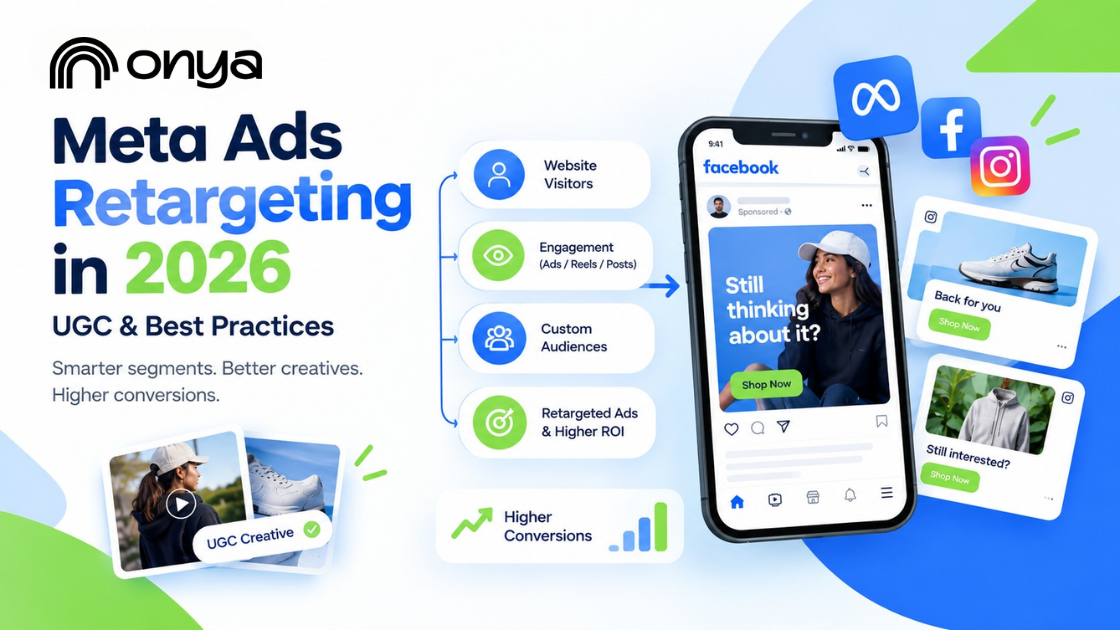
How to optimize UGC for meta ads retargeting 2026?
Meta's ad delivery system now treats creative as a relevance signal, not just the audience behind it. A repeated, generic ad loses ground even when the targeting is accurate, because the platform rewards ads that actually resolve something for the specific person seeing them. That's a meaningful shift from how retargeting used to work, and most campaigns haven't caught up to it yet.
At Onya, we manage Meta retargeting across higher education, healthcare, and business clients, and the gap we see most often isn't a budget problem or a platform problem. It's a strategy problem. The same ad running to every past visitor, with no consideration for where that person actually stopped engaging, is where most retargeting spend goes quiet.
This post breaks down what makes Meta ads retargeting work in 2026, from how to segment your audiences correctly to which creative approach fits which stage of the funnel and how to read your results honestly.
Why the Same Retargeting Ad Twice Doesn't Work Anymore
Meta's delivery system reads fatigue in real time. Run the same creative to the same person too many times, and the platform doesn't just get less effective; it actively deprioritizes the ad. Costs climb. Relevance drops. You end up paying more to reach people who already told you, by not converting, that the first version didn't land.
A few signs this is happening in your account:
Frequency is past 4-5x with no lift in clicks or conversions.
CPMs are creeping up on an audience that hasn't grown.
The same creative has run 30+ days with no rotation.
One ad is going to everyone who visited, regardless of how far they got.
None of this means Meta ad retargeting stopped working. It simply means the strategy behind it hasn't kept up. Retargeting still earns its spot in the funnel — but only when the creative and audience logic change with the person seeing it, not when an ad gets built once and left to run.
How Retargeting with Facebook Ads Works
Meta ad retargeting relies on one core piece of infrastructure: the Meta Pixel, a snippet of code on your website that tracks visitor activity and reports it back to Meta. Without it, you can't build an audience from your website activity.
Here's the sequence:
Someone visits your site or engages on Facebook or Instagram.
The Pixel logs that action and sends it to Meta.
Meta matches it to a user profile.
Your campaign serves ads to that person next time they're in-feed.
Pixel-only setups are common but increasingly incomplete. Browser blockers and iOS privacy settings mean a chunk of signal never makes it through. Pairing the pixel with the Conversions API closes that gap, since server-side data doesn't rely on the visitor's browser cooperating.
If you're still deciding where to put ad spend in the first place, this breakdown of Google Ads vs Meta Ads covers how the two platforms differ.
How Retargeting Instagram Ads Works
Instagram retargeting uses engagement and website activity to reconnect with people who have already interacted with your brand. Instead of relying only on broad audience targeting, you can build audiences from actions people take across Instagram, Facebook, and your website.
Here’s the basic sequence:
Someone watches your Reel, interacts with a post, visits your profile, or lands on your website.
Meta receives signals from that interaction through its platform and tracking tools.
Those signals can be used to create or update a retargeting audience.
Your Instagram campaign then delivers relevant ads to people who match your audience criteria.
For example, someone might watch a large portion of a product Reel but leave without visiting your website. You can create an audience around that type of engagement and show them a follow-up ad with more product information or a different creative.
Website visitors can also be retargeted on Instagram when the appropriate Meta tracking and audience setup is in place. The Meta Pixel can send website events to Meta, while the Conversions API can complement browser-based tracking with server-side event data.
The key is to treat Instagram retargeting as a continuation of the customer's first interaction, not simply another opportunity to display the same ad. Someone who watched a Reel, visited a product page, or abandoned a cart may need a different message at each stage.
That makes audience segmentation and creative rotation just as important as the retargeting campaign itself.
Build Retargeting Audiences Around Behavior, Not Channel
Most accounts build one audience: everyone who visited in the last 30 days. That treats a person who reads one page the same as someone who almost converted, and they need completely different ads. Group your audiences by what the person actually did, not which channel they came from:
Engagement-based — visited your site or watched most of a video, but took no further action. They know you exist; they're not sold yet.
Intent-based — started something and didn't finish: an abandoned cart, an unfinished application. This is your highest-intent group; they've told you exactly what they want.
Relationship-based — people you already have data on, email lists, and past customers. Worth prioritizing since first-party data holds up better as tracking degrades, part of why retargeting still earns its place in 2026.
Each group stalled for a different reason, so each needs a different message. That's what makes the next step, matching UGC retargeting ads to the right hook, actually work.
Match the Hook to the Reason They Stalled
The product doesn't need three versions. The first three seconds do. Someone who barely looked needs a different opener than someone who almost bought, and matching that opener to the actual hesitation is what separates UGC that converts from UGC that just adds frequency.
Awareness Hook: For Visitors Who Left Too Early They saw the ad or landed on the site but never connected it to a problem they actually have. The fix isn't a better product shot; it's leading with the problem itself, in plain language, before the product ever shows up. If the hook doesn't name what they're struggling with, the product looks irrelevant no matter how good it is.
Proof Hook: For Visitors Who Hesitated Cart abandoners clicked, then talked themselves out of it. Usually it's one unanswered objection: will this actually work for someone like me? Answer it with something concrete, not a general claim:
A specific timeframe ("after two weeks")
A specific result, not a vague one
An unpolished, real moment over a staged one
Decision Hook: For Visitors Who Are Almost Ready This is someone deep in consideration, not a past buyer. They've viewed pricing, come back more than once, and maybe started a form or cart and stopped. They don't need convincing anymore; they need a reason to stop deliberating: a deadline, a guarantee, or a direct answer to what's still holding them back.
Rotate the opener before the offer. When frequency climbs and results dip, the hook usually goes stale first, not the product or the price.
Meta Ads Retargeting Best Practices: How Often to Refresh UGC Creative?
The same clip that converted well two weeks ago starts losing steam the moment your audience has seen it too many times, and leaving it running past that point burns the budget instead of saving it.
Watch performance, not the calendar. Two numbers tell you when it's time to replace a creative:
Frequency past roughly 3-5x with no lift in clicks or conversions
CTR declining on a specific asset, not just the campaign average
When both start moving the wrong way, replace the creative, usually every 2-3 weeks for an active retargeting segment, sooner for smaller audiences that see the same ad more often.
Refreshing doesn't always mean a full reshoot. Often the fastest fix is swapping the opening hook or format on existing footage. If you're running low on raw material to pull from, this breakdown of UGC content ideas is a good next stop before you schedule a new shoot.
Formatting UGC for Facebook and Instagram Retargeting
A strong hook still underperforms if the format looks like an ad instead of a Reel. A few non-negotiables for retargeting social media content on Facebook and Instagram:
A few things worth getting right:
Shoot vertical, 9:16, for Stories and Reels, where most retargeting inventory runs
Front-load the hook; the first two to three seconds decide whether someone stays.
Burn in captions, since most Feed and Stories viewing happens with sound off
Skip the polish; handheld framing and natural lighting read as authentic, which matters more with a warm audience than production value
Facebook and Instagram audiences don't always respond the same way. With retargeting Instagram ads, you'll often see more visual, lifestyle-driven clips perform best, campus life, and product-in-use moments.
When retargeting with Facebook ads, you're often reaching an older or more decision-adjacent audience, parents in a higher-ed context, for example, so slightly more direct, information-forward creative can perform better there. Running the same UGC on both, with small adjustments to pacing or caption tone, tends to outperform picking one platform and skipping the other.
These aren't universal retargeting ads best practices; they're specific to warm audiences who've already seen your brand once and are deciding whether the second look is worth their time.
Are Your UGC Retargeting Ads Actually Working?
Vanity metrics won't tell you if it's actually paying off. Check these at the individual-asset level, not the campaign average:
Frequency and CTR trend per asset — a declining CTR on one specific clip is your earliest fatigue signal, well before overall cost per result moves.
Cost per result by audience segment — lumping every stalled visitor into one report hides which segment is actually underperforming.
Performance by platform — retargeting with Facebook ads and retargeting Instagram ads rarely perform identically, so review them separately.
If none of this is tracked at that level, the honest answer is, "You don't know whether retargeting is working; you just know it's running.
This is usually where teams either build the reporting themselves or bring in someone who already has the system for it. At Onya, matching hooks to funnel stage, formatting for each platform, and reporting on individual assets isn't an add-on; it's the default way we run Meta ads retargeting for every client, higher education, ecommerce, or otherwise.
Conclusion
Retargeting on social media only works when the strategy behind it does. Segment audiences by behavior, match each hook to the reason someone stalled, and refresh creative before fatigue sets in — that's what separates UGC retargeting ads that convert from ones that just add frequency. This discipline applies whether you're running retargeting with Facebook ads, retargeting Instagram ads, or both at once.
Onya is a full-service digital marketing agency that builds this whole system: strategy, creative, platform-specific formatting, and asset-level reporting, not just the retargeting piece. If you want a team that follows retargeting ads best practices end to end, see what Onya can do for your business. Contact us now!
Frequently Asked Questions (FAQs)
What counts as UGC in a Meta retargeting ad? Content that looks like it's from a real person, not a brand. Think testimonials, honest reviews, or day-in-the-life clips.
How is retargeting different from a regular Meta ad? Regular ads target people who don't know you yet. Retargeting shows ads only to people who already visited or engaged with your brand.
Can the same UGC clip work on Facebook and Instagram? Yes, but results differ. Instagram favors lifestyle content, Facebook often does better with more direct messaging.
Do I need a big budget for UGC retargeting ads? No. Polished, expensive-looking ads often perform worse with a warm audience than something that looks real.
How do I know if my UGC creative needs to be replaced? Watch frequency and CTR on that specific ad. When frequency rises and CTR drops, it's time to swap it.
Slow growth? Declined reach? An inconsistent posting schedule may be to blame.
News flash: You don’t have to post daily if you can’t keep up with it. The last thing you want is to get burnt out on posting content.
You need to find a schedule that works and makes sense for you and is something you can stick to consistently!
Something we’ve taken note of recently on the algorithm is that the lifespan of our content lasts a lot longer these days. That means when you have a great post, it can keep reaching and provide exposure for even months at a time.
In other words, quality over quantity is really starting to become fleshed out on these social platforms.
That being said, to reach those posts that last a long time, it will take some initial leg work with a certain quantity of posts. Even ten posts alone won't be enough to cut it. You need to prove to both your audience and the algorithm that you are trustworthy and can generate valuable information.
Below, we’ll share the right scheduling and the right formats to pack a punch. Let’s dive into what schedules might work best for you and your organization to garner the attention you deserve without killing yourself.
“I have no time” Schedule:
Monday2-3 stories on your plan for the weekTuesday1 reelThursday2-3 stories on how things are goingFriday1 reelSaturday2-3 stories on how things are going
Monday1 reel, 3-5 storiesTuesday1 carousel post, 2-3 storiesWednesday1 reelThursday1 carousel post, 2-3 storiesFriday1 reelSaturday1 carousel post, 2-3 storiesSunday3-5 stories
Est. Time Spend: 5-8 hours/week
How to Leverage Instagram Content Formats
Static Posts
Big, bold headline promises an outcome
Color combination that stands out
More visuals than words (or just short sentences)
Make post caption valuable
Information organized, clean design, easy to scan
Stories
Videos/Images highlighting short and sweet thoughts
Captions are preferable
Images should not have long sentences
Sequence of events that increase in thought with a takeaway at the end
Reels
Start video with a pain point/desire
The shorter the better, no fluff
Use graphics, animations, effects to keep viewers engaged
Design covers with interesting hooks to get people to click and watch
Carousels
5-8 slides work best
Big, bold headline on the first slide
Short paragraphs and sentences
Create lists, bullet points
Recap main lesson in last slide for more saves
Still feeling overwhelmed by the amount of content to both create and then schedule? Onya understands this can all feel like a lot for those who are focused on keeping their organization running. If social marketing is something you want to learn more about, reach out to us today!
Unlocking the Power of Personalization as User Magnet
We’ve spoken about personalization before but it’s time to circle back around to it again. And we want to make something clear - the marketing persona is not what it used to be. In fact, it’s detailed. MUCH more detailed.
As we navigate the ever-evolving consumer preferences and behaviors, organizations are recognizing that a one-size-fits-all approach no longer cuts it.
Personalization in marketing involves tailoring content, services, and experiences to suit individual consumer preferences. This goes beyond simply addressing customers by their first names in emails; it's about leveraging data-driven insights to provide highly relevant and customized interactions at every touchpoint of the customer journey.
The Rise of Personalization
When it comes to personalization, it’s not just an option, it’s a necessity for organizations seeking to stay top of mind for users.
Customized Content Drives Engagement:
According to a study by Accenture, 91% of consumers are more likely to shop with brands that provide relevant offers and recommendations. Personalized content, whether in the form of emails, product/service recommendations, or advertisements, significantly boosts engagement.
Impact on Purchase Decisions:
A survey conducted by Epsilon found that 80% of consumers are more likely to make a purchase when brands offer a personalized experience. Understanding customer preferences and delivering tailored messaging can be a powerful motivator in the decision-making process.
Enhancing Customer Loyalty:
In a report by Segment, 44% of consumers say they are likely to become repeat buyers after a personalized shopping experience. Personalization not only attracts new customers but also fosters long-term loyalty by demonstrating an understanding of individual needs.
Personalization Advantage in Branding
Personalization is not just a marketing tactic; it's becoming a key differentiator in brand perception.
Building Emotional Connections
Brands that invest in personalization create emotional connections with their audience. A study by SmarterHQ found that 72% of consumers only engage with personalized messaging, emphasizing the importance of connecting on a personal level.
Increased Customer Satisfaction
Personalization leads to higher levels of customer satisfaction. A survey by Infosys revealed that 74% of customers feel frustrated when website content is not personalized. Meeting customer expectations through personalized experiences contributes to overall satisfaction.
Word-of-Mouth Amplification
Satisfied customers are also more likely to share their positive experiences. A report by Evergage showed that 63% of consumers are annoyed by generic advertising, emphasizing the need for personalized content that resonates and sparks positive word-of-mouth.
The ability to deliver personalized experiences will be a crucial factor in maintaining a competitive edge. From AI-driven recommendations to hyper-personalized email campaigns, the era of mass marketing is fading, making room for a new wave where personalization is the magnet that attracts and retains customers.
In case you were wondering, personalization is not just a trend; it's a fundamental shift in the way organizations connect with their audience. By understanding individual preferences and leveraging data insights, organizations can create a unique and compelling narrative that resonates with consumers, fostering loyalty and driving success in the modern marketing landscape.
Elevating Your Brand in 2024: Onya’s Guide to Collecting Powerful Client Testimonials
Building your brand online is more than possible these days. We have all sorts of digital assets at our disposal to get set up and going.
However, the real challenge comes when we seek the trusted opinions of others to back what we claim online. You know it exists because you’ve worked alongside these organizations for some time.
But how do you get them to share their story in a way that intrigues others? As a team dedicated to maximizing the impact of your brand’s digital footprint, we understand the pivotal role testimonials play in building trust, credibility, and fostering authentic connections with your audience.
Why Testimonials Matter
Trust Factor
According to a survey by BrightLocal, 93% of consumers read online reviews to determine a local business’ reputation, emphasizing the role testimonials play in building trust, even with users on the go.
Conversion Boost
A report by Speigel Research Center reveals that displaying reviews can increase conversion rates by up to 270%. This data illustrates the real-world punch testimonials can have on turning prospects into loyal customers.
Search Engine Optimization
Testimonials provide fresh, relevant content that search engines just love. The more positive (and up-to-date) reviews you have, the higher your website is likely to rank.
Testimonials play an important role in driving the success of organizations but what is the best way to build and collect on those authentic endorsements? Below are some key strategies we recommend to obtain the information you all need.
Key strategies for obtaining great testimonials from your clients
Timing is Everything
When seeking testimonials, timing is critical. Reach out to clients shortly after a successful collaboration, ensuring their positive experience is still fresh in their minds. This not only increases the likelihood of a prompt response but also captures the genuine enthusiasm and satisfaction they feel.
Make it Effortless
Simplicity is key for digital processes you can loop clients into contributing. Craft a straightforward process for clients to share their testimonials. Consider creating a user-friendly online form or providing clear instructions on the preferred format. The easier it is for clients to contribute, the more likely they are to participate.
Encourage Specificity
General testimonials are good, but specific details make them great. Encourage clients to share specific experiences, outcomes, or features they found most beneficial. These details not only add authenticity but also resonate with potential customers facing similar challenges.
Incentivize Participation
Consider offering incentives for clients who take the time to provide testimonials. Whether it's a discount on future services, exclusive access, or a simple thank-you gift, incentives can motivate clients to share their positive experiences.
Leverage Social Proof
Lastly, harness the power of social media platforms to showcase your testimonials. Share snippets or full testimonials on platforms like Instagram, Twitter, and LinkedIn. This not only amplifies your brand's credibility but also increases the visibility of positive reviews.
Testimonials are not just endorsements, they can act as powerful tools for building a strong online presence and promoting trust amongst your audience. By understanding and using the tactics above, you can strategically collect and leverage testimonials to elevate your organization online. We would encourage your team to embrace and encourage testimonials as you work alongside your amazing clients and teams.
Need additional insight when it comes to bolstering your digital footprint? Reach out to Onya today to learn more!
The biggest, and usually most effective way, is through online searchability. With the majority of internet users relying on search engines to discover information and services, optimizing your digital presence is necessary.
Securing a prominent position on search engine results pages (SERPs) is crucial for organizations seeking to enhance their online visibility and drive increased traffic.
According to a study by Advanced Web Ranking, the first position on Google receives an average click-through rate (CTR) of around 31.7%, while the second and third positions drop significantly to 24.7% and 18.7%, respectively.
Furthermore, the majority of users seldom venture beyond the first page of search results, with an estimated 75% never scrolling past the first page, as reported by a survey conducted by HubSpot.
This underscores the importance of securing a top spot, as it significantly increases the likelihood of attracting organic traffic.
Moreover, data from Bing reveals that organizations at the top of search results are perceived as more trustworthy and credible by users, further emphasizing the impact on consumer perception.
Below, we provide you with five powerful ways to enhance your content’s visibility so that you can unlock the visibility you’ve been looking for.
Keyword Optimization: The Foundation of Search Visibility
Keywords are the building blocks of search engine optimization (SEO). By strategically incorporating relevant keywords into your content, you increase the likelihood of search engines understanding and ranking your pages appropriately.
Research and identify the keywords your target audience is likely to use when searching for content related to your organization.
Take Airbnb, for instance. They’ve done a marvelous job of mastering keyword optimization by seamlessly integrating relevant keywords into their listings. Hosts create detailed descriptions that include location-specific terms, amenities, and other key features, making it easier for potential guests to find their properties by searching online, even if they don’t know Airbnb offers these types of places.
Quality Content Creation: Be the Authority in Your Niche
Search engines prioritize content that provides value and relevance to users. Creating high-quality, informative, and engaging content establishes your organization as an authority in your niche.
Regularly update your website with fresh, relevant content to signal to search engines that your site is active and valuable to users.
HubSpot's blog is a prime example of a platform that consistently produces high-quality content. Covering a wide range of topics related to marketing, sales, and customer service, HubSpot's blog attracts a significant organic audience. By providing valuable insights, they have positioned themselves as an authority in the inbound marketing space.
Mobile Optimization: Catering to the Mobile-First Era
As mobile usage continues to dominate internet traffic, search engines prioritize mobile-friendly websites. You’ll want to be sure your website is responsive, providing an optimal viewing and interaction experience across various devices.
Google, in particular, uses mobile-first indexing, meaning it primarily uses the mobile version of the content for indexing and ranking.
Consider the mobile optimization efforts of The New York Times that have significantly contributed to its online success. The website is designed to deliver a seamless and engaging experience on both desktop and mobile devices, ensuring that users can access their content conveniently regardless of the device they use.
Link Building: Establishing Authority through Connections
Search engines view external links to your content as a vote of confidence, indicating that your content is valuable and relevant. Actively pursue link-building strategies, such as guest posting, collaborations, and partnerships, to build a network of links pointing to your content. This not only enhances your website's authority but also improves its search engine ranking.
A good example of this is Neil Patel, a renowned digital marketing expert, who effectively utilizes link-building strategies. Through guest posting on authoritative websites, he has built a robust backlink profile, signaling to search engines that his content is trustworthy and valuable. This has contributed to his high visibility in search results.
Social Media Integration: Amplifying Your Content's Reach
Social media platforms play a significant role in driving traffic and enhancing the visibility of your content. Share your content across various social channels to increase its reach and encourage user engagement. Social signals, such as likes, shares, and comments, are factors that search engines consider when assessing the relevance and popularity of content.
Red Bull's social media strategy is a prime example of effectively leveraging social channels to boost content visibility. Through visually engaging posts and shareable content, Red Bull has created a strong online presence. Their content is widely shared, leading to increased visibility and brand awareness, which positively impacts search engine rankings.
Optimizing your organization's content for search engines involves a multifaceted approach. You can significantly enhance your content's discoverability by leveraging the above strategies. Learning from the success stories of industry leaders demonstrates the tangible impact these strategies can have on improving search engine visibility and, ultimately, driving organic traffic to your organization's digital assets.
Want to learn more about how you can make this a reality for you? Feel free to reach out to Onya today to learn more!
Unlock Instagram success with your unique presence—it's your biggest flex.
However, there will always be other people who are sharing very similar or even the same things as you when it comes to Instagram content.
Let nothing hinder you from infusing your creations with your unique touch. No one has your story. No one has your breakthroughs. No one has your experiences or knowledge. No one else is you.
Moreover, People may want to buy your offers because they resonate more with you than with someone else. Share the authentic side of your business! Define the content that you want to create.
This is why connecting your story to your personal organization’s brand and sharing it on Instagram is key to your growth and success. Here are the best ways to make that happen.
Connect with Your Audience
Authenticity is like a magnet. When you show the real, unfiltered side of your organization, people can relate to you. This means ALL sides.
Takeaway: Share behind-the-scenes moments, customer stories, or even occasional bloopers to connect on a human level.
Stand Out in a Sea of Sameness
Instagram is a crowded place, and everyone's trying to be picture-perfect. When you're bold and unique, you grab attention.
Takeaway: Don't be afraid to experiment with different styles, colors, and content to stand out from the crowd. You don’t want to be cluttered though. Keep it short. Keep it simple. And for goodness sake, branch away from stock photos where you can.
Build Trust
Authenticity builds trust like nothing else. People want to know they're dealing with a genuine organization that cares.
Takeaway: Be transparent about your services, processes, and customer feedback. Show what you’ve learned to show that you're trustworthy.
Encourage Engagement
Boldness sparks conversation. When you're unafraid to share your opinions or take a stance on something, it gets people talking.
Takeaway: Don't shy away from sharing your views on relevant topics or starting discussions around your industry.
If you want help with what it looks like to carry that out and build a trust factor on social media, Onya can help teach you exactly what to do and prove it out with our incredible other client’s success. Reach out today to find out how to get started!
For those who are already leveraging TikTok (and are hopefully enjoying using it), we want to help you switch things up.
We think it’s time you kick things up a notch by elevating your content. Switching up content in TikTok is important for a couple of reasons like maintaining engagement and expanding our reach on the platform this year.
According to a recent report by Influencer Marketing Hub, TikTok has over 1 billion monthly active users, making it one of the fastest-growing social media platforms. With this wide audience, it's essential to diversify your content to cater to a range of interests and demographics.
A study by Hootsuite also found that TikTok users spend an average of 52 minutes per day on the platform, indicating a significant opportunity to capture their attention with varied content.
Repetitive or monotonous content can lead to audience fatigue, causing users to unfollow or disengage. By regularly introducing new and exciting content, you can keep your audience interested and continue to attract new followers, ultimately improving your overall TikTok presence.
TikTok's algorithm also favors diverse and engaging content. HootSuite revealed that TikTok's algorithm promotes videos that receive higher engagement, including likes, comments, shares, and follows. By switching up your Content Ideas, you increase the chances of creating content that resonates with your audience.
Additionally, TikTok rewards creators who use trending sounds, challenges, and formats, so staying up-to-date with current trends and adapting your content accordingly is essential for staying relevant and being discovered by new users.
Below, we explore some of the best ways to help switch things up and move your content in the right direction.
#1 Routines
TikTok viewers LOVE routines! Whether you share your morning routine before work, your evening skincare routine, or your Sunday reset, this type of content is a great way to share some more of your life.
#2 Share Your Knowledge
Many of us (Gen Z especially) use social media platforms as search engines to find out more specific information. This provides a great opportunity to grow your TikTok audience by sharing information, advice, or tips related to your niche, whether you’re a personal trainer, makeup artist, or a student!
#3 Hop On a Trend
You would usually hear marketers say, “Don’t jump on every trend.” You’re right! Your social media strategy should not be based on trending content and trying to go viral. However, TikTok is a fun and lighthearted app and as long as you only partake in trends that are in line with your brand, they can be a fun way to share more of your personality.
#4 Storytimes
Storytelling content often performs well on social media, and the short-form nature of TikTok makes it the perfect platform for this. Whether you share the story of a crazy travel adventure or an embarrassing workplace blunder, this style of content can engage viewers.
#5 Controversial Opinions
Sharing a controversial opinion or unpopular opinion related to your industry can be a great way to generate interest and conversation in the comment section to garner engagement. Make sure you’re ready to defend your opinion and be sure to also not become intentionally harsh or offensive.
Diversifying your content on TikTok is not only important for maintaining your current audience but also for maximizing your exposure to potential new followers through the platform's algorithmic recommendations and the diverse interests of its billion-strong user base.
Is your organization in need of some help when it comes to optimizing your presence on TikTok or social media? Let Onya help. Give our experts a call today to learn about how we’ve helped others like you reach success!
12 Social Media Marketing Misconceptions to Avoid in 2024
Getting anywhere on social media these days can be a painfully slow process. It’s a complaint we hear often when talking with prospects. At times, it can seem like your follower count has stalled and you’ve reached an engagement plateau.
More often than not, this sluggish growth is the result of how you approach and manage social media and marketing to others. You may be doing something to discourage new clients without even realizing it!
If that’s the case, don’t fret. Navigating the realm of social media is a trial-and-error process for many. You have the power to help turn it around.
Do Instead: Use 4-8 relevant hashtags for posting content.
Hashtags are not dead because they continue to serve as valuable tools for categorizing and discovering content on social media platforms, making it easier for users to find and engage with relevant posts. To use them effectively, choose relevant and specific hashtags, limit their number to avoid clutter, and research trending tags to boost the visibility of your posts.
#2 Only posting reels
Do Instead: Diversify your content plan.
To diversify your content plan for social media, incorporate a variety of content formats such as images, videos, infographics, and written posts to cater to different audience preferences. Additionally, explore different topics, themes, and posting schedules to keep your audience engaged and reach a broader demographic.
#3 Posting whenever you are free
Do Instead: Post at the right time.
Posting at the right time on social media is crucial to maximize engagement. Research and analyze your target audience's online behavior to identify their peak activity hours, which often vary by platform. Experiment with different posting times, and use social media analytics tools to track when your content receives the most interaction, allowing you to refine your posting schedule for optimal reach and impact.
#4 Using only square posts (primarily related to Instagram)
Do Instead: Create varying shaped posts.
Using only square posts on social media can limit your creative options and engagement potential. Different content formats, such as landscape and portrait-oriented images, videos, and stories, can capture attention more effectively, offer a fresh perspective, and cater to various platform-specific features, ultimately enhancing your overall social media strategy.
#5 Ignoring SEO-friendly captions
Do Instead: Include keywords in captions.
Using SEO-friendly captions on social media is crucial as it helps increase the discoverability of your content and attracts a wider audience. Effective captions incorporate relevant keywords, phrases, and hashtags that resonate with your target audience and align with their search queries, boosting your content's visibility in search engine results and on the social media platform itself. By optimizing your captions, you enhance your chances of attracting new followers, improving engagement, and driving organic traffic to your social media profiles and website.
#6 Only running promotional posts
Do Instead: Share actionable content.
Sharing actionable content on social media is essential because it provides real value to your audience and encourages them to take meaningful steps. Whether it's offering practical tips, how-to guides, or advice, such content not only fosters trust and engagement but also positions you as a knowledgeable and authoritative source in your niche, ultimately driving more significant results and building a loyal following.
#7 Leaving generic, auto-generated comments
Do Instead: Personalize your responses.
Personalizing responses to comments on social media is crucial for building genuine connections with your audience. It shows that you value and appreciate their engagement, creating a sense of community and trust, which can lead to increased brand loyalty and stronger customer relationships.
#8 Deleting posts that don’t perform
Do Instead: Only archive outdated posts.
While low-performing posts may not garner immediate engagement, they can still have long-term value by contributing to your content history and showcasing your brand's journey. Additionally, archived posts can be revisited, updated, or repurposed in the future to better suit changing trends or audience preferences, providing a potential second chance for success and maintaining a consistent online presence.
#9 Avoiding the repurposing of content
Do Instead: Repurpose content every quarter, if not, every year.
Repurposing content each year on social media is essential to extend the lifespan of your valuable content assets and ensure they reach new audience segments. By revisiting and updating evergreen content, you can keep it fresh, adapt it to changing trends, and continue to provide value to your audience over time, ultimately saving time and effort in content creation while maximizing its impact.
#10 Over-complicating your designs
Do Instead: Create easy and practical designs.
Simple designs on social media can often be more effective as they are visually appealing and easy for your audience to grasp quickly. Clean and uncluttered graphics or images, with a focus on a clear message or call-to-action, can help your content stand out amidst the noise of busy timelines. Utilizing minimalistic designs can also make your content more shareable and memorable, increasing the likelihood that it resonates with your target audience.
#11 Ignoring unique features like highlights or stories
Do Instead: Have 3-5 updated highlights and post stories throughout the week.
Marketers should post unique post types on social media to create a sense of urgency and exclusivity, as these formats often disappear after a set time, encouraging users to engage with the content in the moment. Additionally, highlights and stories provide an opportunity to share real-time updates, behind-the-scenes content, and temporary promotions, fostering a more authentic and immediate connection with the audience.
#12 Not analyzing your analytics
Do Instead: Measure all key metrics.
Marketers should review and act on analytics because data-driven insights provide a clear understanding of their audience's behavior and preferences, allowing them to refine their strategies and make informed decisions. By analyzing metrics such as engagement rates, click-through rates, and conversion rates, marketers can identify what's working and what's not, enabling them to allocate resources more effectively and optimize their campaigns for better results. Regularly monitoring analytics also helps marketers stay agile and adapt to changing trends and customer needs, ensuring that their efforts remain relevant and competitive in the ever-evolving digital landscape.
We want you to be as successful as possible when it comes to navigating and growing consistently on social media. We understand though that many factors contribute to your success. Needing help with social media posting and advertising for your organization? Onya can help - reach out today!
The holidays are upon us! Along with all the parties and celebrations, we are all hands on deck preparing you all for what is to come in 2024!
As we approach the new year, it will be essential to take a closer look at upcoming social media predictions and how they may impact you and your business so that you can best prepare and leverage growth opportunities. Based on our knowledge of regularly used social media platforms, we will explore some of the most significant trends and developments expected to shape the social media landscape in 2024.
Our 2024 Social Media Predictions
The Growth of Short-Form Video Platforms
Short-form video platforms like TikTok and Instagram Reels have gained tremendous popularity in recent years. This trend is expected to continue in 2024 as TikTok alone is projected to reach over 1.2 billion monthly active users, according to a report by Fox Business. Marketing teams and organizations should consider using these types of platforms for regular planned content or paid advertising, especially in reaching younger audiences.
The Increased Use of Augmented Reality (AR) and Virtual Reality (VR)
AR and VR are poised to revolutionize the social media experience as we know it. We know...you’re all thinking, “Isn’t this more of a gamer’s realm than something that would show up on social media?” Not necessarily!
Do you know Snapchat’s AR filters and Facebook’s Oculus VR? Those are just the beginning. Statista reports that the AR and VR market is expected to grow by 209.2 billion by 2024.
Social media platforms will increasingly integrate AR and VR features for enhanced engagement and interactivity. While this may seem still slightly far off in how this impacts your business, realize the potential: users may be able to experience or see a virtual representation of what it is you’re selling. And THAT can make all the difference in converting clients.
The Action on Privacy Concerns and Regulation
This one comes up nearly every year and every year it plagues social media companies as they attempt to run platforms ethically. With continued concerns about data privacy, we can anticipate more stringent regulations in the social media space.
A Pew Research survey found that 79% of Americans are concerned about how companies use their data. In response, platforms will likely implement stricter privacy policies and more transparent data practices (or so we hope).
The Rise of Ephemeral Content
Ephemeral content, which disappears after a set period, is gaining major traction on platforms like Snapchat and Instagram Stories. In 2024, we anticipate many more social platforms adopting this format to suit the user's need for constant content engagement and entertainment.
Stories have become a valuable tool for marketers and advertisers. A survey that was commissioned by Facebook Inc. proves this as 62% of the respondents say that they are more interested in a product or a brand after seeing it in Stories.
The Evolution of Influencer Marketing
This is another one that comes up every year but that’s because it’s still relevant for people to look up to leaders or way-makers in the world.
We expect that influencer marketing will continue to evolve for 2024 with brands. As more and more influencers form deeper and more authentic connections, their content will not be just about the pay but what they strongly feel about.
According to Influencer Marketing Hub, the influencer marketing industry is set to be worth 22.3 billion in 2024. Again, the biggest drivers will be authenticity and leveraging micro-influencers for success in this space.
The Expansion of Social Commerce
Social commerce, or the integration of e-commerce with social media platforms, is set to expand significantly!
A 2021 study by Accenture predicts that the global social commerce market is expected to grow into a $1.2 trillion wave of change by 2025.
With features like Facebook Shops and Instagram Checkout, brands will increasingly use social media as a direct sales funnel. If online commerce isn’t something you currently use for your sales pipeline, now might be the time to get started.
The social media landscape promises to be dynamic and incredibly promising, filled with opportunity for those who chase after the new advances. The areas listed above are just one of many in the great world that is social media, and we all know things could change quickly.
Onya is always here to keep you up on the latest trends and changes. We promise to help shape and grow your business in this ever-changing world of digital marketing. Be sure to reach out today to get a jump start on the new year!
Posting Educational Content Doesn’t Get Sales….Does it?
This is something we’ve heard too much online and we’re sure you have too.
As a reminder, our team regularly posts educational content and gets inquiries every day. It has to mean something, right? Educational content proves that we know what we’re talking about and can establish you as an expert in your industry.
In the world of digital marketing, educational content has become a potent tool for organizations looking to boost their sales and engage with their target audience. Social media platforms have evolved into valuable arenas for sharing knowledge and expertise, and when done right, this can lead to a significant uptick in sales.
But why? And how do you do it?
1. Builds Trust and Credibility
One of the fundamental pillars of a successful organization is trust. Educational content showcases your expertise, knowledge, and willingness to help your audience. When you consistently provide valuable information on your social media channels, you establish yourself as an industry authority. This, in turn, instills trust and confidence in your brand, making your audience more likely to choose your products or services when they need them.
How to do it:
Create in-depth articles, videos, or infographics that address common questions and pain points within your niche. Try and share your content across various social media platforms to reach a wider audience.
2. Attracts a Targeted Audience
Educational content also has the power to attract an audience genuinely interested in your products or services. By sharing content that provides answers to their questions and solutions to their problems, you're more likely to draw in individuals who are already in the market for what you offer. This targeted approach increases the quality of your leads, making it easier to convert them into customers.
How to do it:
Research your audience and identify their pain points and questions. Tailor your content to address these specific issues and share it where your audience is most active.
3. Fosters Engagement and Interactions
Posting educational content tends to spark discussions and interactions on social media. Whether it's a thought-provoking blog post or a how-to video, content that educates encourages likes, shares, comments, and direct messages. This heightened level of engagement not only builds brand visibility but also provides opportunities for you to connect with potential customers on a personal level.
How to do it:
Respond promptly to comments and messages, and actively engage with your audience. Encourage discussions in your posts by asking open-ended questions or seeking opinions.
4. Showcases Your Product's Value
When you share educational content, you can subtly integrate your products or services within the context of your material. We’re not talking about going crazy with the name-dropping, just FYI. We’re talking about naturally reminding folks about what you offer in conversation. This allows you to demonstrate the value and relevance of what you offer in a way that's not overly salesy. Your audience will appreciate your content even more when they see how it can directly benefit them.
How to do it:
Use case studies, testimonials, and real-life examples to illustrate how your products or services have helped others overcome challenges or achieve their goals.
To best succeed in this endeavor, it’s important to be consistent, stay authentic, and genuinely care about helping your audience. By doing so, you'll not only boost your sales but also create lasting relationships with your customers. So, start creating and sharing valuable content today, and watch your sales soar! Looking to level up your game when it comes to posting on social media or your website? Contact Onya today to learn more!