Expert insights on digital advertising, strategy, and growth
Marketing Insights
September 17, 2026
How to optimize UGC for meta ads retargeting 2026?
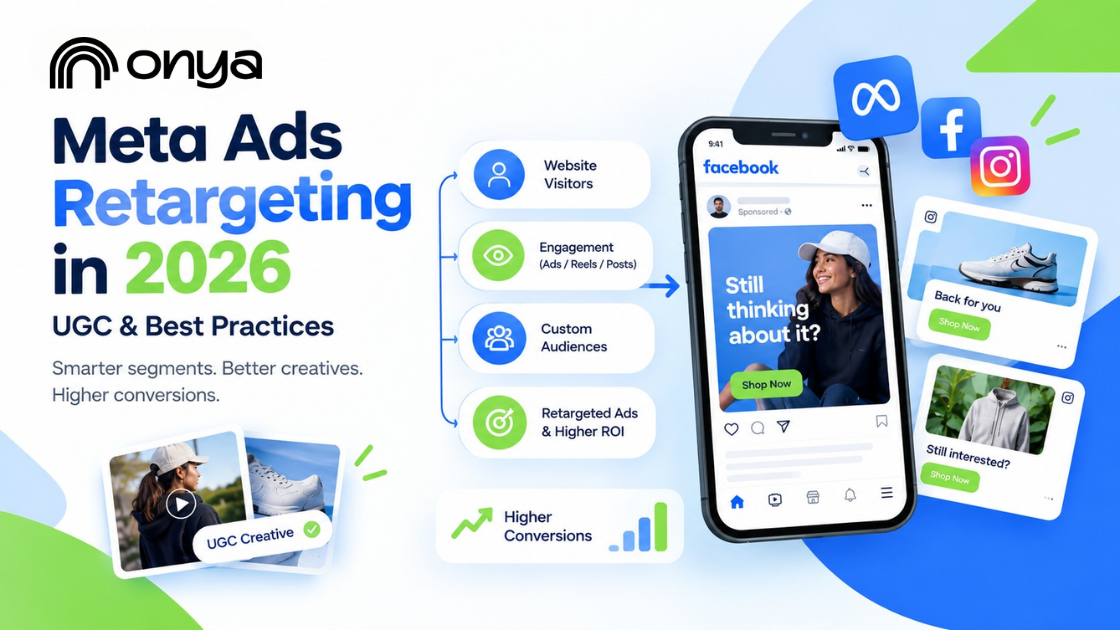
Meta's ad delivery system now treats creative as a relevance signal, not just the audience behind it. A repeated, generic ad loses ground even when the targeting is accurate, because the platform rewards ads that actually resolve something for the specific person seeing them. That's a meaningful shift from how retargeting used to work, and most campaigns haven't caught up to it yet.
At Onya, we manage Meta retargeting across higher education, healthcare, and business clients, and the gap we see most often isn't a budget problem or a platform problem. It's a strategy problem. The same ad running to every past visitor, with no consideration for where that person actually stopped engaging, is where most retargeting spend goes quiet.
This post breaks down what makes Meta ads retargeting work in 2026, from how to segment your audiences correctly to which creative approach fits which stage of the funnel and how to read your results honestly.
Why the Same Retargeting Ad Twice Doesn't Work Anymore
Meta's delivery system reads fatigue in real time. Run the same creative to the same person too many times, and the platform doesn't just get less effective; it actively deprioritizes the ad. Costs climb. Relevance drops. You end up paying more to reach people who already told you, by not converting, that the first version didn't land.
A few signs this is happening in your account:
Frequency is past 4-5x with no lift in clicks or conversions.
CPMs are creeping up on an audience that hasn't grown.
The same creative has run 30+ days with no rotation.
One ad is going to everyone who visited, regardless of how far they got.
None of this means Meta ad retargeting stopped working. It simply means the strategy behind it hasn't kept up. Retargeting still earns its spot in the funnel — but only when the creative and audience logic change with the person seeing it, not when an ad gets built once and left to run.
How Retargeting with Facebook Ads Works
Meta ad retargeting relies on one core piece of infrastructure: the Meta Pixel, a snippet of code on your website that tracks visitor activity and reports it back to Meta. Without it, you can't build an audience from your website activity.
Here's the sequence:
Someone visits your site or engages on Facebook or Instagram.
The Pixel logs that action and sends it to Meta.
Meta matches it to a user profile.
Your campaign serves ads to that person next time they're in-feed.
Pixel-only setups are common but increasingly incomplete. Browser blockers and iOS privacy settings mean a chunk of signal never makes it through. Pairing the pixel with the Conversions API closes that gap, since server-side data doesn't rely on the visitor's browser cooperating.
If you're still deciding where to put ad spend in the first place, this breakdown of Google Ads vs Meta Ads covers how the two platforms differ.
How Retargeting Instagram Ads Works
Instagram retargeting uses engagement and website activity to reconnect with people who have already interacted with your brand. Instead of relying only on broad audience targeting, you can build audiences from actions people take across Instagram, Facebook, and your website.
Here’s the basic sequence:
Someone watches your Reel, interacts with a post, visits your profile, or lands on your website.
Meta receives signals from that interaction through its platform and tracking tools.
Those signals can be used to create or update a retargeting audience.
Your Instagram campaign then delivers relevant ads to people who match your audience criteria.
For example, someone might watch a large portion of a product Reel but leave without visiting your website. You can create an audience around that type of engagement and show them a follow-up ad with more product information or a different creative.
Website visitors can also be retargeted on Instagram when the appropriate Meta tracking and audience setup is in place. The Meta Pixel can send website events to Meta, while the Conversions API can complement browser-based tracking with server-side event data.
The key is to treat Instagram retargeting as a continuation of the customer's first interaction, not simply another opportunity to display the same ad. Someone who watched a Reel, visited a product page, or abandoned a cart may need a different message at each stage.
That makes audience segmentation and creative rotation just as important as the retargeting campaign itself.
Build Retargeting Audiences Around Behavior, Not Channel
Most accounts build one audience: everyone who visited in the last 30 days. That treats a person who reads one page the same as someone who almost converted, and they need completely different ads. Group your audiences by what the person actually did, not which channel they came from:
Engagement-based — visited your site or watched most of a video, but took no further action. They know you exist; they're not sold yet.
Intent-based — started something and didn't finish: an abandoned cart, an unfinished application. This is your highest-intent group; they've told you exactly what they want.
Relationship-based — people you already have data on, email lists, and past customers. Worth prioritizing since first-party data holds up better as tracking degrades, part of why retargeting still earns its place in 2026.
Each group stalled for a different reason, so each needs a different message. That's what makes the next step, matching UGC retargeting ads to the right hook, actually work.
Match the Hook to the Reason They Stalled
The product doesn't need three versions. The first three seconds do. Someone who barely looked needs a different opener than someone who almost bought, and matching that opener to the actual hesitation is what separates UGC that converts from UGC that just adds frequency.
Awareness Hook: For Visitors Who Left Too Early They saw the ad or landed on the site but never connected it to a problem they actually have. The fix isn't a better product shot; it's leading with the problem itself, in plain language, before the product ever shows up. If the hook doesn't name what they're struggling with, the product looks irrelevant no matter how good it is.
Proof Hook: For Visitors Who Hesitated Cart abandoners clicked, then talked themselves out of it. Usually it's one unanswered objection: will this actually work for someone like me? Answer it with something concrete, not a general claim:
A specific timeframe ("after two weeks")
A specific result, not a vague one
An unpolished, real moment over a staged one
Decision Hook: For Visitors Who Are Almost Ready This is someone deep in consideration, not a past buyer. They've viewed pricing, come back more than once, and maybe started a form or cart and stopped. They don't need convincing anymore; they need a reason to stop deliberating: a deadline, a guarantee, or a direct answer to what's still holding them back.
Rotate the opener before the offer. When frequency climbs and results dip, the hook usually goes stale first, not the product or the price.
Meta Ads Retargeting Best Practices: How Often to Refresh UGC Creative?
The same clip that converted well two weeks ago starts losing steam the moment your audience has seen it too many times, and leaving it running past that point burns the budget instead of saving it.
Watch performance, not the calendar. Two numbers tell you when it's time to replace a creative:
Frequency past roughly 3-5x with no lift in clicks or conversions
CTR declining on a specific asset, not just the campaign average
When both start moving the wrong way, replace the creative, usually every 2-3 weeks for an active retargeting segment, sooner for smaller audiences that see the same ad more often.
Refreshing doesn't always mean a full reshoot. Often the fastest fix is swapping the opening hook or format on existing footage. If you're running low on raw material to pull from, this breakdown of UGC content ideas is a good next stop before you schedule a new shoot.
Formatting UGC for Facebook and Instagram Retargeting
A strong hook still underperforms if the format looks like an ad instead of a Reel. A few non-negotiables for retargeting social media content on Facebook and Instagram:
A few things worth getting right:
Shoot vertical, 9:16, for Stories and Reels, where most retargeting inventory runs
Front-load the hook; the first two to three seconds decide whether someone stays.
Burn in captions, since most Feed and Stories viewing happens with sound off
Skip the polish; handheld framing and natural lighting read as authentic, which matters more with a warm audience than production value
Facebook and Instagram audiences don't always respond the same way. With retargeting Instagram ads, you'll often see more visual, lifestyle-driven clips perform best, campus life, and product-in-use moments.
When retargeting with Facebook ads, you're often reaching an older or more decision-adjacent audience, parents in a higher-ed context, for example, so slightly more direct, information-forward creative can perform better there. Running the same UGC on both, with small adjustments to pacing or caption tone, tends to outperform picking one platform and skipping the other.
These aren't universal retargeting ads best practices; they're specific to warm audiences who've already seen your brand once and are deciding whether the second look is worth their time.
Are Your UGC Retargeting Ads Actually Working?
Vanity metrics won't tell you if it's actually paying off. Check these at the individual-asset level, not the campaign average:
Frequency and CTR trend per asset — a declining CTR on one specific clip is your earliest fatigue signal, well before overall cost per result moves.
Cost per result by audience segment — lumping every stalled visitor into one report hides which segment is actually underperforming.
Performance by platform — retargeting with Facebook ads and retargeting Instagram ads rarely perform identically, so review them separately.
If none of this is tracked at that level, the honest answer is, "You don't know whether retargeting is working; you just know it's running.
This is usually where teams either build the reporting themselves or bring in someone who already has the system for it. At Onya, matching hooks to funnel stage, formatting for each platform, and reporting on individual assets isn't an add-on; it's the default way we run Meta ads retargeting for every client, higher education, ecommerce, or otherwise.
Conclusion
Retargeting on social media only works when the strategy behind it does. Segment audiences by behavior, match each hook to the reason someone stalled, and refresh creative before fatigue sets in — that's what separates UGC retargeting ads that convert from ones that just add frequency. This discipline applies whether you're running retargeting with Facebook ads, retargeting Instagram ads, or both at once.
Onya is a full-service digital marketing agency that builds this whole system: strategy, creative, platform-specific formatting, and asset-level reporting, not just the retargeting piece. If you want a team that follows retargeting ads best practices end to end, see what Onya can do for your business. Contact us now!
Frequently Asked Questions (FAQs)
What counts as UGC in a Meta retargeting ad? Content that looks like it's from a real person, not a brand. Think testimonials, honest reviews, or day-in-the-life clips.
How is retargeting different from a regular Meta ad? Regular ads target people who don't know you yet. Retargeting shows ads only to people who already visited or engaged with your brand.
Can the same UGC clip work on Facebook and Instagram? Yes, but results differ. Instagram favors lifestyle content, Facebook often does better with more direct messaging.
Do I need a big budget for UGC retargeting ads? No. Polished, expensive-looking ads often perform worse with a warm audience than something that looks real.
How do I know if my UGC creative needs to be replaced? Watch frequency and CTR on that specific ad. When frequency rises and CTR drops, it's time to swap it.
How to Tell If Your Social Media Options are Actually Working
Social Media Marketing Metrics
As marketers, we want to invest in the right strategies and efforts to reach our ideal audience. Social media is a great opportunity for organizations to increase brand awareness and build richer relationships with people.
It is important to remember, however, that posting content and talking to people is not all there is. Social media marketing needs metrics that align with business goals and also support the buyer journey.
The article below talks about the different buyer phases and some metrics that we recommend looking after to know that you are not just burning fuel.
After reading this, take some time to evaluate your current social media strategy. We are ready to talk if you need support in boosting your growth.
Onya mark, get set, let's grow!
Best,
While viral is exciting, it’s not always reasonable for consistent growth. Be reasonable and push yourselves to see how buyers respond (or don’t respond). From there, you’ll track the growth of specific metrics, and here’s what we recommend tracking:
Buyer Phase: Awareness
What this means: Your potential customer is aware they have a need, and they’re searching for the best fit (hopefully finding you).
KPIs you may track for success:
Impressions/Views: Total amount of time your content was seen.
Reach: Total Number of unique users that see your content.
Growth: Followers, subscribers, etc.
Buyer Phase: Consideration
What this means: Your potential customer now knows they have different options to help fix their need and they have to consider the pros and cons of each option.
KPIs you may track for success:
Engagement rate: Number of Interactions a post receives, divided by the number of impressions=engagement rate.
Website Views for social
CTR: Click-through rate is the percentage of users clicking through a post divided by the number of impressions.
Buyer Phase: Conversion
What this means: Your potential customer is ready to choose which option is best and make their decision, which isn’t always a direct purchase $$$.
KPIs you may track for success:
Email acquisition: are people subscribing?
Add to cart
Initiate checkout
Purchase
Inquire via DM
Link Clicks
Buyer Phase: Loyalty
What this means: Retaining your customers and audience! This is all about creating a sense of community and trust with your platforms.
KPIs you may track for success:
Repeat Customers: How many keep coming back for more?
Engagement Rate: We look at the engagement rate again here to see if users are sticking around to engage with your brand.
Shares/Shout-outs/Reviews
Tagged Media
Other Important Factors to Consider
ROI: Besides your literal hard numbers above that you choose to track for success, be sure you focus on the ROI (Return on Investment). What is your time worth to you? If you were to break down revenue generated from the costs incurred, what would be the return? In reviewing your metrics, determine the revenue generated compared to the cost of your social media marketing (be sure you build in any advertising costs as well). Time is money, even if it is just looking at social media.
Social Tools: Most social platforms offer built-in analytics tools (e,g., Facebook Insights, Twitter (X) Analytics, Instagram Insights) that provide you with data on your account’s performance. These tools are a quick win for tracking and give you helpful data (demographic or otherwise) on who’s engaging.
A/B Testing: Try and experiment with different types of content, posting schedules, and ad campaigns. Run A/B tests to figure out which approaches yield the best result.
Customer Feedback: Pay attention to comments, reviews, and direct messages from your audience. This qualitative feedback is also insightful to see how your social presence is being perceived.
Oftentimes, we get asked what growth rate is considered “good” for each metric. For example, “How many website visits/week is considered good”. Not a single person can give you this number without first understanding the ins and outs of your business and the data you already have.
What’s more important when building your social strategy is to line up your efforts with your business goals and a unique buyer journey. When you see where your customers are, you can develop unique goals for each phase of the above journey and track those metrics. Growth looks different for every business. Progress is what matters more in this case.
Are you looking for help with your social strategy or advertising? We would love to chat. Give Onya a call today to get started!
6 Types of Content Your Audience Craves and How to Create It
Creating content that resonates with your target audience isn’t always difficult, but it can be time-consuming. But like we’ve mentioned in past posts, it is essential to a successful online Growth and the key to attracting, engaging, and retaining their attention.
6 types of content your audience is likely to crave via blogs or social and effective tips on how to get started
1. Educational Content: Audiences are hungry to know more. Your content should teach them something new through how-to guides, informational articles, or step-by-step tutorials. Start by identifying common questions or pain points from your target people and understand how to better teach the answers they’re searching for.
2. Entertaining Content: Who doesn’t love a good laugh or riveting story? Create entertaining content that balances humor, storytelling, or interactive quizzes and games. To help your business stand out with this type of content, insert yourself, your personality and your values so that audiences set it apart from bland content.
3. Inspirational Content: Don’t underestimate the power of inspiration. Readers are looking for ways and encouragement in life and you can help provide that through stories, quotes, case studies, or interviews on your success, overcoming adversity, or personal growth. Encourage your audience to dream big and take action.
4. Visual Content: Quality visuals put a place to the name and attract attention that resonates with users for branding. Be sure to leverage mediums like images, videos, and infographics to make content shareable and attractive to others.
5. User-Generated Content: You all know how much we love UGC. The feedback you see from users is excellent to share with others (as long as it’s been approved to share) and loved by all others who may also want to share thoughts. Gain this helpful content through contests and challenges or by showcasing reviews and testimonials.
6. Behind-the-Scenes Content: Give your audiences a sneak peek into your world. Whether it’s through the making of your products, a day in the life of your team, or the process behind your services, share those behind-the-scenes moments. Authenticity goes a long way in building loyalty.
Tips In Content Creation
To deliver the above content types well, here are some helpful tips that may help you generate information in a way that packs a punch.
1. Know Your Audience: We’ve said it before, and we’ll say it again - get to know your target audience. Assumptions will get you nowhere. Research their demographics, interests, dislikes, and nuances and tailor the content accordingly.
2. Tell a Story: Don’t just draft a 2 sentence post. Craft wording into a compelling narrative, something that makes people stop and read. Stories drive emotional connection and we all know once emotion kicks in, they’re more likely to drive deeper.
3. Be Authentic: As mentioned above, authenticity builds trust. Be genuine in your content and don’t overpromise. Bring mistakes to the surface and share what you learned from them. Readers are only human and they like to see that you can be human too.
4. Keep Up the Consistency: The less you post, the less there is to interact with. This tip comes with a caveat though, let quality reign over quantity. Give audiences something they can count on, in a manner they can relate with.
5. Engage and Respond: Don’t become MIA when someone posts feedback or poses a question. Foster a running circle of community by inviting feedback and letting audiences know you hear them loud and clear.
6. Measure and Adapt: What is measured gets improved. Connect your social platforms and website to analytics tools and see how people respond. Adjust the strategy based on what sells and maybe pivot when interaction dips. In this arena, it’s also okay to try out new ideas and formats. Keep what works and work on what doesn’t.
In conclusion, understanding your audience's cravings and delivering the right content can make a significant difference in your online presence. By providing fruitful and digestible content, you can build a loyal and engaged audience that values what you have to offer and will (hopefully) be highly likely to convert. With all your content, stay true to your brand, be consistent, and always seek ways to improve.
Is your organization needing help with digital strategy? Is creating content challenging for you? Let the experts here at Onya help. Reach out to schedule a call today!
Do Aesthetics in Branding Really Matter for Your Marketing?
"Do aesthetics really matter?"
Our answer: absolutely.
Your visual identity isn't just a face; it's a powerful connection tool. For this week’s newsletter, we dive into the stats: 50 milliseconds for a first impression, 80% boost in recognition with brand consistency, and 28% higher emotional engagement with visually appealing designs.
From web designs to social media impact and conversion rates, aesthetics play a crucial role. Ready to elevate your brand visuals? Dive in below and discover the visual power of aesthetics.
"Your visual identity has the power to not only affect the emotion and perception of your brand but to also connect to your audience!"
Your visual identity has the power to not only affect the emotion and perception of your brand but to also connect to your audience! It’s one of the first things people see when navigating to your page.
In today’s competitive business landscape, creating a strong brand presence is essential to long-term success. Aesthetics, often considered subjective, play a pivotal role in shaping a business’s identity and influencing customer perceptions.
But just saying it’s important isn’t enough. Below, we support its importance with industry-backed statistics and what others have seen who have used powerful branding on their website and on social media.
First Impressions Count
Stats reveal that it takes just 50 milliseconds for a user to form an opinion about your site design. In a study by the Missouri University of Science and Technology, 94% of first impressions are design-related, thus proving a visually appealing and consistent brand aesthetic can quickly capture a potential customer’s attention and interest.
Make sure your landing pages and social pages are enticing and validate they make sense to people coming in by testing with neutral parties. Doing so will give fruitful feedback and allow you to make visuals really stand out.
Brand Recognition and Recall
Consistency in branding (maintaining a cohesive visual identity, including color schemes, fonts, and logo design) can increase brand recognition by up to 80%, according to Lucidpress and Oberlo. It’s important to keep things somewhat standard for branding, even if you want to go flashy because jumping all over the place can cause confusion long-term for users.
Emotional Connection
It’s true that aesthetics have the incredible potential to create emotional connections between customers and brands. A Nielson study found that ads with strong visual imagery can increase emotional engagement by 28%. When users are pleased with what they see, they become loyal followers and are much more likely to make purchases from your brand.
Perceived Value
Many consumers associate visually appealing designs with higher quality. A survey by Tyton media reveals that 48% of people believe website design is the leading factor determining a business’s credibility.
In other words, don’t short-change the fact that investing in pleasing and clean visuals can convey a sense of professionalism and superior value. It can literally be the difference between someone choosing your brand vs. someone else who has a more buttoned-up look and feel.
Social Media Impact
The impact of well-designed aesthetics extends to social media as well where, as we all know, visual content reigns supreme. According to HubSpot, Facebook posts with images receive 2.3 times more engagement than those without images.
Pictures say thousands of words and many times support and magnify the point you’re trying to communicate. On social media, brands that choose to use nice visuals (that are on-brand) are far more likely to generate shares, likes, and comments.
Conversion Rates
Web designs with clear visual hierarchy lead to a better user experience and higher conversion rate, as evidenced by Adobe’s “State of Content” which states that 38% of users will stop engaging with a website if the content or layout is unattractive. Be mindful that certain considerations like easy navigation and appealing layouts contribute to improved user engagement and conversions. It’s not just about losing the sale, it’s about gaining more sales - making it easy for people to find what they need and giving them an appealing experience while they do so.
The data is clear: aesthetics in branding matter for effective business marketing. A strong and consistent visual identity not only creates a memorable first impression but also fosters emotional connections, influences perceptions of quality, and drives engagement across various marketing channels. By leveraging statistical insights, businesses can make informed decisions about their branding strategies and unlock the power of aesthetics in enhancing their marketing efforts.
Looking for more guidance on how to best do that for your brand? Let the experts here at Onya talk with you today!
Selling Emotion: The Art of Infusing Feeling Into Your Products and Services
I’ve heard it said, ‘Move the audience, and the needle will follow’.
I can’t think of a truer statement when it comes to staying in front of your audience in a dynamic marketing landscape.
The secret to capturing your target audience does not just lie in what the people see - but also in what they feel. As a result, it’s critical to infuse emotion into the way you market to your audience.
We will guide you through understanding your audience, crafting compelling narratives, and leveraging evocative language to create a lasting impact. Ready to turn emotions into conversions? Dive in below and let's elevate your brand together!
Onya mark, get set, let’s grow!
Best,
Selling Emotion in Your Marketing
When it comes to selling what you offer, people don’t ever buy what it is you’re selling. They buy what it makes them feel.
In the business world, emotions play a pivotal role in driving consumer decisions. While traditional marketing strategies focus on the features and benefits of a product or service, the real power lies in tapping into the emotions of your customers.
Selling feelings along with your offerings can create a deeper connection and drive incredible loyalty.
Some prime examples:
Parents aren’t just buying their kids a swing set. They’re buying core memories.
Couples aren’t just buying flower bouquets. They’re buying a token of love or a romantic gesture.
People aren’t buying extra-large mattresses. They’re buying a good night’s sleep (finally).
Your audience isn’t just buying your membership or course training. They’re investing in their future.
Below, we explore how to effectively sell emotion in your services and create a lasting impact.
Below, we explore how to effectively sell emotion in your services and create a lasting impact.
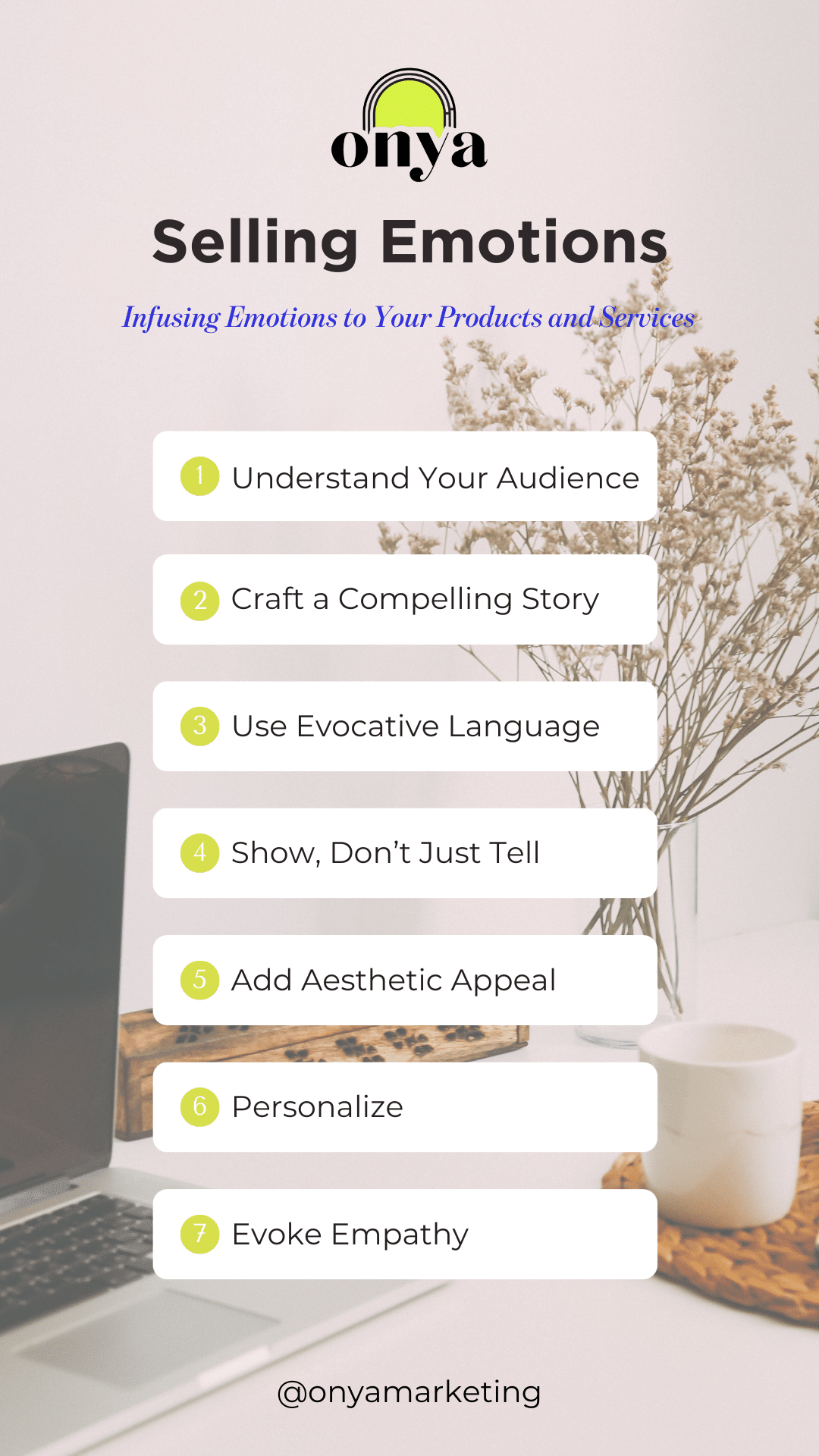
Understand Your Audience
We say this often, and it’s because it’s a huge point with anything in business - your audience matters a lot. Begin to understand their emotions, needs, and desires. What do they truly value? By grasping their pain points and aspirations, you can tailor your services to resonate on an emotional level.
Craft a Compelling Story
Stories harken to people’s pasts and act as a golden key to worlds unearthed. Develop a narrative that highlights the journey of your services, emphasizing the positive impact they can have on customers’ lives. Whether it’s a story of transformation, empowerment, or joy, a compelling story can create deep emotional connections.
Use Evocative Language
Language, in many ways, has the power to paint vivid detail and color, triggering emotions. In your content, try incorporating words that align with the feelings you want to convey. Whether it's using words like “empowerment,” “confidence,” or “happiness,” your choice of words can make a significant difference in how someone engages with the text.
Show, Don’t Just Tell
Demonstrate the emotional impact of your services through real-life examples. Be sure to share customer testimonials, case studies, or before and after stories that display the positive emotions your services or product generated for others.
Add Visual And Aesthetic Appeal
Visuals play a big part, especially when someone first comes to your page (both via website and social platforms). Be sure to utilize color palettes, imagery, and design elements that align with the emotions you want to associate with your brand. Consistency in visuals can also reinforce emotional connection.
Run with Personalization and Connection Experiences
Customers appreciate when they feel understood and valued. Be sure to personalize your interactions and services by addressing their individual needs. This can also be done through connection experiences like unboxing processes, personalized recommendations, or exclusive events. These personal and fun touches create a sense of connection that goes beyond transactional relationships.
Evoke Empathy
Everyone has something they care deeply about. While sticking to your company values, show empathy towards your customers' challenges and concerns in life. Acknowledge how they feel and position your products or services as a solution that can alleviate their pain points or amplify their joy. Even if you are directly talking about something outside of your product or services, show people that you care and direct your attention to things that matter to them.
Selling emotion in your services and products requires a strategic approach that taps into the deep-seated feelings of your customers. By understanding your audience and creating meaningful, well-crafted stories, you can create an emotional bond that not only drives sales but also builds lasting brand loyalty. People aren’t here to just buy products or services, they are here to invest in the feeling attached to them. Looking for better ways to create these experiences in your digital assets? Contact Onya today to learn more!
We understand finding ideas and keeping them fresh for businesses and individuals can be tricky. Posting content on the regular is both necessary and helpful to continuous engagement from these groups which is why we want to make it easy to keep things new!
Standing out is possible and we are able to help by looking at some of the top 30 content ideas for this upcoming holiday season and how to best highlight your products (and ultimately convert those sales)!
10 Reels/Videos
An unboxing video showing off your packaging
A montage highlighting your product being styled or used.
Sharing the inspiration behind your product.
Teaching through a tutorial
Busting industry myths
Telling an interesting story while packaging an order.
POV: when your product solves a problem
Perspective on a viral reel in your industry
Take part in a popular trend and try to incorporate your product.
Record a time-lapse of you running an industry task
Share a goal you’ve set
Post a testimonial or review
Show your audience the excitement behind a new product and link to it
Repost from followers using your product
Post weekend plans
Talk about a recurring theme (something you like to do personally, believe in, or are known for)
Answer questions from your DM’s
Do a poll on a trending topic
Share a sneak peek of a product/project
With these 30 content ideas, you have an arsenal of creative options to revamp your social media strategy.
Authenticity, relevance, and providing value to your key audiences should always be at the core of your content. Try and experiment with differing formats and monitor your performance to finetune your approach and see what end-users like best.
By staying dynamic and responsive, you’ll build a thriving social media presence and forge deeper connections with your followers. Need help with ongoing ideas and strategy? The experts here at Onya would love to help! Connect with us today.
While TikTok may still have some catching up to do compared to advertising giants like Facebook and Instagram, those platforms have seen a notable decrease in perceived effectiveness over the past year.
Facebook’s effectiveness has dropped by 25% while Instagram’s has plummeted by a whopping 40%.
These shifts in the advertising landscape are a clear indication that brands need to adapt and meet their customers where they are on each platform.
TikTok’s diverse and rapidly growing communities, covering everything from book lovers to fridge organization enthusiasts, make it easier for marketers to hone in on their target audiences with compelling, tailored content.
So if you’re looking to stay ahead of the curve, it’s definitely worth considering TikTok as part of your marketing strategy.
But how do you effectively market on TikTok? Here are the top steps we recommend you start with:
Understand the platform
Familiarize yourself with TikTok’s features, trends, and user demographics so that you genuinely understand the type of content that resonates with your target audiences.
Participate in trends and challenges
Be sure to take part in popular challenges and trends relevant to your niche as this boosts your visibility as well as connect with others in a personal and fun way in the online community.
Create regular, creative videos
As with any good marketing strategy, begin taking part in the content on the regular. Develop creative and captivating videos that align with your brand’s identity and keep them short and shareable to increase ongoing engagement. Remember that TikTok’s algorithm favors accounts that are constantly active.
Cross-promote
In the same vein as what’s listed above, be sure to share your videos on other social media platforms in order to drive traffic and increase your following.
Use relevant hashtags and music
Increasing discoverability is carried forward by using trending and popular hashtags that people regularly search for. It also helps increase engagement by adding fun, well-liked music so people stay to watch more.
Interact with Followers
Like with any good business, no matter the size, be sure to respond to comments and messages so that people can see you actively talking with individuals with questions. You want to be available and forthcoming with information and not be seen as an entity that ghosts people.
Analyze Your Performance
As you move and groove within the platform, be sure to use TikTok’s analytics to track performance and audience insights. The data should ideally show you what people like the most and which items they moved quickly past. Take the feedback, test new content, and bolster the best-performing options for the highest engagement that converts.
At the end of the day, keep in mind that TikTok’s algorithms prioritize content that keeps users focused on the platform so create content that speaks closely to your target audience. Need help in creating and managing content that converts? Be sure to reach out to Onya today to learn more!
When it comes to working LinkedIn content with the intent of converting readers, many post content that ends up being pretty boring and easy to avoid for effective business changes. Sure, LinkedIn is filled with professionals, but the content still needs to strike strong in order to catch their attention.
Creating LinkedIn content that converts involves a combination of strategic planning and engaging storytelling. If you’re looking to make an impact on this highly-used and professional platform, here are some tips to help you convert content:
Define your objectives
Clearly understand your goals and what you want to achieve with your LinkedIn content. Whether it’s generating leads, grow your business on LinkedIn, driving traffic to your website, or increasing brand awareness, having a clear objective will guide your content creation process.
Know your target audience
Research and understand your target audience’s demographics, interests, pain points, and motivations. This information will help you tailor your content to resonate with them and address their needs. Tailor your content to their interests, pain points, and goals.
Create compelling headlines
Craft attention-grabbing headlines that entice readers to click and go deeper. Make sure your headline is concise and specific and highlights the value or benefit readers will gain from engaging with your content.
Offer valuable insights
Provide readers with valuable, actionable information that addresses your audience’s pain points and solves issues for them. Share industry insights, tips, and strategies that position you as a thought leader and expert in your field.
Utilize visual content
Incorporate eye-catching visuals such as images, videos, or infographics into your LinkedIn posts. Visuals help capture attention, give moments to pause, increase engagement, and make your content more shareable.
Tell stories with authenticity
Share personal anecdotes, case studies with hard facts, or real success stories that resonate with your audience. Authentic storytelling helps create an emotional connection and builds trust with your readers.
Include a clear call to action (CTA)
Every piece of content should have a clear CTA that guides your audience to take the desired action. It could be visiting your website, downloading a resource, signing up for a webinar, or contacting you directly.
Engage with your audience
Actively respond to comments, engage in conversations, and build relationships with your audience. By being present and responsive, you can foster trust and credibility, and increase the chances of conversions.
Talk in a conversational tone
Be sure to write in a very friendly and approachable manner, preferably one that is readable. LinkedIn is a professional platform but you want to strike a healthy balance between professionalism and approachability.
Test and iterate
Continuously test different types of content, formats, headlines, and CTAs to determine what resonates best with your audience. Use LinkedIn analytics to track the performance of your posts and make data-driven decisions to optimize your content strategy. When it comes to testing this content, make sure you’re generating enough to actually test with. One or two posts are fine but consistency is key and you want to see what swings can make people run or stay away.
With LinkedIn posts, be sure information is relevant and timely, providing value at all turns so that you give people a reason to engage and ultimately convert. Remember that professionals are people too and desire to connect rather than be sold to. The more humane, the better the overall return. Looking for help when it comes to fine-tuning your social strategy? Let Onya help by booking a call today!
Don’t get us wrong, we can’t deny AI tools have the compilation of some of the best content out there (and there’s plenty out there to be had)!
They’re good at gathering and generating “information” you could talk about, but it’s not always the best when it comes to creating content that gets traction.
They don’t have what you have, which is your tone of voice, perspective, and experience on a specific topic. The information could come from the AI tools (if you use them), but the insights on how to use the information should come from you.
Consider what we type in when looking for results on “How to Get 100,000 followers on Instagram”
“Gaining a large following on Instagram requires time, effort, and engaging content. Here are some tips to help you increase your Instagram followers:
1. Post high-quality content: Share visually appealing photos, videos, or graphics that are relevant to your target audience.
2. Consistency is key: Regularly post content to keep your followers engaged and interested. Find a posting schedule that works for you and stick to it.
3. Use relevant hashtags: Research and include popular and niche-specific hashtags in your posts. This will help your content reach a wider audience and increase your chances of being discovered.
4. Engage with others: Interact with your followers and other users by responding to comments, liking their posts, and following accounts that align with your interests. Genuine engagement can attract new followers.
5. Collaborate with influencers: Partner with influencers or popular accounts in your niche for collaborations or shoutouts. This can expose your account to a wider audience and help you gain followers.
6. Run contests or giveaways: Offer incentives for people to follow your account, such as giveaways or contests. Make sure the requirements to enter include following your account or tagging friends, which can help increase your follower count.
7. Cross-promote on other platforms: Promote your Instagram account on other social media platforms, your website, or through your email newsletter. Encourage your existing audience to follow you on Instagram.
8. Optimize your profile: Make sure your Instagram bio is clear, concise, and reflects your brand or interests. Use a recognizable profile picture and include a link to your website or a relevant landing page.”
While these are all absolutely good and workable strategies, there’s one big problem: they’re incredibly mainstream. Everyone talks in this way.
Sharing just “information” today is that literally anyone can do just that. And pretty soon, the content market just sounds like a broken record.
AI tools can give you tons of information for the “how you…” content which is a fine starting point, but in order for you to differentiate yourself, you need something beyond just information.
You need the “how I…” content.
The best type of content to earn trust and credibility is the “how I received/delivered *result*” content. This is something you can’t find with AI tools. Many people won't care about your tips on “how you…” before you’ve proven your expertise with the “How I…” content.
There’s a massive difference between “Do blank and get results” versus “I did blank and here’s the % result we experienced.”
You are able to create better content by sharing real-life experiences and industry expertise than using a monotone computer-generated content filler. It gets the job done, but not in a way that will bring you long-term success.
In other words, if you want to create content better than AI tools and not get replaced, begin putting the work in. The actual business work. Share those outcomes and the rest will speak for itself.
Looking for ways to amp up your content and create lasting impressions on your target audience? We can help. Reach out to Onya today to schedule a free consultation!
We all know social media is an ever-changing, regenerative process that seeks to engage more and more users. Each platform has its own agenda, but at its core, social media is always looking for new and exciting ways to keep you focused on their respective content.
With the introduction of AI Integrated Features and new revenue-generating models like a paid blue tick, the way we use social media is changing and we want to be sure you’re in the know.
Let’s take a look at some of the major updates from the social media world:
Instagram will now allow users to download publicly posted reel content.
As of right now, this feature appears to only be rolled out to the US. As users need to do is tap the “Share” icon on a desired reel and select “Download”. The plus here is the broader sharing of content which will encourage boosts in branding, even without the direct link to the creator’s profiles (as it will have the username in the clip itself).
TikTok for a long time has enabled this feature, and with Instagram now opting in as well, it will provide more pathways to maximize reach. For those that don’t want this feature turned on, no worries - creators can turn this feature off in their account settings.
Twitter is rolling out 25k character tweets for Twitter blue subscribers.
Yeah, you read that right. 25k. Hope you like to read long tweets.
In February 2023, Twitter Blue Subscribers were able to tweet up to 4k characters. In April, that was expanded to 10k. Now, it’s 25k.
Not only that, but they also included the ability to add inline images between long parses of text, giving users many options for how they shape their content. This falls directly in line with the new CEO’s vision of expanding the app's functionality by giving people a place to share more types of content like long-form text and video. Long-term, their goal is to better monetize the app instead of users needing to link to other platforms to view information.
LinkedIn is launching live tests of generative AI posts.
AI isn’t going anywhere anytime soon and LinkedIn is seeking a way to leverage this newfound ability so that users can begin a basic draft idea of what they’d like to share. Upon drafting a few sentences, the composer would then provide suggestions on first drafts. Their intent behind it is to help create full ideas that don’t take an eternity to draft. Our biggest concern, it’s not 100% your voice or fully-owned opinion. Ultimately it could misrepresent the person creating the post. Time will tell if people will be held accountable or own these AI-generated posts or not.
LinkedIn is removing native carousels, profile videos, and in-image links.
With social media comes the opportunity for bad features and good features. Some features work for some platforms while others can flop.
This is the case for some of the newest features LinkedIn quietly removed including profile videos, in-image linking, and carousels. While the carousel option seemed to be a good idea (take Facebook or Instagram), users weren’t leveraging it nearly as much as LinkedIn developers anticipated. Users were able to manually run it on their own through the PDF attachment option but the native feature didn’t take, so it’s being rolled back.
It's the same with profile videos. The idea spurred the thought that employers might want to see more from the individual submitting their resume or posting content but it didn’t make much of a difference in take-up so that feature was also removed.
Lastly was the direct linking in images. The idea here is mimicked from story posts driving direct link referral traffic, but again, the idea never caught on. In short, not all ideas span all platforms and LinkedIn is learning just like the rest of us that it’s okay to try and fail.
Meta is launching a new Twitter challenger app.
It’s no secret that there’s unrest in the Twitter-sphere right now as Musk and Zuckerburg battle it out for the biggest posting medium in the social media world.
Twitter has been making massive changes within the past year (good or bad is up to the consumers) but one thing’s for sure and that is Meta is recognizing opportunity from the exodus of engagers on Twitter and creating their own space to share thoughts and opinions. This real-time text app, labeled Project 92 has the potential to take the world by storm with the existing 1.3 billion active users currently on Instagram who would be able to automatically create an account, thus challenging the so-called 250 million active users on Twitter. Only time (and functionality) will tell if this new platform takes off and kicks Twitter out.
As stated previously, social media is always bound to change, many times not affecting users in any major ways. However, these new updates seem to be causing a stir in the community and we desire to ensure you know how to best leverage these changes. Want to learn more? We’d be glad to talk. Reach out to Onya today to schedule a meeting.