Expert insights on digital advertising, strategy, and growth
Marketing Insights
September 17, 2026
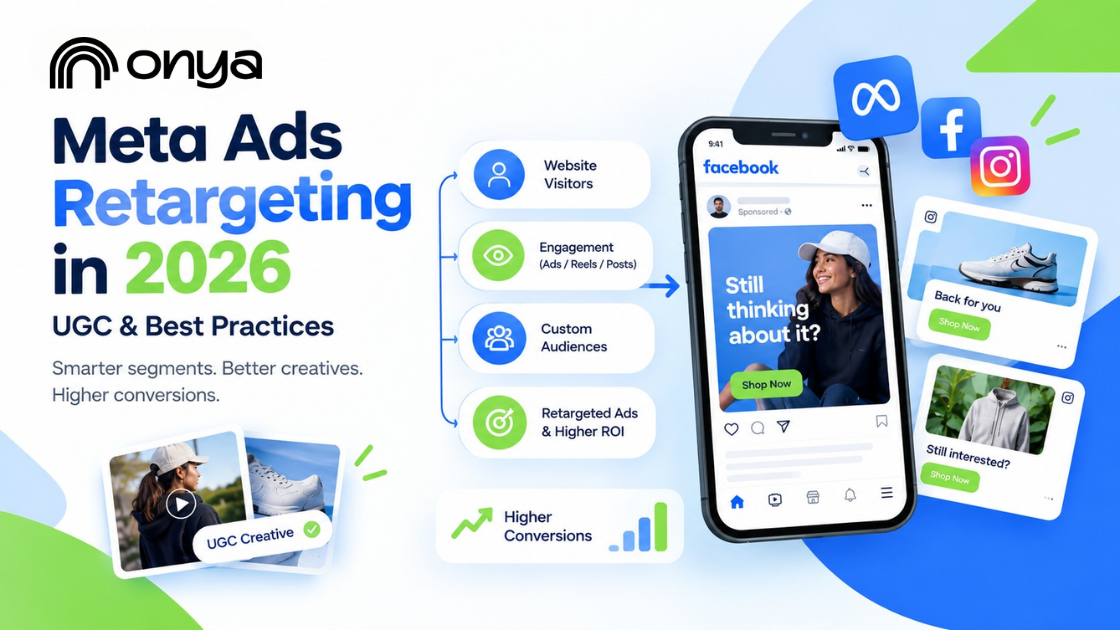
How to optimize UGC for meta ads retargeting 2026?
Meta's ad delivery system now treats creative as a relevance signal, not just the audience behind it. A repeated, generic ad loses ground even when the targeting is accurate, because the platform rewards ads that actually resolve something for the specific person seeing them. That's a meaningful shift from how retargeting used to work, and most campaigns haven't caught up to it yet.
At Onya, we manage Meta retargeting across higher education, healthcare, and business clients, and the gap we see most often isn't a budget problem or a platform problem. It's a strategy problem. The same ad running to every past visitor, with no consideration for where that person actually stopped engaging, is where most retargeting spend goes quiet.
This post breaks down what makes Meta ads retargeting work in 2026, from how to segment your audiences correctly to which creative approach fits which stage of the funnel and how to read your results honestly.
Why the Same Retargeting Ad Twice Doesn't Work Anymore
Meta's delivery system reads fatigue in real time. Run the same creative to the same person too many times, and the platform doesn't just get less effective; it actively deprioritizes the ad. Costs climb. Relevance drops. You end up paying more to reach people who already told you, by not converting, that the first version didn't land.
A few signs this is happening in your account:
Frequency is past 4-5x with no lift in clicks or conversions.
CPMs are creeping up on an audience that hasn't grown.
The same creative has run 30+ days with no rotation.
One ad is going to everyone who visited, regardless of how far they got.
None of this means Meta ad retargeting stopped working. It simply means the strategy behind it hasn't kept up. Retargeting still earns its spot in the funnel — but only when the creative and audience logic change with the person seeing it, not when an ad gets built once and left to run.
How Retargeting with Facebook Ads Works
Meta ad retargeting relies on one core piece of infrastructure: the Meta Pixel, a snippet of code on your website that tracks visitor activity and reports it back to Meta. Without it, you can't build an audience from your website activity.
Here's the sequence:
Someone visits your site or engages on Facebook or Instagram.
The Pixel logs that action and sends it to Meta.
Meta matches it to a user profile.
Your campaign serves ads to that person next time they're in-feed.
Pixel-only setups are common but increasingly incomplete. Browser blockers and iOS privacy settings mean a chunk of signal never makes it through. Pairing the pixel with the Conversions API closes that gap, since server-side data doesn't rely on the visitor's browser cooperating.
If you're still deciding where to put ad spend in the first place, this breakdown of Google Ads vs Meta Ads covers how the two platforms differ.
How Retargeting Instagram Ads Works
Instagram retargeting uses engagement and website activity to reconnect with people who have already interacted with your brand. Instead of relying only on broad audience targeting, you can build audiences from actions people take across Instagram, Facebook, and your website.
Here’s the basic sequence:
Someone watches your Reel, interacts with a post, visits your profile, or lands on your website.
Meta receives signals from that interaction through its platform and tracking tools.
Those signals can be used to create or update a retargeting audience.
Your Instagram campaign then delivers relevant ads to people who match your audience criteria.
For example, someone might watch a large portion of a product Reel but leave without visiting your website. You can create an audience around that type of engagement and show them a follow-up ad with more product information or a different creative.
Website visitors can also be retargeted on Instagram when the appropriate Meta tracking and audience setup is in place. The Meta Pixel can send website events to Meta, while the Conversions API can complement browser-based tracking with server-side event data.
The key is to treat Instagram retargeting as a continuation of the customer's first interaction, not simply another opportunity to display the same ad. Someone who watched a Reel, visited a product page, or abandoned a cart may need a different message at each stage.
That makes audience segmentation and creative rotation just as important as the retargeting campaign itself.
Build Retargeting Audiences Around Behavior, Not Channel
Most accounts build one audience: everyone who visited in the last 30 days. That treats a person who reads one page the same as someone who almost converted, and they need completely different ads. Group your audiences by what the person actually did, not which channel they came from:
Engagement-based — visited your site or watched most of a video, but took no further action. They know you exist; they're not sold yet.
Intent-based — started something and didn't finish: an abandoned cart, an unfinished application. This is your highest-intent group; they've told you exactly what they want.
Relationship-based — people you already have data on, email lists, and past customers. Worth prioritizing since first-party data holds up better as tracking degrades, part of why retargeting still earns its place in 2026.
Each group stalled for a different reason, so each needs a different message. That's what makes the next step, matching UGC retargeting ads to the right hook, actually work.
Match the Hook to the Reason They Stalled
The product doesn't need three versions. The first three seconds do. Someone who barely looked needs a different opener than someone who almost bought, and matching that opener to the actual hesitation is what separates UGC that converts from UGC that just adds frequency.
Awareness Hook: For Visitors Who Left Too Early They saw the ad or landed on the site but never connected it to a problem they actually have. The fix isn't a better product shot; it's leading with the problem itself, in plain language, before the product ever shows up. If the hook doesn't name what they're struggling with, the product looks irrelevant no matter how good it is.
Proof Hook: For Visitors Who Hesitated Cart abandoners clicked, then talked themselves out of it. Usually it's one unanswered objection: will this actually work for someone like me? Answer it with something concrete, not a general claim:
A specific timeframe ("after two weeks")
A specific result, not a vague one
An unpolished, real moment over a staged one
Decision Hook: For Visitors Who Are Almost Ready This is someone deep in consideration, not a past buyer. They've viewed pricing, come back more than once, and maybe started a form or cart and stopped. They don't need convincing anymore; they need a reason to stop deliberating: a deadline, a guarantee, or a direct answer to what's still holding them back.
Rotate the opener before the offer. When frequency climbs and results dip, the hook usually goes stale first, not the product or the price.
Meta Ads Retargeting Best Practices: How Often to Refresh UGC Creative?
The same clip that converted well two weeks ago starts losing steam the moment your audience has seen it too many times, and leaving it running past that point burns the budget instead of saving it.
Watch performance, not the calendar. Two numbers tell you when it's time to replace a creative:
Frequency past roughly 3-5x with no lift in clicks or conversions
CTR declining on a specific asset, not just the campaign average
When both start moving the wrong way, replace the creative, usually every 2-3 weeks for an active retargeting segment, sooner for smaller audiences that see the same ad more often.
Refreshing doesn't always mean a full reshoot. Often the fastest fix is swapping the opening hook or format on existing footage. If you're running low on raw material to pull from, this breakdown of UGC content ideas is a good next stop before you schedule a new shoot.
Formatting UGC for Facebook and Instagram Retargeting
A strong hook still underperforms if the format looks like an ad instead of a Reel. A few non-negotiables for retargeting social media content on Facebook and Instagram:
A few things worth getting right:
Shoot vertical, 9:16, for Stories and Reels, where most retargeting inventory runs
Front-load the hook; the first two to three seconds decide whether someone stays.
Burn in captions, since most Feed and Stories viewing happens with sound off
Skip the polish; handheld framing and natural lighting read as authentic, which matters more with a warm audience than production value
Facebook and Instagram audiences don't always respond the same way. With retargeting Instagram ads, you'll often see more visual, lifestyle-driven clips perform best, campus life, and product-in-use moments.
When retargeting with Facebook ads, you're often reaching an older or more decision-adjacent audience, parents in a higher-ed context, for example, so slightly more direct, information-forward creative can perform better there. Running the same UGC on both, with small adjustments to pacing or caption tone, tends to outperform picking one platform and skipping the other.
These aren't universal retargeting ads best practices; they're specific to warm audiences who've already seen your brand once and are deciding whether the second look is worth their time.
Are Your UGC Retargeting Ads Actually Working?
Vanity metrics won't tell you if it's actually paying off. Check these at the individual-asset level, not the campaign average:
Frequency and CTR trend per asset — a declining CTR on one specific clip is your earliest fatigue signal, well before overall cost per result moves.
Cost per result by audience segment — lumping every stalled visitor into one report hides which segment is actually underperforming.
Performance by platform — retargeting with Facebook ads and retargeting Instagram ads rarely perform identically, so review them separately.
If none of this is tracked at that level, the honest answer is, "You don't know whether retargeting is working; you just know it's running.
This is usually where teams either build the reporting themselves or bring in someone who already has the system for it. At Onya, matching hooks to funnel stage, formatting for each platform, and reporting on individual assets isn't an add-on; it's the default way we run Meta ads retargeting for every client, higher education, ecommerce, or otherwise.
Conclusion
Retargeting on social media only works when the strategy behind it does. Segment audiences by behavior, match each hook to the reason someone stalled, and refresh creative before fatigue sets in — that's what separates UGC retargeting ads that convert from ones that just add frequency. This discipline applies whether you're running retargeting with Facebook ads, retargeting Instagram ads, or both at once.
Onya is a full-service digital marketing agency that builds this whole system: strategy, creative, platform-specific formatting, and asset-level reporting, not just the retargeting piece. If you want a team that follows retargeting ads best practices end to end, see what Onya can do for your business. Contact us now!
Frequently Asked Questions (FAQs)
What counts as UGC in a Meta retargeting ad? Content that looks like it's from a real person, not a brand. Think testimonials, honest reviews, or day-in-the-life clips.
How is retargeting different from a regular Meta ad? Regular ads target people who don't know you yet. Retargeting shows ads only to people who already visited or engaged with your brand.
Can the same UGC clip work on Facebook and Instagram? Yes, but results differ. Instagram favors lifestyle content, Facebook often does better with more direct messaging.
Do I need a big budget for UGC retargeting ads? No. Polished, expensive-looking ads often perform worse with a warm audience than something that looks real.
How do I know if my UGC creative needs to be replaced? Watch frequency and CTR on that specific ad. When frequency rises and CTR drops, it's time to swap it.
5 Questions Your Pinned Instagram Posts Should Answer
The Posts You Pin Say A Lot About You
Great answers require great questions.
Asking the right questions is not only key to solving mysteries, acing interviews or winning a beauty pageant. It is the secret sauce to growing your business too!
Have you ever asked what in the world are pinned posts for? Since we live in a time of scrolling ad infinitum, creating content that stops the scroll and gets the attention of your target audience is a must.
But what’s next? This is where understanding content curation using pinned posts comes in to get them to know you.
Make a great first impression. Onya mark, get set, grow!
Best,
What Is a Pinned Post on Instagram?
A pinned post on Instagram is a post you choose to keep at the top of your profile, so it’s one of the first things visitors see when they land on your page. Instead of getting pushed down by newer content, a pinned post stays visible and can be used to introduce your brand, highlight an important announcement, showcase your best content, or tell visitors what they can expect from your account. As part of your Instagram marketing strategy, pinned posts can help create a strong first impression and quickly communicate who you are, what you offer, and why people should follow you.
Your Pinned Instagram Post Should Answer These 5 Questions
In the fast-paced world of social media, with the clicks, likes, views, comments, and content creation, it’s essential to make an impactful first impression with your Instagram account.
This is especially important considering Instagram offers key tools like pinned posts to grab users’ attention and guide them to more. As Instagram’s algorithm evolves, pinned posts have become a powerful tool to captivate your audience and leave a lasting impression. Below, we explore the five questions your pinned Instagram posts should answer to attract and engage your followers effectively.
Who are you and what do you do?
The very first question your pinned post should answer is who you are and what it is that you do. It should be a clear and concise introduction to your account’s identity and let users know instantly what it is you’re all about. Whether you’re a fitness enthusiast, travel blogger, budding artist, or a business owner, be sure that visitors can immediately understand the account’s purpose and content focus. Being too general will confuse people and lead them to someone more focused, while being too wordy and specific will bore them and lead them elsewhere as well. Be straight to the point and clear.
What value do you offer to your followers?
People follow accounts that provide value and enrich their lives in some way. Use your pinned post to communicate the benefits of following your account. Do you go out of your way to share insightful tips, entertaining content, inspirational stories, or exclusive promotions? Highlight the unique value you bring to your followers and let them know why they should stay connected to your journey.
What sets you apart?
In a massive sea of Instagram accounts, what makes yours stand out? Use your pinned posts to showcase your unique selling points and core values. Whether it’s your authentic storytelling, cutting-edge expertise, stunning visuals, or distinctive brand voice, emphasize what sets you apart and entices followers to choose you over others in the same niche. The more specific your niche is and the clearer you convey it, the more interested users will be to learn more.
How can others engage with you?
Interaction and engagement are the lifelines of any successful Instagram account. Encourage your audience to interact with your content and be part of your community as you share across the platform. Ask questions, invite them to tag friends, run a giveaway, and promote helpful discussions. Use your pinned posts to provide them with clear instructions on how they can communicate by liking, commenting, sharing, or more!
What should they expect moving forward?
Lastly, leave your followers excited and curious about what’s to come down the road. Use the pinned posts section to tease upcoming content, collaborations, or events. You may share hints about future projects or new initiatives to build anticipation. This way you can keep your audience eagerly waiting for more.
Your pinned Instagram posts serve as a virtual handshake, making a lasting impression on every visitor who stumbles upon your profile. By answering these five crucial questions, you can effectively captivate your audience and foster a loyal community that converts.
Introduce yourself, showcase your unique value, highlight what sets you apart, encourage engagement, and tease upcoming content to keep your followers eager and invested in your journey. Remember, your pinned post is the gateway to the IG world - make it count! Looking for more helpful tips and tricks on converting within Instagram? We’d love to chat. Give Onya a call today to learn more!
We here at Onya challenge you to make it a priority to show up for your audience on Instagram stories. Why?
Recent Instagram Stats note that 50% of Instagram users have visited a website to make a purchase after seeing it in stories. Stories not only put you front-and-center in your followers feed, they also humanize your brand by being more informal and offer many opportunities to engage with end-users.
But how do you know what to talk about on a regular basis?
We’ve got you covered there. Instagram stories don’t need to be complicated - let them be basic so that you can connect on a deep level.
Instagram Story Ideas
Monday
Motivational Monday - What gets you out of bed? What keeps you going?
Mission Accomplished - How do you set yourself up for the week? See how your audience does this as well.
Morning Routine - Time stamp your routine. What did you have for breakfast? How do you get awake and moving?
Tuesday
Tuesday Quick Tips - What valuable tips can you share with your audience?
Transformational Tuesday - Share a client case study and how they changed due to your brand.
Transparency - Let go of your perfect image for once and share something real about you or your business.
Wednesday
What I’ve Learned - If you could go back and tell your younger self something, what might it be?
Workspace - Share your work setup and how your brand functions throughout the day.
Wednesday Wellness - What are your healthy habits? How do you prevent burnout?
Thursday
Thankful for - What are you grateful for? Have you had a win recently you want to share?
Trust the Process - How do you create your product or service? Let people see behind the scenes.
Trending Now - Share a trend in your industry and your thoughts on it.
Friday
Free Resources - Share a lead magnet, a free masterclass, or some sort of downloadable content for people to build trust with your brand.
Fun Facts - Have your audience join in your business or industry quiz.
Funday - What does your Friday consist of for you and your employees? How do you unwind? Share what you’re up to.
Saturday
Sneak Peek - Share how you’re relaxing or what your plans entail. What is your audience up to? Be sure to ask them!
Sharing Time - Share your book, restaurant, mindfulness, or recipe recommendations. The sky’s the limit!
Saturday Style - What does your attire look like this weekend? How are you making a splash?
Sunday
Story Time - Grab a glass and share a business story or personal experience that others can learn from.
Self Care - What are your Sunday rituals to prepare for the week?
Say it again - Share a highlight of the past week’s updates that your audience may have missed.
Save these story ideas and save yourself the time and energy of sitting on Canva scrolling through varying templates before giving up and just resharing the main post you made earlier that day. You CAN make an impact on a daily basis with stories. Which ideas will you try first?
If you or your brand is needing assistance with social media strategy and advertising, Onya can help out in big ways. Contact us today to learn more!
And we’re going to stop to interrupt with this very important announcement: we’re not in the business of going viral on Instagram. We’re in the business of…well…business!
Let’s also ask one simple question: Why is going viral your goal?
Going Viral
Hitting milestone numbers with “viral” reach isn’t like rubbing a magic lamp and getting three business wishes. Hitting 100k views on a reel doesn’t automatically get you 100k in sales. We wish it did, but it doesn’t work that way.
Plus, if you aren’t putting any effort into strategizing your content - those numbers you’re reaching are far less likely to convert to followers when they land on your page and find 10,001 attempts to go “viral” but can’t figure out who you are or what you do.
Consider Your Audience
The energy and time spent chasing these numbers would be better placed nurturing relationships, connecting with your current audience, and creating a community that you enjoy showing up for.
If you’re always focused on new numbers, you’ll discover many who haven’t connected with you or followed along. You’re ignoring the people who are right in front of you and are ready and excited to see your content and engage.
Instead of chasing vanity numbers, why not nurture those relationships and foster the already existing community?
Avoid “Viral” Metrics
Take some pressure off. Social media should be fun and not feel like a chore. And really, not every post has to be a chart-topper. Think about your favorite musician. They have fan favorites, the kind that many listen to on repeat! They also have lesser-known songs but are they removed from the album? No, largely because for some people, those less popular songs are their favorite.
In the same way, some of your content may not be the most popular or garner the most attention online, but it sure does pack a punch for someone out there and it may be just what they needed to seal the deal with your business.
They come to your feed or your site to read, watch, and save content. They have that one post that made them feel seen and heard. The one post that gave them the lightbulb moment and changed their perspective. This is the kind of content that can’t be defined by likes, views, comments, or saves.
Redirect Your Attention
Let’s have you focus on new goals since we’re going to place going viral in the bin for the moment. Focus on fostering your community, converting more followers to customers and showing up with confidence in posting content you genuinely enjoy posting.
Vanity metrics are good for tracking what your audience thinks about your content, but ensure you’re using those metrics in line with and against your core business goals and purpose. Don’t stray from what your business needs.
All in all, if social media (particularly Instagram) feels too much like you’re throwing spaghetti against the wall and hoping it will stick, you’re probably doing something wrong. It shouldn’t feel so hard to get conversions which is why we recommend checking out helpful resources and building a strategy centered around community and core business goals. Be sure to reach out to Onya to create conversions that matter! Contact us today.
Posting on Social Media is the LAST Thing You Should Do
We know….this sounds unusual, but posting on social media shouldn’t be the first step.
Don’t panic. We’re not going down the road of “You don’t own your Instagram, what if you lost your account” or any advice along those lines. It’s much bigger than that.
What we literally mean is that when creating your sales and marketing strategy, “posting on social media” should be one of the last steps you implement.
Here’s why…
You may be asking, “Aren’t you a social media and advertising management business?”
Yes, yes we are. And we’re here to tell you - Don’t start trying to sell on social media platforms until:
You’re super clear on your offer
You’ve built out a solid sales funnel
You have a sales strategy aligned with your ideal client
Getting 20K views on a funny reel is awesome, but is anyone purchasing after watching?
You may be focusing on the wrong thing. Instead of looking for trending audios or learning a new lip-sync, focus on strategically placing people into your funnel so that you can start selling to them.
How do you do that?
Understand your audience - Yes, you need to talk to these people. It’s not enough to just sell to them. Listen to what they have to say. Seek to understand their pain points, needs, and desires.
Innovate - Listen to what your audience says but try to create solutions in unique ways. This all depends on your industry but address needs from the inside out. This will help set you apart from competitors.
Build out your sales funnel - Create a selling process that is both seamless and straightforward. Don’t make your audience jump through hoops to join in your business endeavors and make a purchase. Avoid the runaround. Hook them while they’re interested.
Assess and Pivot - If things are working, assess to find out why. Did one avenue work better than another? Why didn’t the other tactic work? Work and rework as needed.
Notice how most of those weren’t all centered on social media? Save social media for when your process is mature and ready.
Also, ask yourself before posting - Is this content gaining my business visibility, proving authority, or creating lead generation? If not, it may be worth passing on for the time being (or posting to your own personal account).
Remember, selling doesn’t have to be so “buy this, it’s great.”
Instead of selling with overdone, obvious sales posts with no real strategy behind them, capture your audience’s attention and establish trust. Direct them to your funnel in creative ways and let the planned (tried and true) funnel do the rest.
This way, you aren’t posting your offer over and over. That would be both dull and exhausting to your audience. Your engagement would meet the long end of a short pier and people would run.
Start with the end goal in mind.
Selling on your social media down the line of to-do’s means you’re creating demand to feed your funnel with already hungry leads, not constantly chasing them.
Doing some research, building out a strategy, creating a sales funnel, and THEN posting to your channels may not seem like the most fun plan, but booking a much-needed vacation whilst getting multiple payment notifications IS fun. Otherwise, again, you’ll just be chasing pipe dreams. Work from a tried and true process that is built to last and your social will just be a tool to help reap those rewards.
When we work with our clients, we do so much more than posting their content and advertising. Our first question is usually what are your goals and why do you want to have an outstanding social media presence?
For some, it’s to increase visibility, grow their presence, and connect with more people online. But for most, their priority is sales.
This is why here at Onya, we build a social media and advertising strategy that incorporates a sales strategy to provide growth AND bring in sales. Showing up on social media is both helpful and necessary (and gives people that binge-worthy content they love). We just ask you to get it in the right order. Looking for help in posting the right way? We are here to help. Reach out to Onya today to learn more!
Let’s go ahead and play some word association, shall we?
When we say smartphone, what comes to mind? Apple perhaps?
Music Streaming - maybe Spotify?
That’s because these guys are the big players and have done an incredible job of making their brands known to you.
However, being top of mind isn’t just for the biggest brands out there. If you’re reading this, you’re likely not a big player for smartphones or music streaming. You’re likely a business trying to become a stand-out in your niche industry. But how do you make that happen?
You’re probably thinking, “But I’m not a massive brand with a huge budget to use on marketing. How do I make this happen?”
The fact of the matter is: these brands all had to start somewhere. A business doesn’t become a leader in their market overnight. It takes time and a whole lot of focused strategy. It also takes some key tactics that all businesses should be mindful of when building their brand.
Let’s start with Starbucks:
They have a very consistent brand experience. Part of the appeal of Starbucks is familiarity. Consistency means the brand becomes more defined in customers’ minds, increasing Brand awareness, which in turn makes the brand more reliable.
How this applies to you:
Consistency! Everything your business does can be tailored to be part of your brand. From your logo to your presence on social media. Your goal is to create an identity that your audience feels familiar with them and can relate with. This makes your brand feel more like a trusted partner than a nameless business.
Let’s Look at Netflix:
Take a look at the graphic below. When you talk in a language your customers understand, you can easily convey your message. Good design and good copy go hand-in-hand. The copy here wouldn’t have made that much of an impact for the Stranger Things teaser if not for the upside-down text. Netflix is playing on a common theme and recognizable branding.
Scratch beyond the surface and compile thorough market research to create a target profile and learn the language of your audience.
Let’s Wrap It Up with Apple:
Over the years, Apple has built one of the most loyal followings of any known brand. Their marketing strategies include making customers want to belong to a community that understands their pain points and seeks to simplify with great technology.
They don’t just mimic audience usability behaviors, they invent it. They ask, follow, watch, and respond to known technology issues that people over the years have had. We all knew we loved listening to music on stereos, walkmans, and on the radio. Apple just made it possible to compile all our favorites onto one single device. And they didn’t stop there!
How this Applies to You:
Show your audience you value them and their opinions by building a community. Seek to listen….really listen….to what they are experiencing and innovate.
Respond to their comments and carry on a helpful conversation.
Create programs for referrals to reward them for their input.
Check-in with your current and past clients. What do they love and hate?
Ask open-ended questions in your content.
All-in-all, It is possible to become a go-to brand in your industry. It takes work, and a lot of humility, but it is possible. If you’re ready to get going and glow up your content, feel free to reach out to our team here at Onya! We would love to help you build a brand strategy that moves mountains!
Every single dollar that goes into marketing is valuable. Because your time is valuable.
With email marketing, many still wonder if it’s worth their dollar or if they should even still use it.
The answer is yes. 1000x yes. Email marketing, when done right, is set up to make you money and continue making you money for years to come. In fact, Litmus shared that for every $1 you spend on email marketing, you can expect an average return of $36. Compared to other marketing platforms, that’s the highest there is. We understand if you still have your doubts though. Email has been around for a long time (too long some think). But there’s a reason it’s still one of the go-to marketing tactics.
If your brand is struggling to make email with their while, this post is for you.
What exactly is Email Marketing ROI?
ROI stands for “return on investment”. Email marketing ROI is the term used to describe the metric that defines the success of a given email marketing campaign.
Tracking the EXACT ROI for email marketing isn’t always as straightforward as it sounds. Email used for marketing purposes can accomplish so much for your business including awareness, relationship growth, increase in social platforms/website, and profit growth. Keep in mind that email can do any number of things as long as it’s contributing towards your established business or marketing goals. Your idea of ROI may look much different than the business down the street. They may see effective ROI as gaining the most followers as possible on their Facebook platform while you may see it as gaining the highest dollar. Either way, the tactics below are recommended strategies to maximize your investment.
How to Maximize Your Email Marketing ROI
1. Segment Your Audiences
Once again, it all comes back to your target audiences. By separating out your email distribution list into core groups and their behaviors, your Email marketing strategy will instantly become more strategic and focused. Some end-users may want to read more on your website while others would prefer to interact via seminar. Either way, the CTA and outcome looks different.
Using this tactic also allows you to create customized journeys based on where they jump in through the sales cycle. Again, this directly addresses their need and isn’t a “one-size-fits-all” solution. Thereby, increasing your conversions significantly.
2. Make it Personal
Industry talk is fine for the most recent convention but keep your emails relatable through storytelling, tips and tricks, and conversations. Many email tools today too allow for name inserts in the subject line as well as in the body text. The more personal (but professional), the better. Your audience will thank you and you will be less likely to end up in the spam folder.
3. Consider Timing
The time you send your messages can make or break whether or not a user even opens the email. Analytics in general suggests Tuesday mornings but this doesn’t necessarily mean it works for your target audience. Start there, and test out other times to see where you get the biggest bang for conversions. And folks, we’re not talking about testing 1-2 times. We're testing out a full campaign or multiple emails. It will be revealing of how future messages will perform in the future.
4. Insert Quality Imagery and Branding
Guys, aesthetics are a big thing. Big.
Whether you like it or not, people are visual and will click away in an INSTANT if they aren’t pleased with what they see. Now, I’m not saying everything has to be 100K+ in photography and design spend but it should seriously stand out from your competitors.
We get it - not every industry requires intense graphics. But for heavens sake, please use professional and clean imagery, preferably pictures of your workspace that is specific to YOU. Stock images are useful in some cases, but where possible, use your own.
With campaigns, ensure the medium matches the end goal. Sometimes video works better and sometimes pictures say it all. Use discretion and wisdom when building out your marketing campaign via email.
Last but not least with graphics, be consistent. Your emails should fall directly in line with your company brand look and shouldn’t cause alarm for regular followers.
5.Use Customer Journeys
This was mentioned above when referring to target audiences. Setting up automated flows with triggers and jump points that vary based on user action can really set you apart from others that just send one email a month and are done.
Sure, customer journeys take some time to set up and require that you have content to feed it, but once they’re established, you don’t have a ton of work to continue to do on your end.
Not all customer journeys have to be sales-dependent either. It can be based on signing up for a newsletter, coming in from your website, jumping in from social media, and whether or not they downloaded free material. Whatever the case may be, try and use it to your advantage.
Generating regular emails that convert isn’t easy. The most important thing to do if you haven't already is just to consider and start using email marketing. From there, it’s a matter of implementing our suggestions above and working from there. If you’re having trouble getting going or need more tactical direction, Onya would be happy to help. Reach out today to learn more!
How to Leverage User-Generated Content and Their Creators
With nearly everyone on social media these days, people have begun to find unique ways to increase engagement, monetize interactions, and increase their overall following. An excellent way many individuals and brands have done so is by sharing and creating content that engages viewers to act and share on their own.
This is the unique phenomenon known as User-Generated Content (UGC). UGC is the content (videos, responses, blogs, photos, or audio) created by the users of a particular platform that follow a particular user. A great example of that is posters on youtube filming themselves talking about the most fantastic ice cream they’ve ever tasted. It’s not their ice cream but they HAVE to talk about it.
The same goes for testimonials, reviews, and excellent feedback overall received and then shared by that specific brand.
Who are UGC Creators?
A UGC creator is someone who creates content varying in medium specific to a brand or community they follow, purchase from, or interact with. This can take place on nearly any social media platform as well as digital forums and communities. Creators range widely in age, demographic, and occupation. They could be your next-door neighbor or the local influencer you see posting often.
The biggest difference between them and a business posting about an item or service is that these people are posting from their own experience and are not usually paid for their opinion. This makes their posts more authentic due to the reliability and self-creation of the content.
Benefits of Using Creators
Here are some of the top reasons we love and encourage others to leverage UGC creators:
1. Trust and Authenticity
Creators provide content that is completely and 100% their own opinion and voice. They have taken the opportunity to generate their thoughts regarding the service or product on their own and are usually not paid, making their feedback more genuine.
Showcasing UGC gives your potential audience a genuine view of your business. UGC creators are a relatable voice making it more likely to resonate with potential customers, thereby boosting social media following (and hopefully sales!). People want to see real results, real humans, and real emotions in the brands they follow.
2. Increased Following
When messages relate to people who can recognize genuine, honest opinions over sales material, they’ll listen. Not only that, if they believe it to be trustworthy information that piques their interest, they’ll follow along. Branded content is both good and necessary but it can’t be the only thing you focus your attention on when it comes to social media. Businesses will be wise to use UGC because it will increase both following AND engagement.
3. People See What They Like
Similar to what was already said before, people like seeing others support a brand in an honest way. Not only that, UGC (when you have the right people behind it) often generates images and wording that you may not have otherwise thought of yourself. This saves both time and money. Now, of course, all UGC needs to be vetted and reviewed before posting. Still, many influencers and highly interactive creatives will be some of the best resources for producing lovely and entertaining posts. Let this drive your brand. Don’t shy away from it.
5. Diverse Voices
Real UGC creators come from all over the world with all different backgrounds. Wider perspectives drive through to a much wider audience. Sure, you need to have your target audience in place, but a UGC creator will bring many more eyes - so much so that you may tap into audiences you would have never previously considered.
Finding Creators
There are several ways to find UGC creators to work with on social media. Here are a few methods to consider:
1. Social Media
One of the easiest ways to find UGC creators is to search for relevant content, businesses, hashtags or keywords on social media platforms. If you see people who use these hashtags, reach out and see if they’d be interested in learning more about your brand and potentially posting an honest review. Social media also allows you to see smaller, local voices and not just influencers. Influencers have their place (as we will discuss below) but they can also be harder to secure. Don’t be afraid to talk to some that are really just passionate reviewers.
2. Influencer Marketing Platforms
Beyond the world of social media, there are influencer marketing platforms where influencers are willing and able to connect with you and take a look at what you have to offer. These platforms are also designed to make it easy for you to find and search your industry or niche and connect with people who have large followings. Don’t forget to also leverage local influencers as well. The next time you’re headed to a local networking event or industry lunch, keep your eye out for others who are strong voices and influence reactions and decisions.
3. Brand Ambassador Programs
A great way to find and secure UGC creators is to establish a brand ambassador program. This involves selecting a group of leaders or faithful followers who are passionate about your brand. Gather them together and provide them with discounts, VIP access, and more perks in exchange for their thoughts and voice. These ideally are already people who like what you have to offer. Incentivize them to continue doing it with ambassador programs.
4. Customer Reviews
One of the best and most regularly used UGC generators are your existing customers. Look for regular clients or shoppers, and those that leave good reviews online or on social media. Ask if it would be ok to share their review or see if they’d be willing to write one.
5. Event Hosting
An excellent way to control the environment and generate genuine interest in your brand is by hosting a company event. It could be for any reason or cause under the sun, but it allows you to control the setting and create your own hashtags. Give guests something to think about or share and use this to generate your own UGC.
6. Digital Contests
What better way to collect fun and unique content than with a good ol fashion contest? It will encourage users to put forward their best work and give you some of the best images/text/videos to post about.
To wrap it up
UGC is not only necessary, but it’s also a fun way to get others behind your brand. Ideally, these will be your ride-or-die for years to come. Let people talk freely about your brand, keep the best content, and reward those who share some of the best with you. Authentic voices are in short supply these days so any time a brand chooses to lean more openly with followers, it’s going to bode well for them. Ready to engage UGC creators to boost your following on social media? Get in touch with us at Onya today.
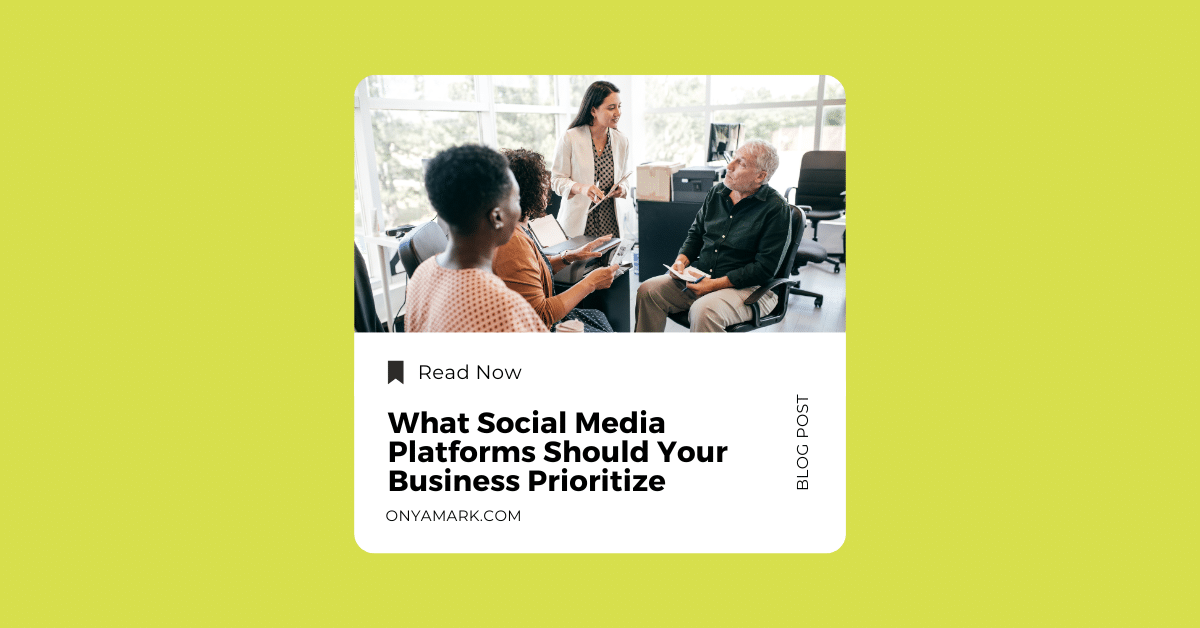
What Social Media Platforms Should Your Business Prioritize
The temptation for businesses to want to be on all social platforms is an understandable one. However, not all are equal in nature and all serve different purposes (even though they are all under the social media definition).
Selecting too many social platforms may seem like the best strategy in order to cover the most ground but you’re not guaranteed success or engagement on ANY of those platforms if your time is stretched and plan is thin. Not to mention, your resources should be better spent on really focusing on where your target audience spends their most time instead of burning marketing budget on all platforms.
After all, the whole point of showing up on social media is bring you in contact with your most receptive target audience. To do that, you need to meet them where they are.
How to Find the Right Social Platforms:
Who’s your target audience? Where do they spend their time?
Do your research here. Ideally, you will already have an idea of who your target audience is. Take a look at each social platform and the age groups, demographic, etc. to understand where the majority spend their time.
Is my Industry common on this platform?
A good indicator here is where your competitors spend their time. For instance, if you’re a B2B business focused on selling sales management services, your target audiences would be far more likely to be on a platform like LinkedIn and not Pinterest.
What type of content are you sharing/wanting to share?
Instagram is known for photos, TikTok for videos, LinkedIn for blogs/advice...If you hate any one of those mediums, you’re better off leaning towards a platform specific to the types of content you’re willing to invest time in. Remember, social media should be sustainable and consistent.
Top Social Platforms for Businesses
We may not know all the ins and outs of your business and all industries that exist in the world, but the platforms below are the most common and most lucrative when it comes to businesses on social media.
LinkedIn
We’re starting here because it's the first one that comes to mind when people think of businesses online. Especially for B2B businesses, this is the place to be. It’s suitable for individual professionals connecting with past and present colleagues and partners but is an excellent resource for finding educational materials and learning about what the industry has to offer. Don’t just stop by building a business page though. Have all your key people up and active on this platform as users can read about your business and get to know the individuals who serve and create the brand. It’s a great trust-building tool!
Facebook
Not all love Facebook but it favors the local mindset, has MANY users of all ages, and has incredibly powerful advertising tools. They are constantly rolling out new features that cater to new businesses and becomes more and more enticing the longer they exist. Facebook can be used for photos, videos, and business pages making it a great starter platform.
Youtube
YouTube boasts more than two billion users daily around the world, largely due to the simplicity of adding and managing video content. Don’t think they haven’t noticed other video platforms too like TikTok. They are always working to increase engagement with tools like Youtube Shorts. As a business who is willing and able to create video content, this is an excellent platform. Next to Facebook, they are also one of the better advertising selections as well.
Instagram
If you've followed our journey, then you know Instagram is one of our favorites - but it’s not for everyone! People love this platform purely for its visual significance and dedication to branding. This social platform is for creatives. It highlights some of the most beautiful aspects of what a business can offer. Examples are behind-the-scenes footage and “how its made” content. It also has subtle advertising for those who aren’t all about selling directly in your face. Its usability is straightforward and uncomplicated. It’s also an excellent place to get regular feedback in the comments section and is a high-engagement platform.
Pinterest
Pinterest is unique in that it’s not quite as “connection” heavy as the other platforms that focus on following. Pinterest’s bread and butter is identifying current trends and driving traffic to your website. It has a relatively seamless customer journey. It also allows people to save items and refer back to them months, even years after the fact. Unlike other social media platforms, this makes it an evergreen garden. Pinterest is a haven for large content libraries. This should be one of the first places you jump to if you have evergreen content.
Tik Tok
Tik Tok doesn’t have a huge business following in comparison to the other platforms above. However, it is still one of the most popular platforms for individual users. Tik Tok is video-centric and the core hangout for Gen Z. Although, its growth is expanding for many other age groups as it grows in popularity. Considering its advertising features, they are still developing. On the other hand, if you’re a young and hip business looking to connect and drive sales, this is your place to go.
Final Takeaways
Be realistic about your time and financial resources. Social media has HUGE potential to convert when done right but only when done regularly. If your team is small and you don’t have endless hours to post online, choose 1-2 platforms to focus on.
Looking for a social media marketing agency? Onya is well-versed in growing your business with more time to dedicate to social media. Reach out to us today and we’ll connect with you soon!
At Onya, we cannot overstate the fact that in order to be successful on social media, you must have a clearly defined customer journey.
If you can fully understand your customer journey, then you will know exactly what type of content to create, when to create it, and where to put it to make the maximum impact on your business.
Define “Customer Journey”
Your customer journey is a cumulation of the interaction that customers have with your brand when making a sale. Customers often won't simply take a straight jump to the sale (although some might). They usually run through many interactions and content touchpoints before making their decision. This includes things like reading a blog, walking into your store, reading a review, etc.
Map Your Customer Journey
When starting a journey, you need to first look at the end goal. It seems backwards (and it is) but your actions at the end will define how to best get there. What do you want your audience members to do? Most often, this will be to purchase something. Once goals are in place, you need to figure out your customers and what they’re looking for.
This is a separate exercise that deserves more time in another post, but for the sake of the journey, be sure to build buyer personas that are as specific as possible so you know the types of people entering your journeys.
With your known buyers, identify every stop they may have with your brand. This means physical and digital. Store front, social platforms, emails, website, etc. From there, find out what actions were taken at each stop and what their understanding is of your company.
Here are the four levels of understanding and awareness used to help define points in your customer journey:
1. Unaware - There are people that don’t know any problem even exists and are completely unaware of your brand altogether. Your goal here is to show them the problem.
2. Problem aware - There are people who know they have a problem but are only just now starting to ask questions. There are early symptoms of discovering a leak in your basement or the check engine light on your car. They know something is wrong but have only just started their search.
3. Solution aware - The people here know they have a problem, they’re collecting answers and looking actively but do not yet know what you have to offer. This is a very active stage as they’re still collecting answers they need and about to dive into their next steps. For you, try to leverage and share testimonials and case studies so you show the solution side of things.
4. Product aware - At this stage, people know possible solutions and know the direction they’re headed in/product category to tackle (oil for the car, dehumidifier for the basement). This is your strong chance to show them why your product or service is the best option for them.
5. Highest Awareness - People know who you are, they know your product or service exists but they need that last bit of encouragement to pull the trigger and make the sale.
With each pitstop for potential customers, tie in these awareness levels and refine your content strategy so that it makes sense for each persona’s level of awareness. If you’ve tapped into the customer journey with the right awareness level at the right place, users will be both grateful and less annoyed when they see your brand.
Be part of the solution and speak directly to their needs. Each platform, location, and stage in the customer journey should keep everyone’s needs in mind. No one person is the same and so different persona’s journeys should include different content. Don’t make your strategy a one-size-fits-all.
With any good strategy, be sure to watch, analyze, and refine. Your business will grow, your industry will shift, and your users will change.A customer journey should ebb and flow as time goes on. Let this be an ongoing process and never be done with it.
Need more steps and direction on how to optimize this time? Onya is here to talk. Give us a call today to get started!