Expert insights on digital advertising, strategy, and growth
Marketing Insights
September 17, 2026
How to optimize UGC for meta ads retargeting 2026?
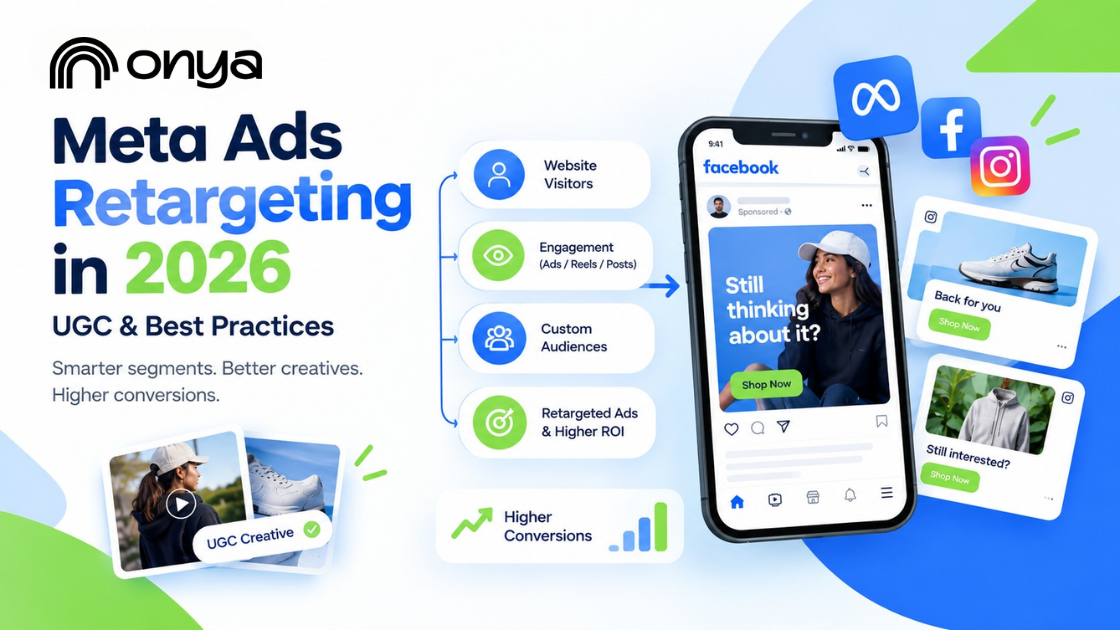
Meta's ad delivery system now treats creative as a relevance signal, not just the audience behind it. A repeated, generic ad loses ground even when the targeting is accurate, because the platform rewards ads that actually resolve something for the specific person seeing them. That's a meaningful shift from how retargeting used to work, and most campaigns haven't caught up to it yet.
At Onya, we manage Meta retargeting across higher education, healthcare, and business clients, and the gap we see most often isn't a budget problem or a platform problem. It's a strategy problem. The same ad running to every past visitor, with no consideration for where that person actually stopped engaging, is where most retargeting spend goes quiet.
This post breaks down what makes Meta ads retargeting work in 2026, from how to segment your audiences correctly to which creative approach fits which stage of the funnel and how to read your results honestly.
Why the Same Retargeting Ad Twice Doesn't Work Anymore
Meta's delivery system reads fatigue in real time. Run the same creative to the same person too many times, and the platform doesn't just get less effective; it actively deprioritizes the ad. Costs climb. Relevance drops. You end up paying more to reach people who already told you, by not converting, that the first version didn't land.
A few signs this is happening in your account:
Frequency is past 4-5x with no lift in clicks or conversions.
CPMs are creeping up on an audience that hasn't grown.
The same creative has run 30+ days with no rotation.
One ad is going to everyone who visited, regardless of how far they got.
None of this means Meta ad retargeting stopped working. It simply means the strategy behind it hasn't kept up. Retargeting still earns its spot in the funnel — but only when the creative and audience logic change with the person seeing it, not when an ad gets built once and left to run.
How Retargeting with Facebook Ads Works
Meta ad retargeting relies on one core piece of infrastructure: the Meta Pixel, a snippet of code on your website that tracks visitor activity and reports it back to Meta. Without it, you can't build an audience from your website activity.
Here's the sequence:
Someone visits your site or engages on Facebook or Instagram.
The Pixel logs that action and sends it to Meta.
Meta matches it to a user profile.
Your campaign serves ads to that person next time they're in-feed.
Pixel-only setups are common but increasingly incomplete. Browser blockers and iOS privacy settings mean a chunk of signal never makes it through. Pairing the pixel with the Conversions API closes that gap, since server-side data doesn't rely on the visitor's browser cooperating.
If you're still deciding where to put ad spend in the first place, this breakdown of Google Ads vs Meta Ads covers how the two platforms differ.
How Retargeting Instagram Ads Works
Instagram retargeting uses engagement and website activity to reconnect with people who have already interacted with your brand. Instead of relying only on broad audience targeting, you can build audiences from actions people take across Instagram, Facebook, and your website.
Here’s the basic sequence:
Someone watches your Reel, interacts with a post, visits your profile, or lands on your website.
Meta receives signals from that interaction through its platform and tracking tools.
Those signals can be used to create or update a retargeting audience.
Your Instagram campaign then delivers relevant ads to people who match your audience criteria.
For example, someone might watch a large portion of a product Reel but leave without visiting your website. You can create an audience around that type of engagement and show them a follow-up ad with more product information or a different creative.
Website visitors can also be retargeted on Instagram when the appropriate Meta tracking and audience setup is in place. The Meta Pixel can send website events to Meta, while the Conversions API can complement browser-based tracking with server-side event data.
The key is to treat Instagram retargeting as a continuation of the customer's first interaction, not simply another opportunity to display the same ad. Someone who watched a Reel, visited a product page, or abandoned a cart may need a different message at each stage.
That makes audience segmentation and creative rotation just as important as the retargeting campaign itself.
Build Retargeting Audiences Around Behavior, Not Channel
Most accounts build one audience: everyone who visited in the last 30 days. That treats a person who reads one page the same as someone who almost converted, and they need completely different ads. Group your audiences by what the person actually did, not which channel they came from:
Engagement-based — visited your site or watched most of a video, but took no further action. They know you exist; they're not sold yet.
Intent-based — started something and didn't finish: an abandoned cart, an unfinished application. This is your highest-intent group; they've told you exactly what they want.
Relationship-based — people you already have data on, email lists, and past customers. Worth prioritizing since first-party data holds up better as tracking degrades, part of why retargeting still earns its place in 2026.
Each group stalled for a different reason, so each needs a different message. That's what makes the next step, matching UGC retargeting ads to the right hook, actually work.
Match the Hook to the Reason They Stalled
The product doesn't need three versions. The first three seconds do. Someone who barely looked needs a different opener than someone who almost bought, and matching that opener to the actual hesitation is what separates UGC that converts from UGC that just adds frequency.
Awareness Hook: For Visitors Who Left Too Early They saw the ad or landed on the site but never connected it to a problem they actually have. The fix isn't a better product shot; it's leading with the problem itself, in plain language, before the product ever shows up. If the hook doesn't name what they're struggling with, the product looks irrelevant no matter how good it is.
Proof Hook: For Visitors Who Hesitated Cart abandoners clicked, then talked themselves out of it. Usually it's one unanswered objection: will this actually work for someone like me? Answer it with something concrete, not a general claim:
A specific timeframe ("after two weeks")
A specific result, not a vague one
An unpolished, real moment over a staged one
Decision Hook: For Visitors Who Are Almost Ready This is someone deep in consideration, not a past buyer. They've viewed pricing, come back more than once, and maybe started a form or cart and stopped. They don't need convincing anymore; they need a reason to stop deliberating: a deadline, a guarantee, or a direct answer to what's still holding them back.
Rotate the opener before the offer. When frequency climbs and results dip, the hook usually goes stale first, not the product or the price.
Meta Ads Retargeting Best Practices: How Often to Refresh UGC Creative?
The same clip that converted well two weeks ago starts losing steam the moment your audience has seen it too many times, and leaving it running past that point burns the budget instead of saving it.
Watch performance, not the calendar. Two numbers tell you when it's time to replace a creative:
Frequency past roughly 3-5x with no lift in clicks or conversions
CTR declining on a specific asset, not just the campaign average
When both start moving the wrong way, replace the creative, usually every 2-3 weeks for an active retargeting segment, sooner for smaller audiences that see the same ad more often.
Refreshing doesn't always mean a full reshoot. Often the fastest fix is swapping the opening hook or format on existing footage. If you're running low on raw material to pull from, this breakdown of UGC content ideas is a good next stop before you schedule a new shoot.
Formatting UGC for Facebook and Instagram Retargeting
A strong hook still underperforms if the format looks like an ad instead of a Reel. A few non-negotiables for retargeting social media content on Facebook and Instagram:
A few things worth getting right:
Shoot vertical, 9:16, for Stories and Reels, where most retargeting inventory runs
Front-load the hook; the first two to three seconds decide whether someone stays.
Burn in captions, since most Feed and Stories viewing happens with sound off
Skip the polish; handheld framing and natural lighting read as authentic, which matters more with a warm audience than production value
Facebook and Instagram audiences don't always respond the same way. With retargeting Instagram ads, you'll often see more visual, lifestyle-driven clips perform best, campus life, and product-in-use moments.
When retargeting with Facebook ads, you're often reaching an older or more decision-adjacent audience, parents in a higher-ed context, for example, so slightly more direct, information-forward creative can perform better there. Running the same UGC on both, with small adjustments to pacing or caption tone, tends to outperform picking one platform and skipping the other.
These aren't universal retargeting ads best practices; they're specific to warm audiences who've already seen your brand once and are deciding whether the second look is worth their time.
Are Your UGC Retargeting Ads Actually Working?
Vanity metrics won't tell you if it's actually paying off. Check these at the individual-asset level, not the campaign average:
Frequency and CTR trend per asset — a declining CTR on one specific clip is your earliest fatigue signal, well before overall cost per result moves.
Cost per result by audience segment — lumping every stalled visitor into one report hides which segment is actually underperforming.
Performance by platform — retargeting with Facebook ads and retargeting Instagram ads rarely perform identically, so review them separately.
If none of this is tracked at that level, the honest answer is, "You don't know whether retargeting is working; you just know it's running.
This is usually where teams either build the reporting themselves or bring in someone who already has the system for it. At Onya, matching hooks to funnel stage, formatting for each platform, and reporting on individual assets isn't an add-on; it's the default way we run Meta ads retargeting for every client, higher education, ecommerce, or otherwise.
Conclusion
Retargeting on social media only works when the strategy behind it does. Segment audiences by behavior, match each hook to the reason someone stalled, and refresh creative before fatigue sets in — that's what separates UGC retargeting ads that convert from ones that just add frequency. This discipline applies whether you're running retargeting with Facebook ads, retargeting Instagram ads, or both at once.
Onya is a full-service digital marketing agency that builds this whole system: strategy, creative, platform-specific formatting, and asset-level reporting, not just the retargeting piece. If you want a team that follows retargeting ads best practices end to end, see what Onya can do for your business. Contact us now!
Frequently Asked Questions (FAQs)
What counts as UGC in a Meta retargeting ad? Content that looks like it's from a real person, not a brand. Think testimonials, honest reviews, or day-in-the-life clips.
How is retargeting different from a regular Meta ad? Regular ads target people who don't know you yet. Retargeting shows ads only to people who already visited or engaged with your brand.
Can the same UGC clip work on Facebook and Instagram? Yes, but results differ. Instagram favors lifestyle content, Facebook often does better with more direct messaging.
Do I need a big budget for UGC retargeting ads? No. Polished, expensive-looking ads often perform worse with a warm audience than something that looks real.
How do I know if my UGC creative needs to be replaced? Watch frequency and CTR on that specific ad. When frequency rises and CTR drops, it's time to swap it.
For most basic users of Instagram, the goal is to gain as many followers as possible. For businesses, the goal is always sales. Unfortunately for many businesses we see, they spend countless hours and days pouring into Instagram and the content that fills it, only to find they haven’t gained any new sales and are usually short on followers and engagement.
What we try to encourage with so many of our clients and friends is quality over quantity. Build quality content that can attach to a strong customer journey that leads to a clear sales funnel and watch the sales roll in. If the above sounds like your story, read on to learn how to better approach business with Instagram.
1. Define your Goals
All businesses, big and small, MUST have outlined goals in order for their business to succeed. If you’re jumping in head-first to the Instagram game without business-defined goals, you’re going to fail.
Sans goals, your content is going to skew left and right and somewhere in between.
We know you’re busy. We know your time is precious. But posting randomly is like throwing pasta at the wall in hopes that something will stick. Define your goals and the rest will fall into place.
2. Give Social Proof
First, what even is social proof? Wikipedia defines social proof as “the psychological phenomenon where people assume the actions of others in an attempt to reflect correct behavior for a given situation" In other words, your audience wants to know that you can provide the results you're promising. It’s your job to help give them what they’re looking for and build trust. Here’s how:
User-Generated Content: UGC takes what your audience is passionate about and creates on their own and uses it for building an authentic brand image. Some businesses are scared of this tactic because it requires using others’ words, but it’s free and highlights users and their honest opinions. Get people to start talking through unique challenges or invite them to share their stories.
Testimonials: Similar to UGC, testimonials take honest feedback and highlight it to build trust with others who haven’t become customers just yet. Even if testimonials don’t exist yet, talk to happy customers who are willing to share their thoughts. It takes business a long way in others seeing how you’ve impacted customers.
Influencers: Be careful here. Influencers shouldn’t just be whoever is popular in general. They need to be specific to your niche. When users see these influencers talk positively about your business, they're encouraged to trust and buy from you.
3. Build a Trustworthy Community
This one stands out because social media is ALL about community. That was why it was designed in the first place. It allows people from all walks of life to find and follow those they connect with on a real level. If you want to build that community, engage with your followers. Acknowledge them, answer their questions, and encourage them in their endeavors.
Most importantly, be authentic. People can smell fake a mile away.
4. Make it Easy to Convert
Make the buying process easy for your followers. Consumers want to engage and they want to find your information. Don’t make it hard for them to navigate to where they want to go. Your information in your bio (and again, on your website) should tell others who you are, what you do, and how to get in touch (or where they can learn more).
Links can’t be broken. Contacts should be obvious. Your purpose should be clear.
Let people make sales with ease and don’t be the main reason they click away to a competitor.
5. Provide True Value
Truly valuable content will keep people coming back for more. You want posts to be informative, educational, and actionable. In other words, don’t make everything about selling your services or product.
Give tips and tricks.
Share your struggles and how you overcome them (or ask for advice).
What FAQs are most common in your industry?
Share relevant fun facts.
Provide free downloads.
6. Review and Pivot
Don’t just post. Review what’s working well (or not working well) and be sure to change if need be. Do metrics reflect the goals you’re trying to reach? This is also key when analyzing how everything is performing. When reviewing, dive into the details. What posts got the most likes? Which got the lowest likes? Which ones generated DM’s? Were there certain times during the day/week/year that others engaged the most?
Remember that Instagram Statistics tell a story and you need to work off of what those numbers are telling you. Use analytics to take the next steps so you can continue to give people what they need and want to see online.
Converting Instagram followers IS possible. But it requires you to be strategic and consistent. Trying for only one week won’t get you there. Followers need to rely on what you’re posting to build trust before they buy. This takes time so be patient and be intentional. If you're struggling to convert those followers, let's have a chat. Onya can help determine a solution-based strategy that attracts potential customers and meets your goals as a business.
How to Rank on TikTok Search Results: Guide to TikTok SEO
TikTok has quickly become a cultural phenomenon, with users flocking to create and share short-form videos that showcase their creativity, humor, and unique perspectives. For businesses, influencers, and content creators, TikTok represents a huge opportunity to reach a wide and engaged audience. Plus, all the cool kids are over there.
However, with so many videos being uploaded to the platform every day, it can be difficult to get your content noticed. That's where TikTok SEO comes in. TikTok SEO is now becoming the number #1 search engine on the internet, overtaking Google's position. With the buzz around TikTok, optimizing your videos for TikTok's search algorithm can increase your visibility, reach, and engagement on the platform's search results.
If you have been wondering how to go about your TikTok visibility strategy and get your videos placed at the top of TikTok's search engine results, this comprehensive guide to TikTok SEO is for you. This guide will give you all the interesting details on what TikTok SEO is, how it works, ranking factors, and how you can use SEO for TikTok to rank on the TikTok search engine.
What is TikTok SEO?
TikTok SEO, or TikTok search engine optimization, is optimizing your content to improve its visibility and ranking in the app's search results. To put it simply, TikTok SEO is optimizing your content on TikTok's "For You" pages so that it can easily be found by TikTok users when they use the search engine feature.
SEO for TikTok works in the same way traditional SEO (Google SEO) works. Optimizing your content with the right keywords, hashtags, and other strategies can increase the likelihood that your TikTok videos will appear at the top of search results, attracting more views, likes, and followers to your account.
Many will ask, "But TikTok isn't a search engine, so how is it possible?" Although TikTok is technically not a search engine, it still has a search bar, making SEO an integral strategy on the platform. As a result, as SEO TikTok continues to grow into an essential aspect of any TikTok marketing strategy, creators and brands need to take full advantage of it.
Ranking Factors for TikTok SEO
To understand SEO for TikTok better, you must first understand the ranking factors. These include
User Interactions
User interactions involve likes, comments, followed accounts, shares, re-watches and completions, and videos added to favorites, which affect the ranking factors on TikTok. TikTok algorithm takes notes of these and recommends such videos or content to you. This is because it has gotten the insight that interactions with such content mean "users want to see more of those." Therefore, if your content has lots of engagement, it will be recommended to users.
Video Information
Another factor that affects ranking on TikTok is the video information. Hashtags, caption keywords, effects, sound effects, content, and music determine video information on TikTok. To rank and optimize your TikTok video, TikTok checks if your videos contain relevant keywords in their titles and descriptions and hashtags, video transcripts, music, and more in their videos. Therefore, to boost your TikTok SEO for your videos, ensure these factors are included, as they can potentially increase user reach on the app.
How to Rank of TikTok Search Results in 4 Steps
With so much content on TikTok, optimizing your videos for search engine optimization (SEO) is important to ensure they reach the right audience. Here are six steps for TikTok SEO:
1. Understand your audience's search intent and needs
To optimize your TikTok videos for search engines, you need to understand what your audience is searching for and their intent. Doing this can create relevant and valuable content for your viewers. To get the most out of TikTok SEO, research the popular topics and trends in your niche and use this information to create content that meets your audience's needs. Some questions you should ask:
Who are they?
What are their interests?
What do they like?
What do they dislike?
What kinds of problems do they have?
Once you understand the answers to these questions, you’ll already know what your audience is naturally searching for within the app - create content aligned with that and SEO will be a breeze for you!
2. Speak the voice of your audience
This is one strategy that many creators need to master yet find challenging to do - understanding and speaking the voice of your audience. It's important to create TikTok videos that speak the language of your audience. Use phrases that resonate with your viewers, and try to create relatable and easy-to-understand content. This will help increase engagement and attract a wider audience to your content.
3. Keywords, keywords, keywords.
Keyword research is an essential component of TikTok SEO. Start by identifying the keywords that are relevant to your niche or industry. Consider the keywords your target audience might be searching for on TikTok, and use these keywords in your video content, description, and hashtags. Using the right keywords will make it easier for users to find your content and increase your visibility on the platform. Choose keywords relevant to your content and niche, and use these keywords in your video title, description, and hashtags.
There are three things to consider when choosing the keywords for your SEO TikTok
Search Volume: This refers to the number of people searching for the keyword you want to use in your video or visual content.
Relevance: This refers to the amount of relevancy your keyword has to the content.
Keyword difficulty: This refers to how difficult it is for that keyword to rank your video.
Therefore, it is recommended that you select a keyword with
High search volume
High level of relevance
Low keyword difficulty.
IMPORTANT TIP: Don’t overstuff your content with keywords. Keep the placement natural, and don’t overwhelm your viewers. You don’t need a keyword in each place mentioned on this list. Test out your placement. Switch it up and see which videos get more views.
4. Determine your hashtag strategy:
If there is a powerful strategic tool for increasing the visibility of TikTok videos, it is hashtags. Hashtags target the width, height, and depth of TikTok. To boost your searchability, find ways to determine a hashtag strategy relevant to your content and niche. Use popular and trending hashtags related to your content to increase your reach and engagement. The key is to stay relevant and consistent with your hashtags. And PLEASE: don’t use the large trending hashtags like #fyp or large event and branded hashtags. It’s tacky.
5. Analyze and Measure Your Progress
When you are looking to grow on any platform, you need to measure your progress. Take note of the things that are doing well and replicate them. Take note of the things you didn’t see as much TikTok Growth from and try different methods. TikTok gives creators access to various analytic data on its platform so that they can see how well their content performs. Analytics are separated into three main categories: Overview, Content, and Followers.
In the Overview tab, you can see video views, profile views, follower growth, likes, comments, and shares for custom date ranges of up to 60 days.
In the Content section, you can view data on each of your videos. This can help you identify the things that are working well based on which videos have the most engagement. Pay attention to metrics like average watch time and the percentage of users who watched the full video.
In the Followers tab, you can learn more about the users following your account and watching your videos. Learn where your audiences are from and the most popular times they view your content.
This only scratches the surface with TikTok SEO, but here’s what we really want you to take away - It’s easy to fall into the comparison trap on TikTok or wind up feeling more overwhelmed when browsing, but the BEST advice we have is to start posting. Unlike Instagram, TikTok appreciates “off the cuff” style videos - you can post whatever you want, and it really can’t hurt you. Start posting consistently, and gather the data you need to optimize as you grow!
For more information on boosting your TikTok SEO, contact us at Onya - we’d love to partner with you!
Understanding Target Market Analysis and How it Can Work for You
For many of you, we hope you know who your main customer base is. However, knowing where to look to find new customers is another thing. How do you find them, how do you capture their attention, and how do you secure the sale?
Or an even better question - are you even targeting the right audience?
This is where Target Market Analysis comes into play and can make a BIG difference for your business strategy.
What is target market analysis?
Target market analysis is a review process used to establish a specific group who collectively make up your brand’s ideal customer base.
If used correctly, TMA will create a strong base and allow you to pull and develop these individuals into regular leads (that will hopefully convert).
What is TMA looking for?
Who – TMA defines in detail what your audience looks like. This includes specific demographic details like gender, age, job, looks, and so much more (this will largely depend on your product or service - for instance, if you sell a shampoo for blondes with curly hair, your target audience will be blondes with curly hair).
What – What does your audience like and dislike? This could be specific to your product or service but should also span beyond your business into their hobbies and pain points.
When – At what points are your audience members most likely to be online checking email, scrolling through social media, or searching on the web? Get it down to days of the week, time of day, and seasons that they are most active. Keep in mind too that time zones will play a factor as well as the frequency in which they interact online.
Where – Where are your audience members? Do they all reside close to your business? Or are they across the country? Are they international? What does their habitation look like?
Why – Of all the possible choices online or abroad, why might your audience choose your brand? The TMA should detail pain points, solutions, and reasons behind their decision-making. Be mindful, this shouldn’t just be assumed by your business - this should come from detailed analysis and conversation with key audience members.
What NOT to Do with TMA
Only focusing on friends and family - This is a classic example of using what you’re most comfortable with. When running an audience question analysis, be sure to survey individuals from all walks of life that you do not know directly. This will give you more honest answers.
Seeking the Wrong Information - TMA needs to be directly related to your brand and not just your industry. Your analysis should define an audience that is specifically centered around selling your product and service, not your competitors or otherwise.
Using Biased Data - Many brands are prone to collecting and singling out information they think is most true which is often influenced by their own bias. To avoid getting too close to the info, try leveraging an agency as a neutral third party (Onya is happy to help with this process).
Making Assumptions - This is very much connected to the bias you bring to the conversation but it’s worth noting this separately. Be sure to rely on the answers people provide when analyzing groups. Don’t dictate what you think the answers should be and don’t lead the witness. Sit back and listen. Assumptions can create skewed data which can lead to you having to re-run your TMA again. That’s a huge waste of time and money.
Using only Digital Resources - Look, we are all about online analysis. It’s how we work. But when it comes to defining your target audience, you need to speak with real people, Community and have real conversations. Not to mention, the web will only give so much. Sure, you can collect keywords and basic demographics, but conversions will reveal more robust details you may have missed online.
Tools for Running TMA
Start by outlining what your brand and its services/products seek to solve. From here, you will want to create questions around the issue being addressed and see how audience members respond.
Define your initial target market. Who are these people and where do they come from? Refer to the above section for what TMA is looking for to help segment these individuals.
Create a TMA survey. These should be questions that are centered around your brand and the issues you solve. Once questions are defined, you can ask using tactics like an online survey, in-person survey, or focus groups. This will help to more articulately create the people you want to market to.
Study your social media. Review the analytics on your social platforms. What types of people regularly come to your business account? How long are they for? What does engagement usually look like for them? Better yet, study social platforms you’re not currently using. Are there places your audience may be spending their time at that where you aren’t located?
Study the competition. What are your business rivals up to these days? What people are they talking to and do they differ greatly from yours? If so, you may want to assess and determine why. Their behaviors and social groups may surprise you and open new target audiences you hadn’t yet considered.
How Onya Can Help
Target Market Analysis is necessary for your brand’s success but can also take some time. With Onya’s marketing expertise, you can count on our team to help create an audience that is sensible and successful to ensure sales! Get in touch today to discover more about our services.
With growing technology comes new and optimized social media platforms. These platforms are modified daily to keep up with the rapid technological advances we see today.
Instagram is one of the most popular social media platforms and is an exceptional app. When used correctly in alignment with its updates and trends, it can help a business grow and excel while avoiding common Instagram mistakes that can impact engagement and overall performance.
Here are our top five tips and tricks to help your business achieve impactful marketing success.
#1 Create more videos
The digital landscape is changing, and so is Instagram. What was once a place of selfies and cat memes has changed drastically. Awareness of changing trends keeps your marketing from getting left behind.
Take it from the head of Instagram himself, Adam Mosseri. He says, "We're no longer a photo-sharing app or a square photo-sharing app."
If pictures are no longer the optimal way to capture audience attention, should you post videos instead? The answer is yes.
It is now known that the most effective way to share videos is not through posts, but instead through reels and carousels. This is because reels and carousels bring the highest engagement time giving Instagram more time to push ads out to their users resulting in more sweet cash. The bottom line is, videos are the future of Instagram and aren’t going away anytime soon, so you should get out there and put your creative mind to work!
#2 Have a posting schedule
Imagine your favorite TV show, The Office, let's say, has no schedule for when its newest episode is going to air. It could air in the next hour or the next month, but there's no set arrival leading you to say, “Eh I'll just watch Friends.” This is more or less what’s happening when you post on Instagram. By not having a posting schedule, your audience could miss out on important information regarding your brand as well as company updates. Not only that but without a posting schedule, you’re more likely to have inconsistency in your posts, possibly going weeks without posting because you have no deadline or just flat-out forget. Having a schedule for everything is important and Instagram is no exception.
Optimize your bio
Think of your Instagram bio as sort of your first impression. If you do not correctly format your bio, it can potentially off-put a future client or customer just as a bad first impression could scare away a future friend.
A satisfactory Instagram bio should explain the meat of your company as well as why you’re worth following. Your bio is your sales pitch as to what you do and how you can potentially help the person reading. As we all know, these first impressions are vital in future interactions where a good first impression can result in a new client or purchase, and a bad first impression can result in that person not wanting to associate with your company due to your unprofessional demeanor. All in all, by the time the person is done reading your bio they should concisely understand what you do, who you do it for, and why you're worth following. With this information, you should be able to create the best first impression that is the catalyst for the overall growth of your business.
Have linearity in your posts
Imagine you went to watch Animal Planet, the beloved documentary series about wild animals and domestic pets, and instead of seeing a chimpanzee in the wild it was footage of a tamed pet chimpanzee playing the drums… stay with me here. Although they're still filming an animal, it doesn't follow the linearity or theme of being in the wild.
When posting on Instagram, the last thing you want to do is confuse your audience about your overall goals and purpose. Although this sounds very obvious, many companies fail to use this tip and will post things that aren’t directly related to their company’s intentions. Before posting you should ask yourself, will this post help inform my audience about the goal of my company and lead my audience to think about my business in a positive and informative light?
Utilizing trends for your Instagram reels
While using popular trends whether it be trending concepts, videos, or hashtags seems obvious, many companies tend to overlook the benefits of it. There are many great examples of companies taking advantage of trends such as Chipotle and Burger King which not only gets their reach out to more people but also a wider variety of people. These interesting and trendy videos are what people like to enjoy watching, and it adds a lot more character and liveliness to your company than a regular social media ad would. Not only that, but social media apps favor trending videos and could send yours out to more people without even having to pay for an ad!
There's much more research that goes into social media marketing than a person might originally think. Learning some tips and tricks for these platforms can be beneficial in growing your business, as well as creating a diverse audience who will want to follow and stay up to date with what's going on. It’s time to take advantage of these tips and tricks and see some real progress with your social media marketing!
Need additional strategic help when it comes to social or content strategy? We’d love to chat with you. Feel free to book a free strategy call with us now!
It’s the new year which means there are new marketing trends that you need to be made aware of. With the advancements in marketing in the past few years, marketing trends are changing and evolving all the time and if you want to take advantage of them you must catch on early. Marketing in 2023 will come down to who can attract and sustain an audience in a practical and meaningful way while taking into account the quickly changing social media trends and strategies.
When learning these trends, you will gain a better understanding of your audience as we move into the new year and what this new generation expects from a company. By learning how your customers think and react to marketing in this new age, you will be able to take advantage and give your customer a better experience throughout the buying process. Making a seamless and easy experience for your customer is necessary in 2023 and to do that you must utilize these trends.
Changing Consumer Behavior
Throughout the years, it’s evident that certain things mattered most in alignment with the time. For example, in the 1930’s the priority was to survive the Great Depression while in the 1950’s a top priority was raising a family with a spouse and getting a job. Now that we’re in 2023 and we can have just about anything at the tips of our fingers, one of the most important factors that we might overlook is speed and convenience. This is so important because people today value their time and with how quickly necessities can be attained, people aren't going to wait around and waste their time with slow and confusing websites. By creating a seamless and easy-to-understand website with quick shipping, your potential customer will not have to waste time and can indulge in your business with ease.
Video Marketing
Marketing your business in the form of a video has been, and will continue to be, one of the most beneficial marketing tools on social media. That’s because videos are more engaging than pictures and can be viewed for a longer period than a post meaning your potential customer will be viewing your content for longer. A trending form of video marketing we see a lot in 2023 is short-form video. This is a video under sixty seconds that is engaging and shares information about your company. These short videos can be posted on just about any social media platform with some of the most popular being Instagram, YouTube, Facebook, TikTok, and Twitter with some of the platforms having specific areas just for short-form content such as Instagram reels.
Push Notifications
With all the changes occurring in 2023, push notifications are becoming more accepted by users. Push notifications are messages sent through a push notification service to a mobile app or that can appear directly in your browser. Learning that users are turning on their notifications more than ever means it would be silly not to take advantage of this. When creating more personalized notifications you can increase the rate of reactions by the user up to 400%! Push notifications are quick and easy reminders to the user about your business whether it has to do with updates, deals, reminders, and more.
Interactive Content
Zero-party data is any data that a user voluntarily gives you whether it be through polls, quizzes, giveaways, etc. By using interactive content, which is any content that a user interacts with, your business can get helpful data from your users which can be used to update and improve your business. Interactive content not only gives you information on users but is also known to be more engaging than static content such as pictures. In 2023, social media marketing is all about keeping the user engaged, and by using interactive content, you’ll do just that.
Understanding new trends can be tricky to find and use, but when done correctly will give your company a more up-to-date feel. When these strategies are used, you’ll have more chances to gain attention and potential customers. If you want this work done for you feel free to book a free strategy call with us now!
With the number of marketing metrics in the new age of marketing, your company would be at a major disadvantage to not utilize these amazing tools.
These metrics will give your company important information that can potentially skyrocket your business such as who's looking at your website and how engaged they are in it. By learning these metrics you can see what works well and what needs to be tweaked to get the best results from your marketing strategy.
Qualified leads
A qualified lead is someone who has the highest chance of purchasing your product. This ideal customer is also known as a buyer persona, and you can create this buyer persona by finding a person who is most likely to need your product. Once you have found a qualified lead you can target your business towards them to get the most engagement possible.
Cost per mille
A super bowl advertisement or a YouTube advertisement, which one costs more? Well obviously the super bowl advertisement, but how much more? CPM refers to the cost per 1,000 impressions or people that view your advertisement. If you're trying to reach people in certain industries you’ll have to pay a higher CPM so that you can target a more particular audience.
Clicks, calls, visits
It’s extremely important to know that your marketing campaign is being shown to people who might be interested in your product. When tracking your clicks, calls, and visits, you're able to see if your ads are targeting the desired audience. If not, then it’s a good indicator that the marketing campaign should either target a different audience or should modify the advertisement to trigger more engagement.
Bounce rate
Someone who visits your website and then immediately leaves is known as a person who “bounces” through your website. A higher bounce rate means people are more likely to leave your website as soon as they look at it. This could be a result of your website being poorly designed or being targeted to the wrong audience. By tweaking your website design and measuring the progression or your bounce rate, you can see what works best on your website. By changing your target audience, you might find a better bounce-through rate as well.
Conversion rate
The conversion rate measures the people who end up on your landing page and become a customer by purchasing your product. The higher your conversion rate the more people on your website that are becoming customers. There are lots of ways to increase your conversion rate such as improving your website, including social proof, tracking your site's interaction, adding live chat, testing your offers, and more. These tips can help you gain lifelong customers that buy your products for years to come because you are a trustworthy and open company that makes the site convenient for the customers.
Using these marketing metrics will give you a better understanding of your business as well as its consumers. By utilizing the information found in these metrics correctly, you’ll be able to optimize your business and create the best possible experience for your customers.
Need additional strategic help when it comes to social or content strategy? We’d love to chat with you. Feel free to book a free strategy call with us now!
<strong>4 Tips for Increasing Brand Awareness<strong/>
Do customers, investors, and businesses know that you exist? If not, it’s because you don’t have effective brand awareness.
Effective brand awareness should inform someone about your business such as what you do, why you do it, and who it's for. Likewise, it will have someone remembering important factors of your business including your logo, color scheme, slogan, history, content, and much more that has to do with your business.
When you have brand awareness, a customer should have a deeper understanding of what you do, and this is the first step to creating a loyal lifelong customer who will be a catalyst for growing your business.
When working on your business' brand awareness, it will give you important information about the effectiveness of your marketing strategy and brand design. Knowing what works and what doesn’t will be a great tool when it comes to growing your business and getting the type of customer engagement you're looking for.
Brand partnerships
Throughout the years, you’ve seen many different popular brands partnering with each other. A popular example of this would be GoPro and Redbull, which are two companies that share similar interests and can grow their brand awareness off of each other. When partnering with a brand that shares similar interests or values as your own, you’ll be able to bring your audience to them while they bring a large, possibly more diverse, audience to you. Both parties can benefit from a partnership, including customers interacting with your brand because you partnered with a respected and trusted brand.
Leverage social media
With over 59 percent of the world using social media, it seems like a no-brainer to be marketing your brand on different platforms. But what comes with social media marketing is knowing where your customers are most likely to be, what content they would enjoy, and how you can get them to interact with your content in some way. One way you can do this is by posting about relevant, hot topics. When a customer sees content about what’s trending in the world right now, they’re more likely to interact with that content whether it’s through reposting, liking, or commenting on it. When you’re active on social media by regularly replying to potential customers, you’ll come off as authentic and gain more support. Just like brand partnerships, you can share other brands' content similar to yours and in turn, they might share your content which will bring in a much wider audience.
Use referrals
People are more likely to share your business with others if you are a friend. Friend referrals are a great way for people to find out about your business and get a good word in from someone they know and trust. By asking ten of your friends to share your content with four of their friends, you will have forty brand impressions. Smart companies will give an incentive to people that share their company with a friend like how Robinhood, a financial services company, gives you one free stock if you get a friend to make an account on their app.
Use consistent branding
When using consistent visual and verbal branding, your business will be easily recognized. Whether it has to do with your logo, colors, fonts, or anything else you should keep it consistent and recognizable for your customer to remember it by. A consistent brand being recognizable is the first and most important step to gaining awareness.
With these brand awareness tips, you should be able to create a more recognizable brand that people will remember and get them on their way to becoming lifelong customers. Learning the first steps is the most important, and these tips are stepping stones to creating a business that lasts.
If you need help with growing a successful business or getting more people aware of your company, give us a call and we will help!
Which Advertisement Platforms Are Best For a Small Business?
Diving into the unknown is scary, not knowing where to start or where you might end. It may seem like a gamble to pick just one social media platform to work with. This, along with a minimal background in social media marketing, can make the process of advertising your company seem impossible.
So we’ve compiled a great list of social media platforms that are sure to give you a boost of knowledge when deciding what platform you want to advertise your business. In this list, we explain why and how these apps will give you the best chance to grow your business and see real progress.
Facebook and Instagram
Creating an ad on Instagram and Facebook is as easy as creating the ad and choosing what you want it to do such as sales, leads, engagement, etc. With many different Ad creative options, it’s easy to navigate and understand what you're looking at and the data you get from your ad. With cool features like boost posts and promote posts, you’re able to get your ad up quicker and pushed to more users for a fair price. This app being used by billions of people means that its targeting options are great and you can direct your content to virtually anyone you desire. Due to Instagram and Facebook's beginner-friendly platforms as well as the number of users on the app, these are obvious advertising platforms that small businesses should be utilizing.
Tiktok
Along with Facebook and Instagram, TikTok is a great app to advertise your business due to its growing popularity and easy user interface. When using TikTok’s Promote 101 option, you can easily post videos and choose an advertising goal whether it’s to get more views, website views, or even account followers. Another great aspect of TikTok ads is the insights about your content and audience based on your posts. Some metrics you're able to view include video views, likes, comments, shares, website views, age, and gender of your audience. With a cost-efficient application, you're able to set a comfortable budget that works for you and can be very beneficial especially if you know that the audience you want is on TikTok.
YouTube
While TikTok and Instagram ads are short form and are usually easy to create, YouTube ads are not. YouTube ads are known to be longer video ads and are usually more complex but can target billions of people. With this, you’re able to target your advertisements to certain types of audiences thanks to keywords a user might type in, as well as keep your advertisements away from certain areas and content that you don't want your brand to be associated with. Along with all this, YouTube ads are a lucrative way to gain an online presence on one of the most popular social media platforms without having to take years of posting videos to gain any recognition.
With all of this being said, none of these platforms will work without one key factor… a good ad! You could be doing all the right steps like using popular keywords and targeting the right people, but that does virtually nothing if your ad is not intriguing to your audience. Due to social media's rapid change in culture, it's not easy to stay up to date with everything going on and make sure your advertisements are up to par with the current state of online social media advertising. Luckily, this is a great first step to growing a social media presence. Pick the app you feel is right for you and your business and start promoting it!
Need additional strategic help when it comes to social or content strategy? We’d love to chat with you. Feel free to book a free strategy call with us now!
4 Important Marketing Funnel Steps to Grow Your Business
As business owners, it is unfortunate that loyal life-long customers do not just appear from thin air. Instead, a customer of this status goes through a long process before fully trusting and committing to the company they might be interested in. This process is known as a marketing funnel. A marketing funnel has to do with the sequence or series of stages to guide prospects through the customer journey.
By understanding the stages of the marketing funnel, you can help optimize and guide your customer in the right direction toward your overall desired end goal. A simple, but effective marketing funnel includes the process of awareness, engagement, conversion, and advocacy. By understanding and utilizing these steps correctly, you’ll be on your way to creating loyal and lifelong relationships with your customers!
Awareness
The sad truth is, if a potential customer isn't aware of your business, they won't try and find it. People grow accustomed to familiar brands and businesses they are used to, and if they don't know the benefits of your company they won't look into it. With that being said, there are better ways than ever before to make a potential customer aware of your business through SEO, content marketing, digital advertising, and more.
Thanks to social media advertising, you can strategically tailor your marketing content to a specific niche of people that you feel would benefit from your business. This means that you don't need to waste your budget on people that have no need or interest in your business. Social media marketing on big platforms is generally very user-friendly, meaning it's easy to create an advertisement and see the metrics to know if the advertisement is effective. Through the process of researching your ideal customer, you’ll be able to find the best place to advertise your brand while getting the most traction because of it.
Engagement
After making your potential customers aware of your business, they must engage with your content. Increased engagement will come from your business adding some sort of value to the viewer. This value can be through the form of content creation such as videos, blogs, social media posts, or anything else that helps your audience. By doing something different than a competing company, a viewer might find more use in your business and start to familiarize themselves with what you have to offer. If what you are offering is in their best interest, they will want to know more.
Conversion
Instead of blindly trying to sell your product to an audience who has no need or desire for your business, you can now confidently convert your engaged users into buyers. You will have a higher conversion rate from people who are interested in your business than people who are not and now that you have found the people who are engaged in your business you can convert them through email marketing, retargeting ads, and through your website.
Advocacy
To create a successful business, you must turn your customers into brand advocates. These are customers who market your company for free, out of love for your company. Brand advocates will market your business because you’ve influenced or helped them in some way, and in return they will tell people about it. To sustain these advocates, you must nurture your relationship with these customers and potentially incentivize them so you can keep their trust. This step of the marketing funnel can not be overlooked because it’s the most important when trying to grow a strong relationship with your customers who will follow your brand no matter what.
A marketing funnel is an excellent way to grow your brand and gain customers who love your business. Though you might understand the marketing funnel now, many different tactics help execute the marketing funnel in the most effective way possible, making sure you get the most out of the content you are creating. The more tactics you try, you will find what works best for your company and take advantage of it to create the best strategy that works for you.
Marketing takes a lot of trial and error and can be difficult to understand for someone who is learning for the first time. Need additional help with your social media marketing? We’d love to chat with you. Feel free to book a free strategy call with us now!